Viet Thanh Nguyen’s Nothing Ever Dies Explored
Nothing Ever Dies by Viet Thanh Nguyen: Quick Answer
- Nothing Ever Dies: The Vietnamese and the War offers a critical, theoretical examination of how war memory is constructed, perpetuated, and contested, particularly through the lens of the Vietnam War.
- The book challenges dominant Western narratives by foregrounding Vietnamese experiences and analyzing the politics of representation in shaping historical understanding.
- It is essential reading for those interested in memory studies, postcolonial theory, and the ethical implications of how societies remember conflict.
Who This Is For
- Readers who want to understand how dominant historical narratives are formed and challenged, especially concerning war and conflict.
- Individuals interested in postcolonial theory and the critical analysis of cultural representations of war, with a focus on non-Western perspectives.
What to Check First
- Author’s Previous Work: Viet Thanh Nguyen’s Pulitzer Prize-winning novel, The Sympathizer, explores similar themes of identity, trauma, and representation, but Nothing Ever Dies is a non-fiction academic work.
- Theoretical Rigor: The book employs dense theoretical frameworks from literary criticism, philosophy, and history. A willingness to engage with complex academic arguments is necessary.
- Contrarian Stance: Nguyen actively questions established historical accounts and cultural interpretations of the Vietnam War. An openness to challenging conventional wisdom is key.
- Scope of “The Vietnamese”: Understand that Nguyen addresses a broad spectrum of Vietnamese experiences—refugees, those remaining in Vietnam, and various political factions—acknowledging the heterogeneity within this group.
Step-by-Step Plan for Engaging with Nothing Ever Dies
1. Understand the Core Concept of Perpetual War: Begin by grasping Nguyen’s central thesis that war, through memory and representation, never truly ends.
- What to look for: Nguyen’s definition of “perpetual war” as a state actively maintained by narrative and cultural production, distinct from active combat.
- Mistake to avoid: Interpreting the title solely as the lingering physical effects of war; the focus is on the active construction and maintenance of war’s memory.
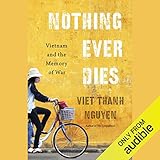
- Audible Audiobook
- Viet Thanh Nguyen (Author) - P. J. Ochlan (Narrator)
- English (Publication Language)
- 09/20/2016 (Publication Date) - Audible Studios (Publisher)
2. Analyze the Politics of Memory Construction: Examine how Nguyen deconstructs the power dynamics inherent in remembering war, specifically the dominance of American narratives.
- What to look for: Nguyen’s critique of how American cultural products have shaped global perceptions of the Vietnam War, often marginalizing Vietnamese voices.
- Mistake to avoid: Accepting dominant cultural representations of the war at face value; Nguyen urges a critical interrogation of these narratives.
3. Deconstruct the Concept of “The Enemy”: Understand Nguyen’s analysis of how the figure of “the enemy” is constructed and utilized to sustain conflict and manage post-war anxieties.
- What to look for: How the perpetual construction of an enemy serves to justify ongoing conflict or reinforce national identities.
- Mistake to avoid: Viewing “the enemy” solely as a historical entity; Nguyen argues it is a continuously manufactured construct with present-day relevance.
4. Engage with Vietnamese Perspectives on Trauma: Focus on how Nguyen highlights the Vietnamese experience of trauma and its mediation through memory and culture.
- What to look for: Nguyen’s exploration of how trauma is processed, suppressed, or weaponized, and the diverse manifestations of this experience.
- Mistake to avoid: Generalizing Vietnamese experiences of trauma; Nguyen emphasizes the multifaceted and heterogeneous nature of these experiences.
5. Evaluate Nguyen’s Critique of Representation: Pay attention to how Nguyen analyzes the role of media, film, and literature in shaping collective memory of war.
- What to look for: Specific examples of cultural works that Nguyen dissects to reveal their underlying political and ideological functions.
- Mistake to avoid: Overlooking the ideological underpinnings of seemingly neutral cultural products; Nguyen argues they are sites of contestation.
6. Consider the Paradox of “Nothing Ever Dies”: Reflect on the dual meaning of the title: the enduring nature of war’s impact and the active efforts to keep its memory alive.
- What to look for: The ways in which the “death” of war is resisted, either through genuine remembrance or strategic deployment of its memory.
- Mistake to avoid: Focusing solely on the negative implications of perpetual war; the title also speaks to the struggle for agency in memory.
7. Apply Insights to Broader Historical Memory: Consider Nguyen’s implications for how societies remember other conflicts and the ethical responsibilities involved in historical representation.
- What to look for: Nguyen’s call for a more just and inclusive approach to remembering war, acknowledging all its victims and complexities.
- Mistake to avoid: Limiting the book’s relevance only to the Vietnam War; its arguments about memory and representation are universally applicable.
Nothing Ever Dies by Viet Thanh Nguyen: A Theory of War Memory
Viet Thanh Nguyen’s Nothing Ever Dies: The Vietnamese and the War is a profound theoretical exploration into the mechanics of war memory. Nguyen, a recipient of a MacArthur Genius Grant, moves beyond a chronological account of conflict to dissect the very processes by which wars are remembered, forgotten, and, crucially, perpetuated. The book argues that war, in essence, never truly concludes because its memory is actively maintained and manipulated. This is particularly evident in Nguyen’s critique of the dominant American narratives surrounding the Vietnam War, which he contends have systematically marginalized and distorted Vietnamese experiences.
The core of Nguyen’s argument lies in the concept of “perpetual war.” He posits that even after active combat ceases, war continues to exist through its persistent presence in cultural artifacts, national consciousness, and political discourse. This is achieved through the strategic construction and dissemination of memory, often serving the interests of those in power. Nguyen meticulously details how American cultural products—films, literature, and historical accounts—have historically shaped a singular, often self-serving, understanding of the Vietnam War, effectively silencing or misrepresenting the vast suffering and agency of the Vietnamese people. This creates a “perpetual war” not on the battlefield, but in the ongoing struggle for narrative control.
One of Nguyen’s most significant contributions is his deconstruction of “the enemy.” He argues that the designation and perpetuation of an enemy are fundamental to maintaining the state of perpetual war. By defining and demonizing an “other,” societies can justify past violence, manage collective guilt, and solidify national identities. Nguyen illustrates how this mechanism has been potent in the American narrative of the Vietnam War, where the enemy was often portrayed as monolithic and irredeemable, thereby simplifying the conflict’s complexities and deflecting American responsibility.
The Vietnamese Experience: Reclaiming War Memory
A central strength of Nothing Ever Dies by Viet Thanh Nguyen is its unwavering commitment to centering Vietnamese voices and perspectives. As a refugee himself, Nguyen understands the profound impact of displacement and the arduous struggle to preserve one’s history against overwhelming odds. He critiques the tendency to view the war solely through the lens of American soldiers or policymakers, a perspective that often erases the immense suffering, resilience, and agency of the Vietnamese population. Through detailed case studies and sophisticated theoretical analysis, Nguyen illuminates the multifaceted ways in which Vietnamese individuals and communities have navigated trauma, loss, and the ongoing fight for recognition.
BLOCKQUOTE_0
This pivotal statement underscores Nguyen’s core critique: the profound historical imbalance in who controls the narrative of war. He challenges readers to question the origins of their understanding of the Vietnam War and to actively seek out alternative perspectives. The book compels a re-evaluation of widely consumed cultural works, revealing how they often reinforce existing power structures rather than offering a balanced portrayal of historical events.
Countering Dominant Narratives: The Enduring Impact of War
Nguyen’s contrarian perspective is most evident in his refusal to accept that the Vietnam War is a closed historical chapter. He argues that the war continues to exert influence precisely through the mechanisms designed to suppress or contain its memory. This includes the perpetuation of stereotypes, the lingering geopolitical consequences, and the psychological impact on individuals and societies. The title, Nothing Ever Dies, serves as a stark reminder that the wounds of war, and the narratives surrounding them, can remain acutely alive, shaping present realities and future conflicts.
The book’s exploration of trauma is particularly nuanced. Nguyen does not simply catalog suffering; he examines how trauma is mediated through memory, culture, and politics. He suggests that while trauma can be a debilitating force, it can also become a site of resistance and a catalyst for collective action. However, he also cautions against the romanticization of trauma, highlighting how it can be exploited to maintain a sense of perpetual victimhood or to justify continued hostility.
Common Myths About War Memory
| Myth | Why It Matters | Fix |
|---|---|---|
| War memory is purely objective historical fact. | This overlooks the subjective nature of experience and the power dynamics in narrative construction. | Recognize that all historical accounts are interpretations shaped by perspective, bias, and cultural context. |
| The “victor” always controls the historical narrative. | While often true, marginalized groups can and do reclaim and reshape narratives, as Nguyen demonstrates. | Actively seek out and amplify narratives from those historically excluded from dominant historical accounts. |
| Remembering war is solely about acknowledging past atrocities. | It also involves understanding the ongoing impact and the political uses of memory in the present. | Consider how the memory of war influences current events, policies, and societal attitudes. |
| Trauma is a uniform experience for all affected by war. | Individual and collective experiences of trauma vary significantly based on context, identity, and role. | Avoid generalizations about trauma; acknowledge the diversity of experiences and the complexities of healing and remembrance. |
Expert Tips for Understanding War Narratives
- Tip 1: Prioritize Primary Sources from Marginalized Voices.
- Actionable Step: When researching any conflict, seek out memoirs, oral histories, and cultural productions created by individuals from groups historically excluded from dominant historical accounts.
Decision Rules
- If reliability is your top priority for Nothing Ever Dies by Viet Thanh Nguyen, choose the option with the strongest long-term track record and support.
- If value matters most, compare total ownership cost instead of headline price alone.
- If your use case is specific, prioritize fit-for-purpose features over generic ‘best overall’ claims.