V. S. Naipaul’s The Enigma Of Arrival: Reflections On Identity
The Enigma of Arrival by V. S. Naipaul: Quick Answer
- “The Enigma of Arrival” by V. S. Naipaul is a profound exploration of displacement, identity, and the search for belonging, told through the introspective lens of an unnamed narrator in England.
- Readers expecting a conventional narrative arc with easily resolved conflicts may find the novel’s philosophical depth and detached perspective challenging.
- The book’s strength lies in its precise, unvarnished portrayal of the immigrant psyche and the persistent quest for selfhood in unfamiliar territory.
Who This Is For
- Individuals interested in post-colonial literature and the psychological impact of migration.
- Readers who appreciate literary fiction that prioritizes thematic depth and stylistic precision over plot-driven narratives.
For those seeking to delve into the profound themes of displacement and identity, V. S. Naipaul’s ‘The Enigma of Arrival’ is an essential read. This novel offers a unique perspective on the immigrant experience.
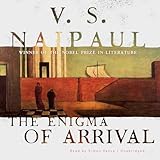
- Audible Audiobook
- V. S. Naipaul (Author) - Simon Vance (Narrator)
- English (Publication Language)
- 07/17/2018 (Publication Date) - Blackstone Audio, Inc. (Publisher)
What to Check First
- Narrative Voice: The narrator’s voice is analytical and often detached, serving as a conduit for Naipaul’s philosophical observations rather than an emotionally accessible character.
- Thematic Focus: The novel centers on themes of alienation, memory, the nature of civilization, and the search for home, rather than a traditional character arc.
- Setting as Symbol: The English countryside is not merely a backdrop but a significant element that reflects the narrator’s internal state and his complex relationship with his adopted environment.
- Pacing and Structure: Expect a contemplative pace with an essayistic quality, where descriptive passages and internal monologues carry as much weight as any plot development.
Step-by-Step Plan for Engaging with The Enigma of Arrival
1. Initial Immersion: Begin by reading the opening chapters to acclimate to Naipaul’s distinctive prose and the narrator’s observational, somewhat distant, perspective.
- Action: Read the first 30-40 pages.
- What to Look For: The narrator’s initial impressions of the English estate and his sense of being an outsider.
- Mistake: Expecting immediate emotional engagement or a clear narrative trajectory.
2. Identify Core Themes: As you read, actively note recurring ideas related to displacement, history, and the nature of home.
- Action: Keep a list of key themes as they emerge.
- What to Look For: How the narrator’s observations about his surroundings connect to his internal state and past experiences.
- Mistake: Dismissing descriptive passages as mere filler; these are integral to the novel’s thematic development.
3. Analyze the Narrator’s Detachment: Pay close attention to the narrator’s analytical approach and his struggle to connect authentically with his environment and its inhabitants.
- Action: Highlight passages where the narrator observes others or his surroundings with a critical, distanced gaze.
- What to Look For: Evidence of the internal conflict between the desire for belonging and the ingrained sense of being an outsider.
- Mistake: Interpreting the narrator’s detachment as a lack of empathy or insight, rather than a deliberate narrative strategy.
4. Deconstruct “Arrival”: Consider the multifaceted meaning of the title. “Arrival” in this context is not a singular event but a complex, ongoing process.
- Action: Reflect on the title’s implications for the narrator’s journey.
- What to Look For: Instances where the narrator feels he has achieved a form of arrival, and conversely, where he feels perpetually in transit.
- Mistake: Limiting the concept of arrival to a simple physical relocation or successful assimilation.
5. Engage with Philosophical Undertones: Recognize that the novel functions as a philosophical inquiry into identity and civilization, as much as it is a narrative.
- Action: Pause to consider the broader societal and historical implications of the narrator’s reflections.
- What to Look For: Naipaul’s critiques of societal structures and the challenges of maintaining an authentic self in a foreign context.
- Mistake: Searching solely for plot resolutions and overlooking the novel’s essayistic qualities.
6. Revisit Key Passages: For deeper comprehension, reread sections that initially seemed obscure or particularly resonant. Naipaul’s prose rewards close attention to detail.
- Action: Re-read passages describing the narrator’s past or his interactions with other characters.
- What to Look For: Subtleties in language, thematic connections, and the nuanced portrayal of the narrator’s internal world.
- Mistake: Abandoning the book after a single, superficial read due to perceived difficulty.
Common Mistakes
- Mistake: Expecting a traditional plot with a clear beginning, middle, and end.
- Why it Matters: Naipaul prioritizes introspection and thematic exploration, leading to reader frustration if conventional narrative arcs are anticipated.
- Fix: Adjust expectations to view the novel as a philosophical meditation and character study, appreciating its descriptive and analytical strengths.
- Mistake: Misinterpreting the narrator’s detachment as apathy or lack of feeling.
- Why it Matters: The narrator’s analytical distance is a crucial element of his identity as an émigré, serving as a defense mechanism and highlighting his struggle with assimilation, not a deficiency in emotional depth.
- Fix: Recognize the detachment as a deliberate narrative choice that underscores the complexities of navigating a new culture and reconciling one’s past.
- Mistake: Underestimating the symbolic significance of the setting.
- Why it Matters: The English countryside in “The Enigma of Arrival” is more than a backdrop; it is a symbolic representation of the narrator’s adopted, often alienating, home.
- Fix: Pay close attention to detailed descriptions of the landscape and society, as they are integral to understanding the narrator’s internal state and feelings of displacement.
- Mistake: Focusing solely on “arrival” as a physical or singular event.
- Why it Matters: The title’s concept of “arrival” is multifaceted, encompassing psychological, cultural, and existential dimensions of belonging and self-discovery.
- Fix: Consider “arrival” as an ongoing process of integration and self-definition, rather than a definitive, static achievement.
The Enigma of Arrival by V. S. Naipaul: A Deeper Look
V. S. Naipaul’s “The Enigma of Arrival” is a novel that probes the profound and often unsettling nature of identity for those who have left their homelands. Published in 1987, it offers a meticulously crafted exploration of displacement, memory, and the elusive search for belonging through the experiences of an unnamed narrator residing in the English countryside. Naipaul’s prose is characterized by its precision and its unflinching gaze, dissecting the psychological landscape of an émigré with a rare clarity.
Thematic Exploration in The Enigma of Arrival
At its heart, “The Enigma of Arrival” is an investigation into how the experience of being uprooted fundamentally shapes one’s sense of self. The narrator’s journey is internal, a process of examining his past and present within the context of his adopted environment. He observes the English landscape, the estate, and its inhabitants with a keen, analytical detachment, reflecting a persistent feeling of otherness. This detachment, however, is not a sign of indifference but a profound engagement with the challenges of assimilation and the enduring weight of colonial history. Naipaul uses the setting not just as a physical space but as a symbolic mirror to the narrator’s internal condition, where beauty and decay, history and the present, coexist.
BLOCKQUOTE_0
This sentiment, reflective of Naipaul’s broader worldview, underscores the narrator’s struggle to find his place. It highlights the tension between an individual’s desire for self-definition and the inherent structures and histories of the societies they inhabit. The novel suggests that true “arrival” is not about conforming to a pre-existing mold but about navigating the complexities of a new context and forging an authentic identity within it, acknowledging the continuous process of becoming.
Contrasting Perspectives on Identity and Belonging
A central tension within “The Enigma of Arrival” is the narrator’s struggle to reconcile his fragmented identity with a desire for stability and belonging. His past as a colonial subject, his present as an immigrant in England, and his internal experiences create a complex tapestry of alienation. This is not a narrative of triumphant integration; instead, it offers a more nuanced, often melancholic, portrayal of navigating cultural divides and the persistent feeling of being on the threshold.
| Aspect of Identity | Narrator’s Experience | Potential Reader Takeaway |
|---|---|---|
| Cultural Rootedness | Experiences a disconnection from both his past homeland and his present environment. | Appreciation for the profound impact of displacement on one’s sense of origin and belonging. |
| Sense of Home | The English countryside is observed and analyzed, but not fully inhabited or embraced. | Understanding the subjective and often elusive nature of “home” for individuals who have migrated. |
| Self-Perception | Views himself as an analytical observer, often alienated from his own emotional responses. | Insight into the challenge of reconciling internal experience with external societal expectations and norms. |
| Concept of “Arrival” | “Arrival” is depicted as an elusive state, more about perpetual negotiation than a fixed destination. | Recognition that “arrival” is an ongoing process of self-definition and integration, rather than a singular achievement. |
Expert Tips for Reading The Enigma of Arrival
- Tip: Embrace the essayistic quality of the prose.
- Action: Treat descriptive passages and philosophical digressions not as detours, but as the core of the narrative’s meaning.
*
Decision Rules
- If reliability is your top priority for The Enigma of Arrival by V. S. Naipaul, choose the option with the strongest long-term track record and support.
- If value matters most, compare total ownership cost instead of headline price alone.
- If your use case is specific, prioritize fit-for-purpose features over generic ‘best overall’ claims.