Thornton Wilder’s ‘The Bridge of San Luis Rey’ Analysis
This analysis delves into Thornton Wilder’s The Bridge of San Luis Rey, focusing on its intricate narrative structure and profound thematic explorations of fate, faith, and human connection. It is intended for readers seeking a nuanced understanding of the novel’s literary merits and philosophical underpinnings.
Who This Is For
- Readers interested in literary analysis of classic American fiction.
- Individuals seeking to understand the novel’s exploration of existential questions through its narrative design.
What to Check First
Before undertaking a detailed analysis, consider these critical elements:
- The Precipitating Event: The novel’s narrative is initiated by the catastrophic collapse of an ancient Inca rope bridge in Peru, an event resulting in the deaths of five individuals. This disaster serves as the narrative’s central pivot.
- Non-Linear Narrative Structure: Wilder intentionally eschews a chronological approach. Instead, he reconstructs the lives of the victims through flashbacks, testimonies, and fragmented narratives, a technique vital to the novel’s thematic development.
- Brother Juniper’s Investigation: A Franciscan monk, Brother Juniper, witnesses the bridge’s collapse and embarks on a mission to scientifically prove that the deaths were divinely ordained, not accidental. His quest forms a significant portion of the novel’s inquiry.
- Thematic Focus: Key themes include the nature of divine providence, the search for meaning in suffering, and the profound interconnectedness of human lives, even across seemingly disparate existences.
Step-by-Step Analysis Plan for The Bridge of San Luis Rey by Thornton Wilder
This structured approach facilitates a comprehensive examination of the novel’s complexities.
1. Analyze the Opening Catastrophe:
- Action: Examine the detailed description of the bridge collapse and its immediate aftermath.
- What to Look For: The narrative’s presentation of the event, the initial reactions of witnesses, and the immediate questions it raises about divine intervention versus random chance.
- Mistake: Overlooking the symbolic weight of the collapse and focusing solely on the physical event as a plot device.
2. Deconstruct Brother Juniper’s Theological Framework:
- Action: Trace Brother Juniper’s motivations and his systematic investigation into the lives of the five victims.
- What to Look For: His specific theological assumptions, his methods of data collection and analysis, and the ultimate outcome of his endeavor to find divine order.
- Mistake: Accepting Juniper’s premise without critically assessing its limitations and the novel’s implicit critique of human attempts to impose rigid order on chaotic existence.
3. Examine the Victim Biographies:
- Action: Study the individual narratives of the five individuals who perished on the bridge.
- What to Look For: The specific details of their lives, their relationships, their aspirations, and how their past actions and emotional states are presented.
- Mistake: Viewing these biographies as mere biographical sketches rather than as carefully constructed pieces of evidence within Juniper’s larger argument and Wilder’s thematic design.
4. Evaluate the Narrative Voice and Perspective:
- Action: Identify the narrative voice and analyze its shifts in perspective and tone.
- What to Look For: How the omniscient narrator guides the reader’s interpretation, interjects commentary, and balances Brother Juniper’s fervent conviction with a more nuanced, compassionate viewpoint.
- Mistake: Assuming a single, unwavering narrative perspective without recognizing its deliberate flexibility and its role in shaping the reader’s understanding.
5. Identify and Analyze Core Thematic Elements:
- Action: Pinpoint and explore the recurring themes of love, loss, faith, and the search for meaning.
- What to Look For: Instances where these themes are explicitly discussed or implicitly demonstrated through character actions, dialogue, and plot developments.
- Mistake: Simplifying the novel’s thematic concerns into broad categories without appreciating the subtle ways Wilder explores their complexities and interrelations.
6. Assess the Novel’s Resolution and Epilogue:
- Action: Examine the concluding sections of the novel, paying close attention to the epilogue.
- What to Look For: How Wilder provides a sense of closure, revisits the characters’ legacies, and ultimately reframes the initial question of divine intent.
- Mistake: Believing the novel offers definitive theological answers rather than exploring the human experience of seeking meaning and confronting mortality.
7. Contextualize the Novel’s Literary Significance:
- Action: Place The Bridge of San Luis Rey by Thornton Wilder within its literary historical context.
- What to Look For: Its relationship to modernist literature, its innovative narrative techniques, and its reception and critical standing upon publication.
- Mistake: Analyzing the novel in isolation, neglecting its dialogue with contemporary philosophical ideas and its place within broader literary movements.
To fully appreciate the depth of Wilder’s narrative, it’s essential to have a copy of ‘The Bridge of San Luis Rey’ by Thornton Wilder.
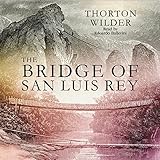
- Audible Audiobook
- Thornton Wilder (Author) - Edoardo Ballerini (Narrator)
- English (Publication Language)
- 01/03/2023 (Publication Date) - Dreamscape Media (Publisher)
Common Myths About The Bridge of San Luis Rey by Thornton Wilder
- Myth: The novel definitively proves that God’s plan dictates every event.
- Why it matters: This interpretation simplifies Wilder’s more complex exploration of human attempts to find order and meaning in the face of inexplicable events.
- Fix: Recognize that Brother Juniper’s project is a flawed human endeavor. The novel ultimately suggests that love and connection, rather than preordained divine decree, provide enduring meaning.
- Myth: The deaths on the bridge are presented as a punishment for the victims’ sins.
- Why it matters: This is a reductionist reading that contradicts the novel’s compassionate portrayal of each character.
- Fix: Understand that Wilder uses the tragic event as a catalyst to explore the lives and loves of the victims, emphasizing their shared humanity and the lasting impact they had on others, rather than judging their moral standing.
- Myth: The novel is solely a religious allegory.
- Why it matters: While faith is a significant theme, the novel also delves deeply into psychological realism, social observation, and the nature of narrative itself.
- Fix: Appreciate the novel’s multifaceted nature, recognizing its engagement with secular concerns of human relationships, societal structures, and individual identity alongside its religious inquiries.
Expert Tips for Analyzing The Bridge of San Luis Rey
- Tip 1: Focus on Narrative Architecture.
- Actionable Step: Create a visual map or timeline that charts the chronological events of the victims’ lives against the novel’s non-linear presentation.
- Common Mistake: Reading the novel linearly and failing to appreciate how Wilder deliberately juxtaposes events to create thematic resonance and underscore his argument about interconnectedness.
- Tip 2: Track the Evolution of “Love.”
- Actionable Step: Identify and analyze the different forms of love (romantic, familial, platonic, devotional) as they appear in the lives of the characters, noting how Wilder contrasts them.
- Common Mistake: Assuming all forms of “love” are presented as inherently positive or redemptive; Wilder explores their complexities and sometimes destructive or unrequited aspects.
- Tip 3: Deconstruct the Epilogue’s Function.
- Actionable Step: Analyze the final chapter’s deliberate shift in focus from individual theological puzzles to the enduring power of memory and love.
- Common Mistake: Dismissing the epilogue as mere sentimentality; it serves as Wilder’s considered response to the question of meaning in the face of mortality and suffering.
The Bridge of San Luis Rey by Thornton Wilder: Thematic Significance
Wilder’s novel transcends a mere recounting of a tragic event; it is a profound meditation on the human behavior. The collapse of the bridge serves as a dramatic device, but the novel’s true substance lies in its exploration of why lives matter and how they connect. It challenges the notion of random catastrophe, suggesting that even in death, there is a pattern—not necessarily of divine judgment, but of enduring influence and love. The meticulous reconstruction of each victim’s life by Brother Juniper, though ultimately flawed in its theological premise, reveals the intricate tapestry of human relationships.
The enduring power of The Bridge of San Luis Rey lies in its ability to find profound meaning in the seemingly mundane. It argues that the “greatest of all the possible virtues” is “love,” a theme that resonates through the interconnected lives of its characters. The novel suggests that even after physical separation, the impact of human connection persists, a testament to the enduring significance of every individual life.
BLOCKQUOTE_0
| Character Name | Key Life Event/Trait | Primary Relationship | Thematic Resonance |
|---|---|---|---|
| La Perichole | Aspiring actress | Lover to Uncle Pio | Ambition, sacrifice, fleeting fame |
| Uncle Pio | Patron and mentor | Devoted to La Perichole | Unrequited love, devotion, artistic pursuit |
| Pepita | Orphan, companion | Servant to the Abbess | Innocence, faith, loyalty |
| Esteban | Twin brother | Devoted to his twin, Manuel | Grief, isolation, search for identity |
| Manuel | Twin brother | Devoted to his twin, Esteban | Love, loss, the fragility of life |
Decision Rules
- If reliability is your top priority for The Bridge of San Luis Rey by Thornton Wilder, choose the option with the strongest long-term track record and support.
- If value matters most, compare total ownership cost instead of headline price alone.
- If your use case is specific, prioritize fit-for-purpose features over generic ‘best overall’ claims.
FAQ
- Q: What is the central question The Bridge of San Luis Rey attempts to answer?
- A: The novel grapples with the question of why certain people die when others live, and whether such events are random or part of a divine plan. It ultimately suggests that the meaning lies in the love and connections forged during life.
- Q: Is Brother Juniper successful in his investigation?
- A: No, Brother Juniper’s attempt to prove divine providence through statistical analysis of the victims’ lives is ultimately unsuccessful and leads to his own condemnation. His methodology is shown to be flawed.
- Q: What is the significance of the epilogue?
- A: The epilogue shifts focus from the theological puzzle to the enduring power of love and memory. It emphasizes that the lives of the victims, though cut short, had a profound and lasting impact on those they left behind.
- Q: How does the novel’s structure contribute to its meaning?
- A: The non-linear structure, which revisits the past lives of the victims, allows Wilder to explore the interconnectedness of human lives and demonstrate that every life, no matter how brief, holds significance. This structure challenges a simple chronological understanding of fate.