Thomas Hardy’s Evocative ‘Wessex Tales
Wessex Tales by Thomas Hardy offers a collection of five carefully crafted short stories, each a window into the author’s signature exploration of rural life, fate, and the often-unseen forces that shape human destinies. These tales are characterized by their rich atmosphere, nuanced characters, and the author’s profound understanding of the psychological impact of social constraints and individual choices.
Wessex Tales by Thomas Hardy: Who This Is For
- Readers interested in exploring Thomas Hardy’s thematic preoccupations and literary style within a more condensed format than his novels.
- Those who appreciate 19th-century English literature, particularly works that examine the interplay between individual lives and the rigidities of social class and rural existence.
What to Check First
- Thematic Consistency: Identify recurring motifs such as fate, coincidence, social determinism, and the psychological toll of isolation and societal judgment.
- Narrative Voice: Assess your comfort with Hardy’s descriptive prose, which is often dense and atmospheric, prioritizing mood and character interiority over rapid plot progression.
- Historical Context: Understand that the stories are grounded in Victorian-era social norms, legal systems, and prevalent superstitions, which may contrast with contemporary viewpoints.
- Authorial Perspective: Recognize Hardy’s critical lens on societal institutions and human fallibility, which contributes to the collection’s frequently somber or ironic tone.
Step-by-Step Plan for Engaging with Wessex Tales
1. Initiate with “The Three Strangers.”
- Action: Read this story first to acclimate to Hardy’s narrative voice and thematic concerns.
- What to look for: Observe how Hardy uses setting (the isolated shepherd’s cottage) and dialogue to build suspense. Note the role of coincidence and the unexpected revelation of character identity.
- Mistake to avoid: Underestimating the significance of the story’s opening, which establishes the atmosphere and introduces the central conflict through the arrival of mysterious figures.
2. Analyze “The Withered Arm.”
- Action: Read this story to examine Hardy’s exploration of superstition, jealousy, and psychological distress.
- What to look for: Pay attention to the portrayal of Rhoda Brook’s descent into perceived witchcraft and its impact on her relationships. Consider the ambiguous nature of the “curse.”
- Mistake to avoid: Dismissing the supernatural elements as mere folklore; Hardy uses them to explore the characters’ internal states and the community’s anxieties.
3. Engage with “Fellow Townsmen.”
- Action: Read this story to understand Hardy’s commentary on social ambition, rivalry, and the consequences of personal pride.
- What to look for: Track the intertwined destinies of the protagonists, observing how social class and personal aspirations influence their choices and ultimate fates.
- Mistake to avoid: Focusing solely on the romantic entanglements; the story’s core lies in its critique of societal structures and individual failings within those structures.
4. Consider “The Hand of Ethelberta.”
- Action: Read this story, noting its more complex plot and its satirical examination of social climbing.
- What to look for: Analyze Ethelberta’s ambition and her strategic navigation of social strata. Observe Hardy’s critique of class distinctions and marriage as a social contract.
- Mistake to avoid: Expecting a straightforward romance; this story is a more intricate social commentary with a pragmatically motivated protagonist.
5. Conclude with “Interlopers at the Knap.”
- Action: Read this final story to synthesize the collection’s recurring themes.
- What to look for: Identify how the story addresses themes of justice, mistaken identity, and the consequences of hasty judgment within a rural community. Note the cyclical nature of fate.
- Mistake to avoid: Underestimating the significance of minor characters or seemingly insignificant plot details, as these often contribute to the overarching message of the collection.
Wessex Tales by Thomas Hardy: A Critical Examination
The collection Wessex Tales by Thomas Hardy serves as a potent microcosm of the author’s enduring literary concerns. Each story, while distinct, contributes to a unified impression of a world governed by forces beyond individual control, where social conventions often dictate fate as surely as any supernatural decree. The strength of these tales lies in Hardy’s meticulous rendering of the Wessex landscape, which becomes more than a backdrop; it is an active participant in the unfolding dramas, mirroring the internal states of his characters and the often bleak trajectory of their lives.
A notable failure mode for readers engaging with Wessex Tales is an underestimation of the subtle interplay between character psychology and external circumstance. Hardy does not present characters making simple choices with clear consequences. Instead, he illustrates how deeply ingrained societal expectations, personal biases, and sheer chance converge to shape destinies. For instance, in “The Withered Arm,” Rhoda Brook’s perceived “curse” is as much a product of her own psychological torment and the villagers’ superstitious beliefs as it is of any inherent supernatural power. Detecting this early involves recognizing that Hardy’s narratives are not driven by plot mechanics alone, but by the intricate, often flawed, human responses to their environment and social pressures. When a reader feels frustrated by a character’s seemingly illogical actions or a plot that feels predetermined, it is often a sign they are missing the nuanced psychological and social determinism at play.
BLOCKQUOTE_0
For a deep dive into Thomas Hardy’s masterful short fiction, the collection Wessex Tales is an essential read. It perfectly encapsulates his signature style and thematic concerns.
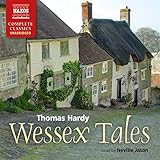
- Audible Audiobook
- Thomas Hardy (Author) - Neville Jason (Narrator)
- English (Publication Language)
- 06/06/2012 (Publication Date) - Naxos AudioBooks (Publisher)
Common Myths About Wessex Tales
- Myth: All the stories in Wessex Tales have tragic endings.
- Why it matters: This perception can deter readers who prefer optimistic narratives or lead to a superficial reading of the collection, missing moments of resilience or quiet acceptance.
- Fix: While many stories conclude with somber resolutions, the nature of the “tragedy” varies. Some endings involve societal downfall, others personal regret, and a few offer a sense of resigned peace. Examining the specific nature of each conclusion reveals a spectrum of outcomes, not a uniform bleakness. For example, while “The Withered Arm” has a clear tragic arc for Rhoda, the resolution for her antagonist, Lou, is more complex, involving a form of penance.
- Myth: The “Wessex” setting is merely a picturesque backdrop.
- Why it matters: Overlooking the setting’s significance leads to a missed layer of Hardy’s storytelling, as the landscape often reflects or influences the characters’ emotional states and fates.
- Fix: Recognize Wessex as a character in itself. Hardy uses the rural topography, weather, and isolated communities to amplify themes of fate, confinement, and the unchanging nature of rural life. The very isolation of the settings in stories like “The Three Strangers” is instrumental in creating the suspense and the sense of being trapped by circumstance.
- Myth: Hardy’s characters are simple, unsophisticated country folk.
- Why it matters: This view can lead to an underappreciation of the psychological depth and internal conflicts Hardy portrays, even within his rural characters.
- Fix: Look for the complex motivations, internal monologues, and moral ambiguities within Hardy’s characters, regardless of their social standing. Characters like Rhoda Brook in “The Withered Arm” exhibit profound psychological distress and complex emotional responses, demonstrating that Hardy’s interest lies in the universal aspects of human nature, not just rural archetypes.
Expert Tips for Reading Wessex Tales
- Tip: Pay close attention to dialogue for subtext and unspoken tensions.
- Actionable Step: Reread key conversations, focusing on what characters don’t say or how they subtly deflect questions.
- Common Mistake to Avoid: Accepting dialogue at face value without considering the social constraints or personal anxieties that might influence a character’s speech. For instance, in “Fellow Townsmen,” the polite but guarded conversations between characters often mask deep-seated resentments or social maneuvering.
- Tip: Cultivate patience with the narrative pace.
- Actionable Step: Allow yourself to immerse in Hardy’s detailed descriptions of setting and character introspection, understanding they build atmosphere and psychological depth.
- Common Mistake to Avoid: Becoming impatient and skipping descriptive passages, which are essential for grasping the mood and thematic resonance of the stories. The slow build in “The Three Strangers,” for example, is critical to the story’s eventual impact.
- Tip: Embrace ambiguity and the absence of easy answers.
- Actionable Step: Resist the urge to assign clear moral blame or seek definitive explanations for events; instead, focus on the interplay of factors contributing to the outcomes.
- Common Mistake to Avoid: Searching for a single cause or protagonist to champion, as Hardy’s realism often lies in depicting the messy, multifaceted nature of life where fate, character, and circumstance are inextricably linked. The “curse” in “The Withered Arm” is a prime example of this deliberate ambiguity.
Quick Comparison of Story Elements
| Story Title | Primary Theme | Key Character Focus | Dominant Tone |
|---|---|---|---|
| The Three Strangers | Coincidence and Identity | The Shepherd’s Family, The Stranger | Suspenseful, Ironic |
| The Withered Arm | Superstition and Jealousy | Rhoda Brook, Lou | Psychological, Foreboding |
| Fellow Townsmen | Social Ambition and Rivalry | Mr. Farfrae, Miss Aldclyffe | Critical, Melancholic |
| The Hand of Ethelberta | Social Climbing and Pragmatism | Ethelberta | Satirical, Observational |
| Interlopers at the Knap | Justice and Mistaken Identity | The Farmer, The Convicts | Reflective, Ironic |
Decision Rules
- If reliability is your top priority for Wessex Tales by Thomas Hardy, choose the option with the strongest long-term track record and support.
- If value matters most, compare total ownership cost instead of headline price alone.
- If your use case is specific, prioritize fit-for-purpose features over generic ‘best overall’ claims.