These Are The Words: Poems Of Strength And Healing
Quick Answer
- “These Are The Words: Poems Of Strength And Healing” by Nikita Gill offers accessible, contemporary poetry focused on self-love, resilience, and overcoming adversity.
- Its direct emotional appeal and clear language make it suitable for readers seeking empowering messages and relatable experiences.
- Readers who prefer abstract symbolism or intricate literary devices may find its straightforward approach less engaging.
Who This Is For
- Individuals seeking relatable and emotionally resonant poetry that addresses themes of personal growth, healing, and self-acceptance.
- Readers who appreciate direct, empowering messages and clear language over complex, layered interpretations.
What To Check First
- Author’s Style: Nikita Gill’s poetry is characterized by its directness and accessibility. If you prioritize highly metaphorical or abstract verse, this collection may not align with your preferences.
- Thematic Focus: The central themes revolve around self-love, resilience, overcoming past trauma, and finding inner strength. Confirm these align with your current reading interests.
- Poetic Form: The poems are predominantly free verse, prioritizing the clear conveyance of message and emotion over strict adherence to traditional structures.
- Emotional Tone: Expect a supportive and empowering tone, acknowledging pain and struggle as integral parts of the healing journey.
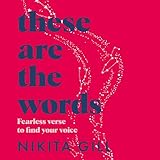
- Audible Audiobook
- Nikita Gill (Author) - Nikita Gill (Narrator)
- English (Publication Language)
- 08/18/2022 (Publication Date) - Macmillan Children's Books (Publisher)
Step-by-Step Plan for Engaging with These Are The Words by Nikita Gill
This plan provides a structured approach to reading and understanding the collection.
1. Initial Read-Through: Read the collection from beginning to end without immediate deep analysis.
- Action: Immerse yourself in the flow of the poems to grasp the overall tone and impact.
- What to look for: Your initial emotional responses, recurring imagery, and the general sentiment of the collection.
- Mistake to avoid: Getting bogged down in dissecting individual poems; focus on the cumulative effect first.
2. Identify Recurring Themes: After the initial read, note down themes that appear repeatedly throughout the collection.
- Action: Jot down keywords or phrases that stand out (e.g., “self-love,” “scars,” “strength,” “healing”).
- What to look for: The author’s consistent exploration of specific emotional or psychological landscapes.
- Mistake to avoid: Overlooking subtle connections between poems; actively look for thematic threads that link different pieces.
3. Select Key Poems for Deeper Analysis: Choose 3-5 poems that resonated most strongly or effectively exemplify the collection’s core messages.
- Action: Re-read these selected poems carefully, paying attention to specific language and structure.
- What to look for: Specific word choices, line breaks, and the progression of the poem’s emotional arc or argument.
- Mistake to avoid: Only selecting poems that are immediately easy to understand; include those that present a slight challenge for deeper engagement.
4. Examine Language and Imagery: Focus on the specific language and imagery used by Nikita Gill.
- Action: Highlight striking metaphors, similes, or concrete descriptions.
- What to look for: How Gill uses tangible language to convey abstract emotional states (e.g., comparing emotional pain to physical wounds).
- Mistake to avoid: Assuming all imagery is purely decorative; consider its functional role in conveying meaning and emotional weight.
5. Consider the Author’s Intent: Reflect on what Nikita Gill aims to achieve with this collection.
- Action: Think about the intended audience and the desired impact of the poems on the reader.
- What to look for: Evidence of an intention to provide catharsis, empowerment, or validation for the reader.
- Mistake to avoid: Imposing your own interpretations without considering the author’s likely purpose and message.
6. Contextualize within Gill’s Work (Optional but Recommended): If you have read other works by Nikita Gill, compare the themes and style in “These Are The Words.”
- Action: Note any evolution in her voice, thematic focus, or stylistic approach.
- What to look for: Consistency or development in her message of self-empowerment across different collections.
- Mistake to avoid: Drawing conclusions based on a single comparison; consider the broader trajectory of her writing career.
These Are The Words by Nikita Gill: Strengths and Limitations
This section provides a balanced assessment of the collection’s merits and potential drawbacks.
Strengths
- Accessibility and Relatability: Gill’s direct language and clear themes make her poetry highly accessible, even for those new to the genre. Poems like “Your Scars Are Not Your Shame” offer immediate, impactful messages of self-acceptance. The strength lies in its ability to connect with a broad audience on an emotional level, providing comfort and validation.
- Empowering Message: The collection consistently delivers messages of resilience, self-love, and overcoming adversity. For instance, the poem “The Truth About Us” reframes past hurts as catalysts for strength. This provides a tangible benefit of encouragement and a positive outlook for readers navigating difficult experiences.
- Contemporary Voice: The language and themes feel current and relevant to modern struggles, particularly for younger readers or those engaging with social media culture. The directness mirrors contemporary communication styles, making the emotional content feel immediate and authentic.
Limitations
- Lack of Ambiguity: While accessibility is a strength, the directness can sometimes lead to a lack of poetic ambiguity or complex layers of meaning. Readers who appreciate dense symbolism or multiple interpretations might find the poems too straightforward. For example, a poem focused solely on a direct affirmation of self-worth might lack the nuanced exploration some readers seek.
- Repetitive Thematic Exploration: Due to the focused nature of the themes, some readers might find a degree of thematic repetition across the collection. While the message is consistent, the approach to certain ideas might feel similar from one poem to the next.
Common Mistakes
- Mistake: Expecting highly complex, abstract symbolism.
- Why it matters: This can lead to disappointment if the reader is seeking dense literary puzzles. Gill’s strength is clarity, not obfuscation.
- Fix: Approach the poems with an openness to direct emotional expression and straightforward metaphors.
- Mistake: Skipping poems that initially seem too simple.
- Why it matters: Even seemingly simple poems often contain a core truth or a specific emotional nuance that contributes to the collection’s overall impact.
- Fix: Read every poem, understanding that each contributes to the larger narrative of healing and strength.
- Mistake: Reading solely for plot or narrative progression.
- Why it matters: Poetry, especially collections like this, often focuses on emotional states, reflections, and moments rather than a linear story.
- Fix: Engage with the poems on an emotional and thematic level, appreciating the insights and feelings they evoke.
Quick Comparison of “These Are The Words” by Nikita Gill
This table provides a quick overview for decision-making.
| Feature | Nikita Gill’s “These Are The Words” | Alternative Collections | Best For | Considerations |
|---|---|---|---|---|
| Style | Direct, accessible, contemporary free verse | Highly symbolic, traditional forms, abstract themes | Readers new to poetry, seeking empowerment | May lack depth for experienced poetry readers seeking complexity |
| Themes | Self-love, resilience, healing, overcoming trauma | Varied (nature, social commentary, existentialism) | Those processing personal challenges, seeking affirmation | May feel repetitive to readers seeking broader thematic range |
| Emotional Impact | Immediate, validating, empowering | Nuanced, thought-provoking, melancholic | Readers needing comfort and a sense of strength | Less emphasis on subtle emotional exploration or ambiguity |
Decision Rules
- If immediate emotional resonance and clear messaging are your top priorities for “These Are The Words by Nikita Gill,” this collection is a strong choice.
- If you are seeking poetry that requires significant interpretation or explores abstract philosophical concepts, you may need to look for alternative collections.
- If your goal is to find poetry that directly addresses themes of self-healing and empowerment in a modern context, this book is well-suited.
FAQ
- Q: Is “These Are The Words” suitable for someone who doesn’t typically read poetry?
- A: Yes, this collection is highly recommended for poetry newcomers. Its accessible language, relatable themes, and direct emotional impact make it an excellent entry point into contemporary poetry.
- Q: What are the main themes explored in “These Are The Words”?
- A: The primary themes include self-love, healing from past trauma, resilience, inner strength, and the process of overcoming personal challenges.
- Q: How does “These Are The Words” by Nikita Gill differ from her other works?
- A: While Gill consistently explores themes of empowerment and healing, “These Are The Words” often features a more direct and concise approach to these themes, making it particularly impactful for readers seeking immediate affirmation and relatable messages.
- Q: Are there specific poems that exemplify the collection’s core message?
- A: Poems such as “Your Scars Are Not Your Shame” and “The Truth About Us” are frequently cited as strong examples of the collection’s focus on self-acceptance and resilience.
Expert Tips for Understanding These Are The Words by Nikita Gill
To gain a deeper appreciation for the collection, consider these practical insights.
- Tip: Focus on the “why” behind the directness.
- Actionable Step: When reading a poem, ask yourself why Gill chose such clear language for this particular emotion or idea. Consider if the directness serves to bypass intellectualization and speak directly to the reader’s feelings.
- Common Mistake to Avoid: Dismissing clear language as simplistic. Recognize that deliberate clarity can be a powerful tool for emotional connection.
- Tip: Use the poems as prompts for self-reflection.
- Actionable Step: After