The Poetry of D. H. Lawrence: Key Themes and Styles
direct engagement with life, a contrarian perspective suggests that this very directness can be a significant barrier for readers, leading to misinterpretation or outright rejection. Many readers approach poetry with an expectation of subtlety, layered symbolism, or intellectual abstraction, common traits in much modernist verse. Lawrence, however, often prioritizes immediate sensory experience and visceral emotion, sometimes to the point of bluntness. This can be perceived not as clarity, but as a lack of sophistication or an overwhelming intensity that alienates rather than connects.
For instance, in poems like “Snake,” Lawrence’s visceral description of the snake and his own conflicted reaction – “a dreadful feeling of cold shock” – is intended to capture a primal, almost spiritual encounter. However, a reader accustomed to more detached observation might find the emotional outpouring excessive or the symbolism too overt, missing the intended exploration of humanity’s complex relationship with the natural world and its own instincts. The danger here is that the reader dismisses the poem as overly simplistic or gratuitously emotional, failing to engage with the deeper psychological and philosophical underpinnings. This failure mode is not about the poem’s inherent quality, but about the reader’s unaligned expectations and interpretive framework. Detecting this early requires an awareness that Lawrence’s “truth” is often embodied and felt, rather than purely reasoned or aesthetically veiled.
Common Myths
- Myth: D. H. Lawrence’s poetry is solely about romantic love and idealized relationships.
- Correction: While love is a frequent theme, Lawrence’s explorations are far more complex, often delving into conflict, desire, power dynamics, and the inherent challenges of human connection. His portrayal of relationships is rarely sentimental or idealized, often focusing on their raw, sometimes painful, realities. For example, in “Bei Contro,” he depicts marital discord with unflinching honesty, challenging conventional notions of romantic bliss.
- Myth: Lawrence’s free verse lacks structure and is therefore less skillful than traditional poetry.
- Correction: Lawrence’s use of free verse is a deliberate stylistic choice designed to mimic the natural rhythms of speech and thought, allowing for a more immediate and spontaneous expression of emotion and sensory experience. The structure is organic, found in the careful placement of line breaks and stanza divisions, which guide the reader’s pace and emphasis. For instance, the seemingly simple lines of “The First Step” are arranged to create a sense of gentle unfolding and immediate observation, a form of control rather than a lack thereof.
Poems Of D. H. Lawrence by D. H. Lawrence: A Deeper Dive
Lawrence’s poetic output, particularly as represented in collections like Poems Of D. H. Lawrence by D. H. Lawrence, is a testament to his belief in the primacy of instinct, sensation, and the vital forces that animate the universe. He sought to capture not just the appearance of things, but their essence, their inherent “aliveness.” This is most evident in his nature poetry, where flora, fauna, and landscapes are rarely passive backdrops. Instead, they are imbued with a potent, almost sentient energy. Consider “Snake,” a poem that transcends mere description of an encounter. The snake is not just a reptile; it is a symbol of ancient wisdom, primal fear, and a challenge to the speaker’s civilized, yet conflicted, consciousness. Lawrence’s visceral language – “a great python,” “black sleek coils,” “a god, black-browed” – forces the reader to confront their own ingrained responses to the wild and the unknown.
His explorations of human relationships are equally unvarnished. He often portrays love not as a gentle unfolding, but as a volatile, sometimes destructive, force, intertwined with power, possession, and the struggle for authentic connection. Poems like “Bei Contro” reveal the fault lines within intimacy, the “clash of wills” that can define even the deepest bonds. This approach can be jarring for readers expecting conventional romantic narratives. Lawrence’s focus is on the dynamic, often messy, reality of human interaction, where vulnerability and conflict are as integral as tenderness. His commitment to this raw emotional truth is a hallmark of his style, setting him apart from poets who might smooth over or intellectualize such complexities.
For a comprehensive understanding of Lawrence’s poetic journey, exploring collections like ‘Poems Of D. H. Lawrence by D. H. Lawrence’ is essential. This volume showcases his signature style and thematic depth.
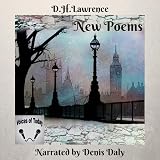
- Audible Audiobook
- D. H. Lawrence (Author) - Denis Daly (Narrator)
- English (Publication Language)
- 09/27/2018 (Publication Date) - Spoken Realms (Publisher)
Step-by-Step Plan to Engaging with Poems Of D. H. Lawrence by D. H. Lawrence
1. Initiate with Direct Observation: Begin with poems that showcase Lawrence’s keen observational skills and direct language.
- Action: Read “The First Step.”
- Look for: Simplicity of language, focus on immediate sensory input (sight, sound), and the subtle emotional resonance derived from direct experience.
- Mistake to avoid: Overlooking the depth of feeling in simple observation; Lawrence finds profound truths in the mundane.
2. Explore the Vitality of Nature: Engage with poems where nature is presented as a living, dynamic force.
- Action: Read “Snake” or “Kettle” from Poems Of D. H. Lawrence by D. H. Lawrence.
- Look for: Personification, vivid sensory details, and the emotional or psychological impact of the natural element on the speaker.
- Mistake to avoid: Treating these poems as mere natural descriptions; they are allegorical and deeply personal explorations of instinct and being.
3. Analyze Human Connection and Conflict: Delve into poems that examine the intricacies of relationships.
- Action: Read “Bei Contro” or “Song of a Man Who is Afraid of Death.”
- Look for: Raw emotional honesty, exploration of vulnerability, conflict, and the complexities of intimacy beyond idealized romance.
- Mistake to avoid: Expecting conventional sentimentality; Lawrence’s portrayals are often challenging and unflinching in their depiction of human struggle.
4. Observe the Rhythmic Flow: Pay attention to Lawrence’s use of free verse and its impact on the poem’s movement.
- Action: Note the line breaks, stanza lengths, and overall cadence in several poems.
- Look for: A natural, speech-like rhythm that supports the emotional and sensory content, rather than adhering to strict metrical patterns.
- Mistake to avoid: Judging his free verse against formal poetic conventions; its strength lies in its organic, expressive quality.
5. Identify the “Life Force” Motif: Look for recurring themes of inherent energy and interconnectedness.
- Action: Seek out poems where Lawrence describes vitality, instinct, or a fundamental connection between disparate elements.
- Look for: A sense of underlying vitality that connects the self, others, and the natural world.
- Mistake to avoid: Interpreting this theme purely philosophically; it is deeply rooted in embodied, sensory experience.
6. Contextualize with Critical Voices: Engage with literary analysis to deepen understanding.
- Action: Consult scholarly articles or critical essays on Lawrence’s poetry.
- Look for: Discussions of his engagement with modernism, his thematic concerns, and critical interpretations of his style and content.
- Mistake to avoid: Relying on a single interpretation; Lawrence’s work often invites diverse critical perspectives.
Poems Of D. H. Lawrence by D. H. Lawrence: Style and Themes
Lawrence’s poetic voice is characterized by its visceral intensity and its unmediated connection to the natural world and the human psyche. In collections such as Poems Of D. H. Lawrence by D. H. Lawrence, he eschews the elaborate artifice favored by some of his contemporaries, opting instead for a free-verse style that mirrors the organic flow of sensation and emotion. This approach allows him to capture the raw energy he perceived in all life. His engagement with nature is not one of detached observation but of deep, often spiritual, communion, where natural phenomena become potent symbols for human experience. Similarly, his poems on human relationships are marked by an unflinching honesty, exploring the complexities of love, desire, and conflict with a directness that can be both illuminating and challenging. This commitment to conveying immediate, embodied experience is the cornerstone of his poetic power, though it requires a reader willing to meet him on his own terms.
Common Mistakes
- Mistake: Assuming Lawrence’s nature poetry is purely descriptive.
- Why it matters: This overlooks his philosophical and emotional engagement with the natural world, where he often finds parallels to human experience and a vital life force.
- Fix: Look for how he imbues natural elements with agency and emotional resonance, connecting them to human consciousness.
- Mistake: Expecting conventional sentimentality in his relationship poems.
- Why it matters: Lawrence often portrays love and connection with a raw, sometimes confrontational honesty that challenges romantic ideals.
- Fix: Approach these poems with an openness to complex emotional dynamics, conflict, and vulnerability, rather than seeking idealized romance.
- Mistake: Dismissing his free verse as formless.
- Why it matters: His use of free verse is deliberate, aiming to capture the organic flow of thought and feeling, the natural cadence of speech, and the immediacy of experience.
- Fix: Pay attention to the line breaks and stanzaic structure; they are crafted to create specific rhythms and emphasize certain words or phrases.
- Mistake: Underestimating the intensity of his language.
- Why it matters: Lawrence uses vivid, often visceral language to convey sensory experience and emotional states, which can be startling.
- Fix: Read with an awareness of his commitment to direct, embodied experience, allowing the language to evoke physical and emotional responses.
Poems Of D. H. Lawrence by D. H. Lawrence: A Comparative Analysis
| Collection/Work | Primary Focus | Strengths | Potential Drawbacks |
|---|---|---|---|
| Poems Of D. H. Lawrence by D. H. Lawrence | Nature, relationships, inner life | Raw emotional honesty, vivid imagery, organic style | Can be intense, unconventional |
| “Snake” | Encounter with a snake, human reaction | Powerful symbolism, exploration of primal fear/awe | May be perceived as overly direct |
| “The First Step” | Observation, immediate experience | Simplicity, sensory detail, sense of wonder | Lacks |
Decision Rules
- If reliability is your top priority for Poems Of D. H. Lawrence by D. H. Lawrence, choose the option with the strongest long-term track record and support.
- If value matters most, compare total ownership cost instead of headline price alone.
- If your use case is specific, prioritize fit-for-purpose features over generic ‘best overall’ claims.