The Brutal Battle of Stalingrad: Antony Beevor’s Account
Quick Answer
- Stalingrad by Antony Beevor provides a comprehensive and visceral account of the pivotal World War II battle, detailing its strategic significance and human cost.
- It is essential reading for those seeking a deep understanding of the Eastern Front, military history, and the psychological impact of total war.
- The book excels in its detailed narrative and its unflinching portrayal of the brutality, though some readers may find its intensity challenging.
Who This Is For
- Students and enthusiasts of World War II history, particularly the Eastern Front.
- Readers interested in the operational and tactical aspects of large-scale battles, as well as the experiences of soldiers and civilians caught within them.
What to Check First
- Scope: Beevor covers the entire campaign from the German advance to the Soviet counteroffensive, offering a complete narrative arc.
- Sources: The work draws on extensive archival research, including Soviet sources previously unavailable, providing a more nuanced perspective.
- Narrative Style: Beevor balances grand strategy with intimate personal accounts, creating a deeply humanistic historical document.
- Thematic Focus: Beyond the military engagement, the book explores themes of ideology, propaganda, and the dehumanizing effects of modern warfare.
Step-by-Step Plan for Understanding Stalingrad by Antony Beevor
1. Begin with the Prelude: Start by reading the initial chapters detailing the strategic context leading up to the battle, focusing on Operation Barbarossa and the German drive towards Stalingrad.
- What to look for: The motivations and assumptions of both the German and Soviet high commands, and the initial phases of the German offensive.
- Mistake to avoid: Underestimating the role of political directives from Hitler and Stalin in shaping military decisions.
2. Immerse in the Urban Combat: Engage with the sections describing the brutal street-by-street fighting within Stalingrad itself.
- What to look for: The tactical innovations and desperate measures employed by both sides in the confined urban environment.
- Mistake to avoid: Glossing over the sheer physical and psychological toll of this close-quarters combat on individual soldiers.
3. Analyze the Soviet Counteroffensive (Operation Uranus): Examine the planning and execution of the Soviet encirclement of the German Sixth Army.
- What to look for: The strategic brilliance and logistical challenges of the pincer movement, and the intelligence failures on the German side.
- Mistake to avoid: Assuming the Soviet victory was solely due to overwhelming numbers; focus on the strategic planning and execution.
4. Understand the Encirclement and Surrender: Read the account of the Sixth Army’s entrapment and eventual surrender.
- What to look for: The failed relief attempts, the dwindling supplies, and the stark choices faced by both commanders and soldiers.
- Mistake to avoid: Perceiving the surrender as a simple capitulation; understand the complex factors leading to it, including Hitler’s refusal to allow a breakout.
5. Grasp the Human Cost: Pay close attention to the sections detailing the suffering of civilians and prisoners of war.
- What to look for: The impact of starvation, disease, and the deliberate brutality inflicted on non-combatants.
- Mistake to avoid: Viewing the battle solely through the lens of military strategy, neglecting the immense civilian tragedy.
6. Consider the Aftermath and Legacy: Review the concluding chapters that discuss the battle’s long-term consequences for the Eastern Front and the war.
- What to look for: How Stalingrad became a turning point and its symbolic importance in Soviet and German memory.
- Mistake to avoid: Concluding the narrative with the surrender; understand its profound impact on the subsequent course of the war.
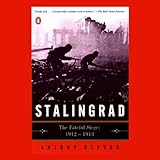
- Audible Audiobook
- Antony Beevor (Author) - George Guidall (Narrator)
- English (Publication Language)
- 12/16/1999 (Publication Date) - Penguin Audio (Publisher)
Stalingrad by Antony Beevor: Key Themes and Counterpoints
Antony Beevor’s Stalingrad stands as a monumental achievement in military history, offering a granular and often harrowing depiction of the battle that fundamentally altered the course of World War II. The book’s strength lies in its refusal to sanitize the conflict, presenting the strategic blunders, tactical innovations, and, most significantly, the profound human suffering endured by all sides.
A common assumption is that Stalingrad was a purely military engagement, decided by superior strategy or brute force. However, Beevor meticulously illustrates how ideological fanaticism, political interference, and sheer desperation played equally critical roles. Hitler’s “not one step back” order and Stalin’s equally ruthless directives demonstrate how political will often overrode military pragmatism, leading to immense casualties. The battle was as much a clash of totalitarian systems as it was a clash of armies.
Examining the Narrative Strengths
Beevor’s writing style is precise and unflinching. He masterfully weaves together official dispatches, soldier diaries, and survivor testimonies to create a multifaceted narrative. The depiction of the urban combat, often described as a meat grinder, is particularly effective. For instance, the detailed accounts of fighting for specific buildings, like the Pavlov House, illustrate the scale of the destruction and the tenacity of the defenders. This granular approach makes the strategic overview more impactful, grounding the grand movements of armies in the lived experiences of individuals.
Limitations and Reader Considerations
While the book’s thoroughness is a significant asset, its graphic and relentless depiction of violence and suffering can be overwhelming. Readers seeking a more detached, purely strategic analysis might find the visceral descriptions challenging. The sheer volume of detail, while comprehensive, can also make the narrative dense for casual readers.
BLOCKQUOTE_0
This quote encapsulates Beevor’s approach: emphasizing the brutal reality over heroic myth-making.
Common Myths About the Battle of Stalingrad
- Myth: The Soviet victory was solely due to overwhelming numerical superiority.
- Why it matters: This overlooks the strategic brilliance and operational planning involved.
- Correction: While the Soviets did eventually field superior numbers, Operation Uranus, the encirclement, was a masterclass in deception and coordinated maneuver. The timely redeployment of forces and effective intelligence were crucial.
- Myth: The German Sixth Army surrendered due to cowardice or incompetence.
- Why it matters: This ignores the impossible situation created by Hitler’s orders and the severe logistical breakdown.
- Correction: Field Marshal Paulus was under direct orders from Hitler not to surrender. The army was cut off, starved, and lacked ammunition, facing an enemy that controlled the battlefield. The surrender was a consequence of strategic encirclement and political intransigence, not a lack of soldierly discipline.
Expert Tips for Engaging with Stalingrad by Antony Beevor
- Tip 1: Contextualize with Maps: Utilize the maps provided in the book frequently to visualize troop movements and the evolving front lines.
- Actionable Step: Before reading a chapter detailing a major offensive or encirclement, locate the relevant map and trace the described movements.
- Common Mistake to Avoid: Reading about strategic movements without actively visualizing their spatial dimensions, leading to a superficial understanding.
- Tip 2: Pace Yourself Through Intense Passages: Recognize that sections detailing the urban combat or the suffering of encircled troops are intentionally graphic and emotionally taxing.
- Actionable Step: If a passage becomes overwhelming, take a short break and return to it with fresh eyes. Consider reading slightly slower through these sections to fully absorb the details.
- Common Mistake to Avoid: Rushing through the most harrowing parts to reach the end, thereby missing the depth of the human cost and the author’s intended impact.
- Tip 3: Cross-Reference with Other Eastern Front Accounts: For a broader perspective, consider reading excerpts or summaries of other key battles or memoirs from the Eastern Front.
- Actionable Step: After finishing Stalingrad, briefly research accounts of battles like Kursk or Moscow to see how the strategic landscape evolved.
- Common Mistake to Avoid: Treating Stalingrad as an isolated event, failing to appreciate its interconnectedness with the larger Eastern Front campaign and its impact on the war’s overall trajectory.
Decision Rules
- If reliability is your top priority for Stalingrad by Antony Beevor, choose the option with the strongest long-term track record and support.
- If value matters most, compare total ownership cost instead of headline price alone.
- If your use case is specific, prioritize fit-for-purpose features over generic ‘best overall’ claims.
FAQ
- Q1: Is Stalingrad by Antony Beevor suitable for someone new to World War II history?
- A1: While comprehensive, Beevor provides sufficient historical context for newcomers. However, readers new to the subject might benefit from a brief overview of Operation Barbarossa before diving into Stalingrad for a more complete understanding of the initial setup.
- Q2: How does Beevor’s account of Stalingrad compare to other historical works on the topic?
- A2: Beevor’s work is distinguished by its extensive use of newly available Soviet archives, offering a more balanced perspective than earlier accounts. Its detailed human-interest stories and visceral portrayal of combat also set it apart.
- Q3: What is the primary strategic significance of the Battle of Stalingrad as presented by Beevor?
- A3: Beevor emphasizes Stalingrad as the crucial turning point on the Eastern Front, marking the beginning of the German strategic retreat and the undeniable momentum shift towards eventual Soviet victory. It was a devastating blow to German morale and military capability from which they never fully recovered.
| Aspect | Strength | Limitation | Reader Takeaway |
|---|---|---|---|
| Narrative Scope | Comprehensive coverage from initial assault to final surrender. | Can feel dense due to the extensive detail. | Provides a complete strategic and human arc of the entire campaign. |
| Human Element | Vivid personal accounts of soldiers and civilians. | Graphic and often disturbing descriptions of suffering. | Offers profound insight into the psychological and physical toll of war. |
| Historical Depth | Utilizes extensive primary source research, including Soviet archives. | Requires some prior knowledge of WWII to fully grasp all nuances. | Presents a more balanced and nuanced view than many older historical texts. |