Tania Branigan’s Red Memory: Understanding China’s Past
Quick Answer
- Red Memory by Tania Branigan delves into the Chinese Cultural Revolution through personal accounts, contrasting official histories with individual lived experiences.
- The book highlights how memory is actively shaped, suppressed, and contested, influencing contemporary China.
- It offers a crucial perspective on the human impact of historical events and the complexities of collective memory.
Who This Is For
- Readers seeking an understanding of the Chinese Cultural Revolution that prioritizes individual experiences and the subjective nature of historical recall.
- Individuals interested in the mechanisms of memory formation, national narratives, and the ongoing impact of historical events on present-day societies.
What to Check First
- The concept of “Red Memory”: This term encapsulates the varied recollections of the Cultural Revolution, including state-sanctioned versions and the often-conflicting personal memories of those who lived through it.
- Author’s journalistic approach: Tania Branigan, a journalist, emphasizes human stories and lived realities, providing a perspective that frequently diverges from official state accounts.
- Historical context of the Cultural Revolution: A basic understanding of the period (1966-1976) is beneficial for appreciating the significance of the memories discussed in the book.
- The role of official narratives: Recognize that the book examines how the Chinese Communist Party curates and disseminates its historical interpretation, often suppressing alternative memories.
Step-by-Step Plan: Engaging with Red Memory by Tania Branigan
1. Establish Foundational Context: Begin by familiarizing yourself with the historical backdrop of the Cultural Revolution.
- Action: Read the introductory sections of the book.
- Look for: Branigan’s clear statement of purpose and the central theme of memory’s complexity.
- Mistake: Skipping this foundational context, which can lead to misinterpreting the significance of individual anecdotes and the book’s core arguments.
2. Understand the Dual Nature of Memory: Grasp how official state narratives and personal, subjective memories coexist and frequently conflict.
- Action: Pay close attention to sections where Branigan contrasts official pronouncements with individual testimonies.
- Look for: Specific examples of how historical events are officially commemorated versus how they are recalled by survivors.
- Mistake: Assuming a singular, objective truth exists about the Cultural Revolution, ignoring the multiplicity of lived experiences.
3. Engage with Personal Testimonies: Immerse yourself in the individual stories presented throughout the book.
- Action: Read multiple accounts from individuals across different social backgrounds and geographic locations.
- Look for: The emotional, psychological, and social repercussions of the revolution on individuals and their families.
- Mistake: Dismissing personal stories as merely anecdotal and therefore less significant than broader historical trends.
4. Analyze State-Controlled Memory: Observe how the government actively shapes and maintains its historical narrative.
- Action: Identify instances where Branigan discusses state-sponsored commemoration, education, and media influence.
- Look for: The methods used to promote specific interpretations of the past and suppress dissenting views.
- Mistake: Underestimating the pervasive influence of state propaganda on collective memory formation.
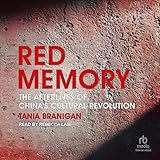
- Audible Audiobook
- Tania Branigan (Author) - Rebecca Lam (Narrator)
- English (Publication Language)
- 07/11/2023 (Publication Date) - Tantor Audio (Publisher)
5. Identify Persistent Counter-Narratives: Recognize how alternative memories survive and are preserved outside official channels.
- Action: Note the strategies individuals and groups employ to share or maintain memories that diverge from the official line.
- Look for: The challenges and risks associated with holding or expressing dissenting historical recollections.
- Mistake: Believing that the official narrative has completely erased all traces of alternative perspectives.
6. Synthesize the Enduring Impact: Reflect on how the competing memories of the Cultural Revolution continue to shape contemporary China.
- Action: Read the concluding chapters that address the legacy of the era.
- Look for: Connections between past traumas and present-day social, cultural, and political dynamics.
- Mistake: Treating the Cultural Revolution as a closed historical chapter with no relevance to current Chinese society.
Red Memory by Tania Branigan: Contrasting Official Narratives with Lived Experience
This section focuses on the core contribution of Red Memory by Tania Branigan: its persistent exploration of the chasm between official historical accounts and the lived, often traumatic, experiences of individuals. Branigan’s approach is not to create a definitive chronology but to map the landscape of memory itself—how it is formed, distorted, suppressed, and how it continues to influence present-day China. The book’s strength lies in its meticulous documentation of personal stories, revealing the human cost of political upheaval in a way that official histories often obscure.
A key theme is the fragmentation of memory as a direct consequence of the Cultural Revolution’s chaos. Branigan illustrates this through accounts of individuals struggling to reconcile their actions during the period with their present-day identities. For example, she details the experiences of former Red Guards who grapple with guilt and confusion, their memories a complex mix of revolutionary zeal and the realization of their participation in violence. The practical takeaway is that understanding historical events requires acknowledging the subjective and often deeply personal nature of recollection, moving beyond simplistic, unified narratives.
Red Memory by Tania Branigan: Challenging Simplistic Historical Frameworks
The primary keyword, “Red Memory by Tania Branigan,” is integrated here to emphasize the book’s unique stance. From a contrarian perspective, a common assumption is that historical inquiry should strive for a singular, objective truth that resolves all ambiguities. However, Branigan’s work intentionally challenges this by presenting a mosaic of often contradictory memories. She argues that the very act of remembering—and the official control over that process—is central to understanding the Cultural Revolution’s legacy.
A counter-intuitive angle is that the official narrative of the Cultural Revolution functions not just as history, but as an ongoing act of memory management. This management involves selective emphasis, omission, and the active suppression of inconvenient truths. Branigan’s meticulous research into how memories are preserved, shared, or erased demonstrates that the absence of certain historical discussions is as significant as the presence of others. For instance, she highlights the limited public discourse on the extensive factional violence and atrocities committed by various groups, a deliberate omission that shapes the collective consciousness. The concrete takeaway is that the state’s control over memory actively constructs the historical understanding of its citizens.
Common Myths
- Myth: The Cultural Revolution is a uniformly remembered historical event within China.
- Correction: Red Memory by Tania Branigan demonstrates that memories of the Cultural Revolution are highly fragmented and contested. Official narratives often differ significantly from personal recollections, which are further shaped by individual trauma, political pressure, and the passage of time. For example, while official accounts might emphasize revolutionary fervor, personal testimonies often reveal deep-seated fear, regret, and confusion.
- Myth: All significant historical events are fully documented and accessible through official archives.
- Correction: The book illustrates that official narratives are often curated and can deliberately omit or downplay sensitive aspects of history. Branigan’s work highlights how critical events, such as widespread factional violence or the scale of intellectual persecution, are often subjects of silence or distortion in official discourse, making personal accounts vital for a fuller understanding.
Expert Tips
- Tip 1: Differentiate Between Official Commemoration and Personal Recollection:
- Actionable Step: Actively look for instances where the book contrasts state-sanctioned monuments or museum exhibits with the private memories of individuals who experienced the events.
- Common Mistake to Avoid: Accepting the official narrative presented in public spaces as the sole or most accurate representation of historical events.
- Tip 2: Consider “Selective Memory” as a Tool:
- Actionable Step: Analyze how individuals and the state might consciously or unconsciously choose to remember or forget certain aspects of the Cultural Revolution based on personal or political motivations.
- Common Mistake to Avoid: Assuming that memories presented are always spontaneous recollections, rather than potentially curated or edited versions of the past.
- Tip 3: Understand the Power of Silence:
- Actionable Step: Pay attention to what is not explicitly discussed or memorialized in official contexts, as this silence can be as informative as explicit narratives regarding sensitive historical events.
- Common Mistake to Avoid: Assuming that a lack of public discussion about certain atrocities or failures means they are universally forgotten or insignificant.
BLOCKQUOTE_0
Red Memory by Tania Branigan: A Comparative Analysis
This section offers a comparative perspective on Red Memory by Tania Branigan, situating it within the broader landscape of literature on the Cultural Revolution. While many works offer factual accounts or political analyses, Branigan’s contribution is distinguished by its deep engagement with the subjective experience of memory. This makes it a valuable counterpoint to more traditional historical texts.
| Aspect | Red Memory by Tania Branigan | Other Scholarly Works | Personal Memoirs |
|---|---|---|---|
| Primary Focus | Contested memories, lived experiences, impact of official narratives | Chronology, political analysis, economic impact | Individual life stories, personal trauma and resilience |
| Methodology | Journalistic interviews, archival research, cultural analysis | Academic research, statistical data | First-person narrative, personal reflection |
| Contribution | Bridges the gap between official history and lived reality | Provides academic frameworks and factual data | Offers raw, emotional accounts of individual suffering and survival |
Decision Rules
- If reliability is your top priority for Red Memory by Tania Branigan, choose the option with the strongest long-term track record and support.
- If value matters most, compare total ownership cost instead of headline price alone.
- If your use case is specific, prioritize fit-for-purpose features over generic ‘best overall’ claims.
FAQ
- Q: How does Red Memory by Tania Branigan differ from standard historical accounts of the Cultural Revolution?
- A: While standard accounts often focus on political events and leadership, Branigan prioritizes the subjective experiences and memories of individuals. She highlights how personal recollections often diverge from, and challenge, official state-sanctioned historical narratives.
- Q: Is Red Memory by Tania Branigan a purely academic