Susan Hill’s Chilling Novel ‘The Woman In Black
Susan Hill’s The Woman in Black is a modern classic of gothic literature. This review focuses on its narrative construction, thematic depth, and its specific appeal to readers of suspense and atmospheric horror. We will examine why it continues to resonate and how to best engage with its carefully crafted dread.
The Woman In Black by Susan Hill: Quick Answer
- The Woman in Black by Susan Hill is a masterclass in atmospheric gothic horror, prioritizing psychological suspense and mood over explicit scares.
- Its strength lies in its deliberate pacing and understated terror, which cultivates a pervasive sense of unease and dread.
- This novel is an excellent choice for readers who value nuanced character development and immersive settings in their ghost stories.
Who This Is For
- Readers who appreciate slow-burn horror and psychological suspense, where tension is built through atmosphere and suggestion.
- Individuals interested in contemporary gothic literature and how classic tropes are employed to create modern chills.
What to Check First
- Atmospheric Preference: Confirm your inclination for a story that builds dread through its environment and implied threats, rather than constant jump scares.
- Pacing Expectations: Understand that the novel utilizes a measured, deliberate pace to establish its unsettling mood. Rapid plot progression is not its primary focus.
- Character-Centric Narrative: Recognize that the story is deeply rooted in Arthur Kipps’s internal experience and psychological unraveling, with the supernatural serving to amplify his isolation and fear.
- Gothic Tropes Familiarity: Be aware that the novel draws heavily on classic gothic elements such as isolated settings, spectral presences, and a sense of historical unease.
The Woman In Black by Susan Hill: A Deep Dive into Gothic Suspense
Susan Hill’s The Woman in Black, first published in 1983, revitalizes the gothic genre with a potent blend of isolation, grief, and spectral retribution. The novel expertly employs classic gothic elements—a remote, decaying mansion, a haunting past, and a vulnerable protagonist—infusing them with a contemporary sensibility that amplifies their chilling effect.
The narrative centers on Arthur Kipps, a young solicitor dispatched to settle the affairs of the late Mrs. Drablow at her isolated estate, Eel Marsh House. From his arrival, Kipps is enveloped by an oppressive atmosphere and the unsettling presence of a spectral woman dressed in black. Hill’s choice of a first-person perspective immerses the reader directly into Kipps’s escalating dread and his struggle to reconcile his rational mind with the increasingly undeniable supernatural occurrences.
A primary strength of The Woman in Black is its masterful control of suspense. Hill understands that true horror often resides in what is implied rather than explicitly shown. The titular woman in black is a figure of profound menace, her appearances fleeting and often glimpsed from a distance, her motivations cloaked in mystery. This ambiguity compels the reader to engage their own imagination, a far more potent engine for fear than any overt depiction of a ghost. Eel Marsh House, rendered isolated by the encroaching tides, serves as a potent metaphor for Kipps’s psychological entrapment and his inability to escape the pervasive influence of the past.
For a quick overview of Susan Hill’s chilling novel, this section offers a concise summary of its strengths. It highlights the book’s mastery of atmosphere and psychological suspense.
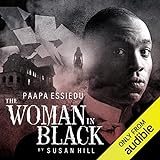
- Audible Audiobook
- Susan Hill (Author) - Paapa Essiedu (Narrator)
- English (Publication Language)
- 10/13/2022 (Publication Date) - Audible Studios (Publisher)
The Woman In Black by Susan Hill: Examining Narrative Strengths
The enduring effectiveness of The Woman in Black is rooted in its meticulously constructed narrative arc and thematic depth. Hill deliberately eschews cheap thrills, opting instead for a slow, creeping dread that permeates every page, making it a compelling read for those who appreciate literary suspense.
- Thematic Resonance: Beyond the spectral encounters, the novel delves into themes of loss, guilt, and the inescapable nature of past traumas. The gradual revelation of Mrs. Drablow’s history underscores the idea that unresolved grief can manifest in devastating ways, adding a layer of psychological complexity.
- Character Arc: Arthur Kipps is not a passive observer but a character whose internal state is crucial to the story’s impact. His initial skepticism and subsequent terror are rendered with palpable authenticity, making his predicament deeply compelling and relatable.
- Atmospheric Setting: Eel Marsh House and its surrounding marshland are characters in themselves. Hill’s descriptive prose vividly conjures the damp, cold, and desolate environment, creating a palpable sense of foreboding that mirrors Kipps’s internal turmoil and enhances the reader’s immersion.
A Key Decision Criterion: For readers whose primary criterion is a strong sense of place and psychological immersion, The Woman in Black stands out as an exceptional choice. If, however, the priority is rapid plot progression and frequent supernatural confrontations, this novel might prove too understated.
BLOCKQUOTE_0
This quote exemplifies the novel’s ability to imbue inanimate settings with a palpable sense of presence and anticipation, a hallmark of its gothic power and a key element for readers to appreciate.
Step-by-Step Plan for Appreciating The Woman In Black
To fully engage with and appreciate the nuances of The Woman in Black, consider the following approach:
1. Approach with an open mind regarding supernatural elements: Accept that the story intentionally blends reality with the spectral.
- Action: Read the opening chapters with an awareness of the gothic genre’s conventions and the author’s intent.
- What to look for: Observe how Kipps initially attempts to rationalize strange occurrences as mundane phenomena.
- Mistake to avoid: Dismissing early subtle hints as mere coincidence, thereby missing the foundational build-up of the escalating dread.
2. Immerse yourself in the setting: Pay close attention to the detailed descriptions of Eel Marsh House and its desolate surroundings.
- Action: Visualize the marshland, the house’s isolation, and the encroaching tidal patterns as you read.
- What to look for: The pervasive sense of isolation, the ominous tidal patterns, and the fog, noting how they contribute to the mood and sense of entrapment.
- Mistake to avoid: Skimming descriptive passages; these elements are crucial for building the oppressive atmosphere and are integral to the narrative’s impact.
3. Focus on Arthur Kipps’s internal experience: Track his emotional and psychological journey throughout the narrative.
- Action: Note Kipps’s detailed reactions, thoughts, and feelings in response to unfolding events.
- What to look for: Kipps’s growing fear, his profound isolation, his attempts to rationalize events, and his eventual, reluctant acceptance of the supernatural.
- Mistake to avoid: Focusing solely on the ghost’s actions rather than Kipps’s internal reactions, which are key to the story’s psychological horror and emotional weight.
4. Observe the pacing and build-up of dread: Recognize that suspense is crafted through anticipation and gradual escalation.
- Action: Note the intervals between unsettling events and the increasing intensity of their occurrences.
- What to look for: The gradual introduction of unsettling events and the increasing frequency and proximity of the Woman in Black’s appearances, observing the deliberate rhythm.
- Mistake to avoid: Expecting immediate scares or constant shock value; the horror is cumulative and relies on sustained tension, not constant overt frights.
5. Consider the thematic undercurrents: Look for explorations of grief, loss, and the enduring impact of memory.
- Action: Reflect on the emotional weight of the narrative beyond the surface-level ghost story.
- What to look for: The backstory of Mrs. Drablow and the unresolved tragedies connected to the house, which reveal the deeper emotional landscape and thematic concerns.
- Mistake to avoid: Reading the story purely as a straightforward ghost hunt without acknowledging its deeper emotional landscape and thematic resonance concerning unresolved sorrow.
6. Engage with the ambiguity: Resist the urge to find definitive answers for every mystery presented.
- Action: Embrace the elements that are not fully explained, allowing them to contribute to the overall sense of unease.
- What to look for: The Woman in Black’s motivations and the exact nature of her connection to the events, understanding that ambiguity is a deliberate narrative choice that amplifies the horror.
- Mistake to avoid: Demanding definitive explanations for every supernatural phenomenon; the lack of complete resolution is a deliberate narrative choice that enhances the unsettling atmosphere.
Common Myths About The Woman In Black
- Myth: The novel relies heavily on jump scares and sudden frights to create terror.
- Why it matters: This expectation can lead to disappointment if a reader seeks constant, overt shock value.
- Correction: The Woman in Black is renowned for its atmospheric dread and psychological suspense, building terror through suggestion and mood rather than overt, startling moments. The horror is in the lingering unease and palpable sense of dread.
- Myth: The Woman in Black is simply a vengeful spirit with no deeper narrative purpose.
- Why it matters: This overlooks the novel’s sophisticated exploration of themes like unresolved grief and the enduring consequences of past actions.
- Correction: The spectral figure is intricately linked to the tragic history of the house and its inhabitants, representing a form of enduring sorrow and retribution tied to past injustices. Her presence is a manifestation of deep-seated pain and historical trauma.
- Myth: The book is only suitable for hardcore horror fans.
- Why it matters: This perception might deter readers who enjoy suspenseful narratives but are not typically drawn to the horror genre.
- Correction: While it is a ghost story, its profound focus on character, atmosphere, and psychological tension makes it accessible and engaging for a broader audience interested in gothic literature and well-crafted suspense. Its literary merit extends beyond strict genre confines.
- Myth: Arthur Kipps is a passive victim throughout the story, with no agency.
- Why it matters: This perception can diminish the reader’s engagement with his internal struggle and his eventual, hard-won understanding of the haunting.
- Correction: Kipps actively attempts to rationalize events
Quick Comparison
| Option | Best for | Pros | Watch out |
|---|---|---|---|
| The Woman In Black by Susan Hill Quick Answer | General use | <em>The Woman in Black</em> by Susan Hill is a masterclass in atmospheric gothic hor… | Mistake to avoid: Dismissing early subtle hints as mere coincidence, thereby… |
| Who This Is For | General use | Its strength lies in its deliberate pacing and understated terror, which cult… | Mistake to avoid: Skimming descriptive passages; these elements are crucial f… |
| What to Check First | General use | This novel is an excellent choice for readers who value nuanced character dev… | Mistake to avoid: Focusing solely on the ghost’s actions rather than Kipps’s… |
| The Woman In Black by Susan Hill A Deep Dive into Gothic Suspense | General use | Readers who appreciate slow-burn horror and psychological suspense, where ten… | Mistake to avoid: Expecting immediate scares or constant shock value; the hor… |
Decision Rules
- If reliability is your top priority for The Woman In Black by Susan Hill, choose the option with the strongest long-term track record and support.
- If value matters most, compare total ownership cost instead of headline price alone.
- If your use case is specific, prioritize fit-for-purpose features over generic ‘best overall’ claims.