Susan Cain’s Quiet: Understanding Introversion
Quick Answer
- “Quiet: The Power of Introverts in a World That Can’t Stop Talking” by Susan Cain argues for the inherent value of introversion, challenging the societal bias towards extroversion.
- The book provides evidence and anecdotes to support the idea that introverts possess unique strengths crucial for innovation and leadership.
- It offers practical strategies for introverts to thrive and for extroverts to better understand and collaborate with them.
Who This Is For
- Individuals who identify as introverted and seek validation and strategies for navigating a world often geared towards extroverted behavior.
- Anyone interested in understanding personality differences and how to foster more inclusive environments that leverage the strengths of both introverts and extroverts.
What to Check First
- Societal Bias: Cain highlights the “Extrovert Ideal” prevalent in Western cultures, which often equates success and charisma with extroverted traits. Consider if this ideal influences your own perceptions or workplace dynamics.
- Personal Experiences: Reflect on instances where your introverted nature may have been perceived as a disadvantage or where your strengths were overlooked.
- Core Tenets of Introversion: Understand that introversion is primarily about how one is stimulated. Introverts recharge through solitude, while extroverts gain energy from social interaction. This is a fundamental distinction Cain emphasizes.
- The “Quiet” Hypothesis: Cain posits that a significant portion of the population (around one-third to one-half) are introverts, yet their contributions are often undervalued or misunderstood.
Step-by-Step Plan to Understanding Quiet by Susan Cain
1. Engage with the Introduction: Read Cain’s opening chapters to grasp the core argument about the Extrovert Ideal and the historical marginalization of introverted contributions.
- Action: Read the introduction and first chapter carefully.
- What to Look For: Cain’s personal anecdotes and initial framing of the problem.
- Mistake to Avoid: Skimming the introduction; it sets the foundational context for the entire book.
2. Explore the Neurobiology and Psychology: Understand the biological and psychological underpinnings of introversion and extroversion as presented by Cain, referencing research by figures like Jerome Kagan.
- Action: Pay attention to sections discussing brain differences and sensory processing.
- What to Look For: Evidence differentiating how introverts and extroverts react to stimuli.
- Mistake to Avoid: Dismissing the scientific basis as overly academic; it supports the book’s claims.
3. Analyze the Historical and Cultural Context: Examine how different societies and historical periods have valued introverted traits, noting shifts that favored extroversion.
- Action: Review chapters on the rise of the “New Group Think” and the impact of the Industrial Revolution.
- What to Look For: Examples of how cultural values influence the perception of personality types.
- Mistake to Avoid: Assuming the Extrovert Ideal is a universal or unchanging phenomenon.
4. Identify Introverted Strengths in Action: Look for case studies and examples of introverts who have achieved significant success in various fields by leveraging their inherent qualities.
- Action: Note the specific examples of innovators, artists, and leaders Cain highlights.
- What to Look For: How introverted traits like deep focus, careful consideration, and preference for solitude contributed to their achievements.
- Mistake to Avoid: Generalizing these successes without understanding the specific context of each individual.
5. Consider the “False Dichotomy” Counterpoint: Recognize that Cain is not advocating for a strict binary but for understanding and appreciating the spectrum of personality.
- Action: Evaluate the nuanced arguments about ambiverts and the importance of self-awareness.
- What to Look For: Cain’s acknowledgment that the introvert-extrovert divide is not absolute.
- Mistake to Avoid: Pigeonholing oneself or others strictly into one category based on the book’s primary focus.
6. Implement Practical Strategies: Absorb the actionable advice for introverts on managing energy, communicating effectively, and finding suitable work environments.
- Action: Identify one or two strategies that resonate with your personal situation.
- What to Look For: Concrete suggestions for assertiveness, managing social events, and creating personal space.
- Mistake to Avoid: Reading the strategies passively without attempting to apply them.
7. Understand the Call for a “Quiet Revolution”: Grasp Cain’s overarching message about the need for societal and institutional changes to better accommodate and value introverted contributions.
- Action: Reflect on the book’s concluding thoughts and its implications for education, workplaces, and social structures.
- What to Look For: The call for a more balanced appreciation of different personality styles.
- Mistake to Avoid: Viewing the book solely as a personal development guide without considering its broader societal critique.
Susan Cain’s ‘Quiet’ is a groundbreaking book that challenges the societal bias towards extroversion and highlights the unique strengths of introverts. It’s an essential read for anyone looking to understand personality differences.
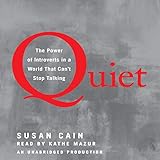
- Audible Audiobook
- Susan Cain (Author) - Kathe Mazur (Narrator)
- English (Publication Language)
- 01/24/2012 (Publication Date) - Random House Audio (Publisher)
Common Mistakes
- Mistake: Assuming introversion means shyness or social anxiety.
- Why it Matters: Introversion is about energy management, not necessarily fear of social interaction. Shyness is a fear of social judgment.
- Fix: Differentiate between the need for solitude to recharge (introversion) and the fear of social situations (shyness).
- Mistake: Believing the book advocates for introverts to become extroverts.
- Why it Matters: Cain’s goal is to empower introverts to embrace their nature, not to change it to fit societal norms.
- Fix: Focus on leveraging introverted strengths and managing energy, rather than adopting extroverted behaviors.
- Mistake: Interpreting the “Extrovert Ideal” as a personal failing.
- Why it Matters: Cain argues it’s a cultural construct, not an inherent flaw in introverts.
- Fix: Recognize the societal bias as the target of critique, not individual personality traits.
- Mistake: Overlooking the nuances of ambiversion.
- Why it Matters: Many individuals fall on a spectrum, and the book acknowledges this complexity.
- Fix: Consider where you might fall on the introvert-extrovert continuum rather than assigning yourself to a rigid category.
Expert Tips for Navigating Introversion
- Tip 1: Curate Your Environment. Introverts gain energy from solitude. Actively design your living and working spaces to include quiet zones or opportunities for uninterrupted focus.
- Action: Schedule dedicated “deep work” blocks in your calendar, free from meetings and notifications.
- Mistake to Avoid: Expecting to thrive in constant open-plan offices or highly social environments without proactive boundary setting.
- Tip 2: Practice Assertive Communication. Clearly articulate your needs regarding social interaction and work style. This is not about being demanding, but about ensuring effective collaboration.
- Action: When invited to a social event, politely state your availability and departure time beforehand.
- Mistake to Avoid: Agreeing to every social obligation out of a desire to please, leading to burnout.
- Tip 3: Leverage Solitude for Insight. Introverts often excel at deep thinking and problem-solving when given space. Utilize this strength strategically in your personal and professional life.
- Action: Before major decisions or creative projects, dedicate time for solitary reflection and brainstorming.
- Mistake to Avoid: Rushing into group consensus or action without allowing for individual contemplation.
The Enduring Relevance of Quiet by Susan Cain
Susan Cain’s “Quiet: The Power of Introverts in a World That Can’t Stop Talking” remains a pivotal work for understanding personality dynamics. Its core argument challenges the prevailing cultural narrative that favors extroversion, offering a compelling case for the unique value introverts bring to society. The book is not merely descriptive; it is a call to action for both individuals and institutions to recognize and cultivate the strengths inherent in introversion.
The evidence presented by Cain, drawing from psychology, neuroscience, and historical analysis, supports the notion that introverts possess distinct advantages in areas such as creativity, deep thinking, and leadership. By reframing introversion not as a deficit but as a powerful temperament, Cain empowers introverts to embrace their nature and provides a roadmap for a more inclusive world.
Strengths of “Quiet”
- Evidence-Based Argumentation: Cain grounds her claims in scientific research and provides numerous real-world examples, lending credibility to her thesis. For instance, her discussion of Jerome Kagan’s research on infant temperament provides a biological basis for introversion.
- Relatability and Validation: The book offers profound validation for introverts, helping them understand their own experiences and feel less alone in a society that often seems designed for extroverts. Cain’s personal narrative as an introvert is woven throughout, enhancing reader connection.
- Actionable Strategies: “Quiet” goes beyond theory, offering practical advice for introverts on how to navigate social situations, manage energy, and succeed in work and life. The section on “The New Group Think” offers specific tactics for fostering better team dynamics.
Limitations of “Quiet”
- Potential for Overgeneralization: While Cain emphasizes the spectrum of personality, some readers might be tempted to rigidly categorize themselves or others, potentially overlooking individual nuances. The book’s focus on the introvert-extrovert dichotomy, while necessary for its argument, can sometimes simplify complex human behavior.
- Cultural Specificity: The “Extrovert Ideal” Cain critiques is most pronounced in Western, particularly American, cultures. While the principles are broadly applicable, the specific manifestations of this ideal may differ in other cultural contexts. The book’s examples are predominantly drawn from Western contexts.
BLOCKQUOTE_0
Contrarian Perspective: The Tyranny of the “Quiet” Narrative
While “Quiet” rightfully champions introverts, a contrarian view suggests that its very success might inadvertently create a new form of pressure: the “introvert ideal.” If the book becomes the sole lens through which introversion is understood, there’s a risk that introverts who don’t perfectly fit Cain’s model might feel inadequate. Furthermore, the strong emphasis on the Extrovert Ideal as a monolithic entity, while effective for rhetorical impact, might overlook the diverse ways extroversion manifests and the genuine contributions of those who thrive in social engagement. The book’s strength in validation could, in some interpretations, lead to a subtle reinforcement of a different kind of prescriptive identity, albeit one that favors the previously marginalized.
“Quiet by Susan Cain”: Understanding the Introvert’s Edge
The Nuance of Introversion and Extroversion
Susan Cain’s seminal work, “Quiet: The Power of Introverts in a World That Can’t Stop Talking,” offers a comprehensive exploration of personality types, challenging the prevailing societal bias towards extroversion. The book posits that introversion is not a flaw but a distinct temperament with inherent strengths. Cain meticulously details how introverts process information, recharge their energy, and interact with the world differently from extroverts. This distinction is crucial: introverts gain energy from solitude and can find prolonged social interaction draining, whereas extroverts are energized by external stimulation and social engagement.
The book argues that modern society, particularly in the West, has increasingly celebrated extroverted qualities—assertiveness, sociability, and a preference for group work—leading to the marginalization of introverted contributions. Cain draws on a wealth of research, including studies on brain chemistry and sensory processing, to illustrate these fundamental differences. For example, research cited shows introverts tend to have a more sensitive nervous system, reacting more strongly to external stimuli, which can lead to a preference for quieter environments and less intense social interactions.
The Impact of the Extrovert Ideal
Cain meticulously documents the rise of the “Extrovert Ideal,” tracing its roots from the Industrial Revolution’s emphasis on teamwork and the subsequent development of the “New Group Think” in the 20th century. This ideal, which equates leadership and success with extroverted traits, has permeated educational systems, workplaces, and cultural narratives. Schools often favor group projects and active participation, while workplaces may prioritize open-plan offices and collaborative brainstorming sessions, environments that can be challenging for introverts.
This cultural preference has led to a situation where introverted strengths—such as deep concentration, careful deliberation, creativity, and the ability to form profound connections—are often overlooked or undervalued. Cain highlights how this societal bias can lead introverts to feel pressured to conform to extroverted norms, potentially stifling their unique talents and contributions. The book provides numerous examples, from figures in science and art to everyday individuals, demonstrating how introverted qualities have been instrumental in innovation and progress, often in quieter, less visible ways.
Leveraging Introverted Strengths
A key takeaway from “Quiet by Susan Cain” is the actionable advice provided for introverts to thrive in an extrovert-oriented world. Cain emphasizes the importance of self-awareness, encouraging introverts to understand their energy cycles and to actively create space for solitude. Strategies include setting boundaries in social situations, finding work environments that suit their temperament, and learning to communicate their needs effectively.
For instance, the book suggests that introverts can leverage their preference for deep thinking by preparing thoroughly for meetings, engaging in thoughtful written communication, and seeking roles that allow for focused, independent work. Cain also addresses the misconception that introverts are necessarily shy, clarifying that introversion is about stimulation preference, not social fear. The goal, as articulated in the book, is not for introverts to become extroverts, but for them to embrace and utilize their natural strengths authentically.
A New Appreciation for Diverse Temperaments
Ultimately, “Quiet by Susan Cain” calls for a broader societal shift towards appreciating the full spectrum of human temperament. Cain advocates for creating environments—in schools, workplaces, and social settings—that accommodate and value both introverted and extroverted styles. This includes rethinking traditional approaches to education and leadership to ensure that introverts have opportunities to contribute their unique perspectives and talents. The book serves as a powerful reminder that diversity in personality is a strength, not a weakness, and that a balanced society is one that values the quiet contributions as much as the loud ones.
Quick Comparison
| Option | Best for | Pros | Watch out |
|---|---|---|---|
| Quick Answer | General use | “Quiet: The Power of Introverts in a World That Can’t Stop Talking” by Susan… | Mistake to Avoid: Skimming the introduction; it sets the foundational context… |
| Who This Is For | General use | The book provides evidence and anecdotes to support the idea that introverts… | Mistake to Avoid: Dismissing the scientific basis as overly academic; it supp… |
| What to Check First | General use | It offers practical strategies for introverts to thrive and for extroverts to… | Mistake to Avoid: Assuming the Extrovert Ideal is a universal or unchanging p… |
| Step-by-Step Plan to Understanding Quiet by Susan Cain | General use | Individuals who identify as introverted and seek validation and strategies fo… | Mistake to Avoid: Generalizing these successes without understanding the spec… |
Decision Rules
- If reliability is your top priority for Quiet by Susan Cain, choose the option with the strongest long-term track record and support.
- If value matters most, compare total ownership cost instead of headline price alone.
- If your use case is specific, prioritize fit-for-purpose features over generic ‘best overall’ claims.
FAQ
*