Sister Outsider: Essays and Speeches by Audre Lorde
Quick Answer
- Sister Outsider by Audre Lorde is a seminal collection of essays and speeches by the influential Black lesbian feminist writer and activist, Audre Lorde.
- It offers clear insights into intersectionality, identity, racism, sexism, and homophobia, serving as essential reading for understanding contemporary social justice movements.
- Readers should approach this work prepared for direct, challenging prose that demands critical engagement with systemic oppression and personal reflection.
Who This Is For
- Individuals seeking foundational texts in Black feminist theory, intersectional analysis, and queer studies.
- Anyone interested in the historical context and enduring impact of Audre Lorde’s contributions to activism and literary scholarship.
What to Check First
- Authorial Context: Audre Lorde (1934-1992) was a self-described “Black, lesbian, mother, warrior, poet.” Her multifaceted identity is inseparable from the power and urgency of her writing.
- Collection’s Scope: Comprising speeches and essays from the 1970s and 1980s, the collection addresses issues such as racism within feminist movements, the marginalization of lesbians, and the critical importance of embracing difference.
- Key Concepts: Familiarize yourself with Lorde’s critiques of “the master’s tools,” the necessity of articulating unspoken truths, the myth of the perpetually strong Black woman, and the power of self-acceptance.
- Lorde’s Rhetorical Style: Her voice is characterized by directness, passion, and a confrontational tone designed to provoke thought and action, rather than passive agreement.
Step-by-Step Plan for Engaging with Sister Outsider by Audre Lorde
1. Begin with “The Master’s Tools Will Never Dismantle the Master’s House.”
- Action: Read this foundational essay first to grasp Lorde’s core critique of systemic change.
- What to Look For: Lorde’s argument that employing the dominant system’s methods will not achieve genuine liberation. Observe her examples of how incremental changes within oppressive frameworks can reinforce existing power structures.
- Mistake to Avoid: Dismissing this as a purely theoretical exercise; recognize its grounding in practical activism and its direct challenge to systemic injustice.
2. Explore “Age, Race, Class, and Sex: Women Redefining Difference.”
- Action: Proceed to this essay to understand Lorde’s articulation of intersectionality.
- What to Look For: Lorde’s explanation of how interconnected oppressions (ageism, racism, classism, sexism) uniquely impact different women. Note her critique of feminist movements that overlooked the experiences of marginalized groups.
- Mistake to Avoid: Treating this as a historical artifact; its analysis remains highly relevant to contemporary social justice challenges.
3. Analyze “The Transformation of Silence into Language and Action.”
- Action: Engage with this powerful speech on the vital importance of speaking one’s truth.
- What to Look For: Lorde’s personal account of overcoming fear to speak, and her assertion that silence serves the oppressor and constitutes self-betrayal. Observe the emotional intensity and the clear call to action.
- Mistake to Avoid: Underestimating the personal courage required to implement the principles Lorde advocates; her own example highlights this struggle.
For those seeking foundational texts in Black feminist theory and intersectional analysis, Audre Lorde’s Sister Outsider is an essential read. This collection offers profound insights into identity, racism, sexism, and homophobia, making it crucial for understanding contemporary social justice movements.
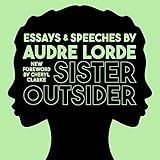
Sister Outsider: Essays and Speeches: Crossing Press Feminist Series, Book 1
- Audible Audiobook
- Audre Lorde (Author) - Robin Eller (Narrator)
- English (Publication Language)
- 04/26/2016 (Publication Date) - Tantor Audio (Publisher)
4. Consider “Poetry Is Not a Luxury.”
- Action: Read this essay to grasp Lorde’s perspective on the role of art in social change.
- What to Look For: Her argument that poetry is essential for survival, for expressing the ineffable, and for fostering emotional and political awareness. Note how she elevates creative expression from a secondary concern to a fundamental necessity.
- Mistake to Avoid: Viewing poetry as less significant than direct political action; Lorde posits it as integral to liberation.
5. Review “There Is No Hierarchy of Oppressions.”
- Action: Examine this speech for its direct refutation of prioritizing certain struggles.
- What to Look For: Lorde’s insistence that all forms of oppression are damaging and interconnected. Note her plea for solidarity among diverse marginalized groups.
- Mistake to Avoid: Interpreting this as a call for inaction or indifference; instead, it’s a demand for a more inclusive and unified approach to liberation.
6. Engage with “Sadomasochism and the Politics of the Erotic.”
- Action: Read this essay to understand Lorde’s nuanced exploration of desire and power dynamics.
- What to Look For: Her distinction between the erotic as a source of power and joy, and the dangers of conflating pain with pleasure within oppressive societal structures.
- Mistake to Avoid: Confusing Lorde’s critical examination of the erotic with an endorsement of harmful practices; she analyzes how societal frameworks can distort natural desires.
7. Reflect on “The Uses of Anger: Women Responding to Racism.”
- Action: Conclude by reading this essay to understand anger as a catalyst for change.
- What to Look For: Lorde’s guidance on how Black women can channel their anger regarding racism into productive action, rather than allowing it to be suppressed or dismissed.
- Mistake to Avoid: Interpreting her embrace of anger as mere emotional venting; she frames it as a strategic tool for dismantling injustice.
Common Mistakes in Reading Sister Outsider by Audre Lorde
- Failure Mode: Treating it as a historical artifact.
- Why it Matters: The collection’s enduring power lies in its contemporary relevance. Overlooking its applicability to present-day activism and personal understanding means missing its transformative potential.
- Fix: Actively draw connections between Lorde’s arguments and current events, social movements, and personal experiences. Consistently ask: “How does this apply to the world today?”
- Misconception: Believing Lorde advocates for sameness.
- Why it Matters: Lorde’s central philosophy champions the power of difference. Misinterpreting her work as a call for assimilation or homogeneity negates her core thesis on leveraging diversity as a source of strength.
- Fix: Focus on Lorde’s consistent emphasis on celebrating and utilizing differences as the foundation for a more just and equitable society.
- Oversight: Ignoring the poetic and emotional undercurrents.
- Why it Matters: As a poet, Lorde’s prose is deeply infused with emotional resonance and rhetorical force. Focusing solely on the logical arguments can lead to a superficial grasp of her message.
- Fix: Read passages aloud to appreciate their rhythm and emotional impact. Consider how the emotional depth amplifies the intellectual arguments.
- Misinterpretation: Perceiving her critiques as solely negative.
- Why it Matters: While Lorde’s critiques are often sharp, they are fundamentally aimed at creating space for something more just and equitable. Viewing her work solely as denunciation overlooks its constructive and visionary aspects.
- Fix: Actively seek out the solutions and the vision for a better future that emerge from her critiques. Recognize that dismantling oppressive systems is a necessary precursor to building liberatory ones.
Sister Outsider by Audre Lorde: Expert Insights
BLOCKQUOTE_0
Expert Tips for Deeper Engagement
- Tip 1: Seek Contextual Information.
- Actionable Step: Before or after reading, research the specific historical and social contexts of the essays and speeches. For instance, understanding the feminist movements of the 1970s and 80s provides crucial background for “Age, Race, Class, and Sex.”
- Common Mistake to Avoid: Reading the essays in isolation without understanding the specific challenges and debates Lorde was responding to, which can lead to misinterpretation of her arguments.
- Tip 2: Practice Active Annotation.
- Actionable Step: Highlight key phrases, write margin notes questioning assumptions, and jot down connections to other ideas or texts you’ve encountered. For instance, when reading about “difference,” note how it connects to concepts of identity politics.
- Common Mistake to Avoid: Passive reading without engagement, which allows Lorde’s challenging ideas to pass by without deep consideration or personal reflection.
- Tip 3: Discuss and Debate.
- Actionable Step: Engage in discussions about the text with others, whether in a book club, class, or informal conversation. Share your interpretations and listen to differing viewpoints.
- Common Mistake to Avoid: Internalizing Lorde’s message solely as personal dogma, rather than recognizing the collective potential of her ideas when shared and debated.
Frequently Asked Questions
- Q: Is Sister Outsider by Audre Lorde a difficult read?
- A: Lorde’s prose is direct and powerful, often challenging. While not always easy, it is profoundly rewarding. The difficulty often lies in confronting uncomfortable truths rather than in complex language.
- Q: How does Sister Outsider relate to modern feminism?
- A: It is foundational. Lorde’s concepts of intersectionality and the critique of exclusionary practices within movements are central to contemporary feminist theory and activism, particularly in discussions about inclusivity and social justice.
- Q: Why is “The Master’s Tools” considered such an important essay?
- A: This essay is crucial because it articulates a fundamental critique of how power structures are maintained, even within liberation movements. It argues that true change requires dismantling the entire system, not just adapting its tools.
- Q: Can I read these essays in any order?
- A: While each essay stands on its own, starting
Quick Comparison
| Option | Best for | Pros | Watch out |
|---|---|---|---|
| Quick Answer | General use | Sister Outsider by Audre Lorde is a seminal collection of essays and speeches… | Mistake to Avoid: Dismissing this as a purely theoretical exercise; recognize… |
| Who This Is For | General use | It offers clear insights into intersectionality, identity, racism, sexism,… | Mistake to Avoid: Treating this as a historical artifact; its analysis remain… |
| What to Check First | General use | Readers should approach this work prepared for direct, challenging prose that… | Mistake to Avoid: Underestimating the personal courage required to implement… |
| Step-by-Step Plan for Engaging with Sister Outsider by Audre Lorde | General use | Individuals seeking foundational texts in Black feminist theory, intersection… | Mistake to Avoid: Viewing poetry as less significant than direct political ac… |
Decision Rules
- If reliability is your top priority for Sister Outsider by Audre Lorde, choose the option with the strongest long-term track record and support.
- If value matters most, compare total ownership cost instead of headline price alone.
- If your use case is specific, prioritize fit-for-purpose features over generic ‘best overall’ claims.