Sinclair Lewis’s Main Street: A Social Commentary
Quick Answer
- Main Street by Sinclair Lewis offers a sharp, often unflattering, portrayal of American provincial life in the early 20th century, critiquing conformity and intellectual stagnation.
- It is essential reading for understanding the historical context of American cultural criticism and the enduring tension between idealism and the realities of small-town existence.
- While a foundational work, its dated social norms and narrative pacing may require readers to adjust their expectations.
Who This Is For
- Readers interested in classic American literature that engages directly with social critique and the concept of the American Dream.
- Individuals studying the evolution of literary realism and the impact of Sinclair Lewis’s work on subsequent American authors.
What to Check First
- Publication Context: Understand that Main Street was published in 1920. Many social attitudes and technological realities depicted are historical.
- Protagonist’s Perspective: Carol Kennicott’s idealism and dissatisfaction are central. Her journey is the primary lens through which Gopher Prairie is viewed.
- Lewis’s Intent: Sinclair Lewis aimed to expose the perceived dullness and oppressive conformity of small-town America, a theme he revisited in other works.
- Literary Significance: Recognize its Pulitzer Prize win (though initially declined by Lewis) and its role in shaping the discourse around American identity and culture.
Step-by-Step Plan for Understanding Main Street by Sinclair Lewis
1. Engage with Carol’s Arrival: Observe Carol Kennicott’s initial impressions of Gopher Prairie.
- What to look for: Her immediate reactions to the town’s appearance, social structures, and perceived lack of culture.
- Mistake to avoid: Dismissing her critiques as mere personal dissatisfaction without recognizing them as Lewis’s broader commentary on societal limitations.
2. Analyze the Town’s Inhabitants: Examine the characters representing Gopher Prairie’s established order.
- What to look for: The ingrained conservatism, gossip, and resistance to change embodied by figures like Mrs. Bogart and Vida Sherwin.
- Mistake to avoid: Focusing solely on Carol’s flaws and overlooking the systemic issues Lewis highlights through the townspeople’s collective behavior.
3. Track Carol’s Efforts at Reform: Follow Carol’s attempts to implement her progressive ideas.
- What to look for: Her initiatives in community beautification, establishing a library, and fostering intellectual discourse.
- Mistake to avoid: Underestimating the deep-seated inertia and passive resistance she encounters, which is a core element of the novel’s conflict.
For those looking to dive into this classic, you can easily find ‘Main Street by Sinclair Lewis’ to begin your exploration of its sharp social commentary.
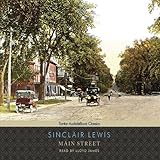
- Audible Audiobook
- Sinclair Lewis (Author) - Lloyd James (Narrator)
- English (Publication Language)
- 12/28/2010 (Publication Date) - Tantor Audio (Publisher)
4. Observe the Marriage Dynamics: Pay attention to the relationship between Carol and Dr. Will Kennicott.
- What to look for: The clash between Carol’s artistic and intellectual aspirations and Will’s pragmatic, small-town sensibility.
- Mistake to avoid: Viewing their marital issues as purely personal without seeing them as a microcosm of larger cultural divides.
5. Evaluate the Town’s Resistance to Change: Note specific instances where Gopher Prairie actively pushes back against Carol’s influence.
- What to look for: The subtle and overt ways the town maintains its status quo, often through social ostracism or dismissal of new ideas.
- Mistake to avoid: Assuming that progress is inevitable or that Carol’s ideas are inherently flawed, rather than recognizing Lewis’s depiction of entrenched mediocrity as a significant obstacle.
6. Consider the Novel’s Ending: Assess Carol’s ultimate decision and its implications.
- What to look for: Whether Carol finds fulfillment or compromise, and what this suggests about the possibility of individual agency within a conformist society.
- Mistake to avoid: Expecting a simple resolution; Lewis offers a nuanced, and for some, disappointing, conclusion that reflects the complexities of social change.
Common Myths About Main Street by Sinclair Lewis
- Myth: Main Street is simply a story about a woman who dislikes her husband and her hometown.
- Why it matters: This reduces the novel’s scope, ignoring its broader social and cultural critique.
- Fix: Recognize Carol Kennicott as an avatar for progressive ideals clashing with the realities of provincial American life, a theme Lewis explores systematically.
- Myth: Sinclair Lewis intended to portray all small towns as irredeemably terrible.
- Why it matters: This oversimplifies Lewis’s critical stance and overlooks the specific context of Gopher Prairie.
- Fix: Understand that Lewis was critiquing a type of small-town mentality prevalent in the early 20th century, focusing on conformity and intellectual inertia rather than a blanket condemnation of all rural communities.
- Myth: The novel’s themes are entirely outdated and irrelevant today.
- Why it matters: This dismisses the enduring relevance of the novel’s core concerns about conformity, idealism, and the struggle for individuality.
- Fix: Consider how contemporary issues of cultural homogenization, the influence of social media on conformity, and the tension between personal aspiration and community expectations echo the themes present in Main Street.
Decision Rules
- If reliability is your top priority for Main Street by Sinclair Lewis, choose the option with the strongest long-term track record and support.
- If value matters most, compare total ownership cost instead of headline price alone.
- If your use case is specific, prioritize fit-for-purpose features over generic ‘best overall’ claims.
FAQ
- Q: Was Main Street based on a real town?
A: While Gopher Prairie is fictional, Sinclair Lewis drew inspiration from his observations of small towns in the American Midwest, particularly Sauk Centre, Minnesota, where he grew up.
- Q: Why did Sinclair Lewis refuse the Pulitzer Prize for Main Street?
A: Lewis, along with other authors, declined the Pulitzer Prize in 1926, protesting what they saw as the prize’s conservatism and its perceived inability to recognize genuinely challenging or critical works of American literature.
- Q: Is Main Street a difficult read?
A: The language and prose style are characteristic of early 20th-century American literature. While not overly complex, readers may need to adjust to the narrative pacing and social context, which differs from contemporary novels.
- Q: What is the central message of Main Street?
A: The novel’s central message revolves around the stifling nature of provincial conformity and the often-futile struggle of the individual to enact meaningful change against entrenched societal norms.
BLOCKQUOTE_0
- Sinclair Lewis, Main Street
This quote encapsulates a key realization Carol Kennicott grapples with throughout the novel: the profound difficulty of altering established community attitudes and behaviors. It serves as a sober counterpoint to her initial idealistic visions of reform, highlighting the inertia of collective human nature.
Strengths of Main Street by Sinclair Lewis
- Pioneering Social Critique: The novel was groundbreaking for its direct and unflinching examination of the perceived limitations and hypocrisies of American small-town life, challenging idealized notions of rural virtue.
- Memorable Protagonist: Carol Kennicott, despite her flaws, is a compelling character whose quest for a more meaningful existence resonates with readers who have felt constrained by their environment.
- Linguistic Acuity: Sinclair Lewis’s prose is sharp and often satirical, capturing the vernacular and social nuances of the era with remarkable precision. His ability to delineate character through dialogue and observation is a significant strength.
Limitations of Main Street by Sinclair Lewis
- Dated Social Norms: Some of the gender roles and social expectations depicted, particularly regarding women’s spheres of influence, reflect the era of publication and may feel anachronistic to modern readers.
- Pacing and Narrative Focus: The novel’s deliberate pacing and extensive focus on Carol’s internal struggles and Gopher Prairie’s minutiae can, at times, feel slow or repetitive for contemporary audiences accustomed to more accelerated narrative structures.
- Unrelenting Pessimism: While effective as social critique, the novel’s consistently critical tone and lack of significant positive transformation in the town can leave some readers with a sense of overwhelming negativity.
Reading Context for Main Street
To fully appreciate Main Street by Sinclair Lewis, it is beneficial to read it within the context of early 20th-century American literature, a period marked by rapid industrialization, urbanization, and evolving social identities. It serves as a vital counterpoint to more romanticized depictions of American life and stands as a precursor to later critiques of consumerism and cultural conformity. Reading it after works like Hamlin Garland’s Main-Travelled Roads can offer a comparative perspective on how different authors approached rural and small-town themes.
Main Street by Sinclair Lewis: A Look at the Social Landscape
Sinclair Lewis masterfully crafts a vivid, if often unflattering, portrait of Gopher Prairie, Minnesota, in Main Street. The novel serves as a powerful social commentary, dissecting the provincialism, conformity, and intellectual stagnation that Lewis perceived as endemic to small-town America in the early 20th century. Carol Kennicott, an educated and idealistic young woman, arrives in Gopher Prairie with dreams of beautifying and uplifting the community. However, she is met with a deeply ingrained conservatism and a resistance to change that ultimately thwarts her efforts and leads to her disillusionment. Lewis uses Carol’s journey to expose the chasm between individual aspirations and the powerful, often oppressive, forces of social inertia. The novel’s enduring impact lies in its bold critique of a specific American cultural archetype, prompting readers to question the nature of progress, community, and individual freedom.
Expert Tips for Engaging with Main Street
- Tip: Actively map Carol’s reform attempts against Gopher Prairie’s responses.
- Actionable Step: Keep a running list of Carol’s initiatives (e.g., library improvements, beautification projects) and, for each, note the specific reactions or obstacles presented by the town’s residents or institutions.
- Common Mistake to Avoid: Treating the town’s resistance as a monolithic, undifferentiated force. Recognize the subtle variations in opposition, from outright dismissal to passive non-compliance.
- Tip: Analyze the symbolic significance of Gopher Prairie’s physical environment.
- Actionable Step: Pay close attention to Lewis’s descriptions of Main Street itself, the architecture, the general store, and the natural surroundings. Note how these descriptions reinforce the town’s character and atmosphere.
- Common Mistake to Avoid: Reading the descriptions of the town as mere background. Understand that Lewis uses the physical setting as a tangible representation of the town’s values and limitations.
- Tip: Consider the novel’s critique of the “American Dream” in the context of its time.
- Actionable Step: Reflect on what the American Dream represented in the early 1920s and how Carol’s pursuit of a more cultured, meaningful life clashes with the perceived material and social goals of Gopher Prairie’s inhabitants.
- Common Mistake to Avoid: Applying contemporary definitions of the American Dream without acknowledging the historical shifts in societal aspirations and values.
Main Street by Sinclair Lewis: A Literary Verdict
Main Street by Sinclair Lewis is a foundational text in American literary realism and social commentary. Its strength lies in its incisive critique of small-town conformity and its exploration of the individual’s struggle against societal inertia. While its historical context is crucial for full appreciation, the novel’s themes of idealism versus pragmatism, and the challenges of enacting change, retain a potent relevance. Readers seeking a nuanced, often critical, examination of American cultural identity will find Main Street a rewarding, albeit sometimes challenging, experience.
| Aspect | Evaluation | Evidence/Example |
|---|---|---|
| <strong>Thematic Depth</strong> | High. Explores conformity, idealism, and the limitations of social reform. | Carol Kennicott’s repeated attempts to introduce culture and progress, met with the town’s entrenched resistance. |
| <strong>Characterization</strong> | Strong, particularly in portraying the collective personality of Gopher Prairie and Carol’s internal conflict. | The distinct, often caricatured, personalities of town figures like Mrs. Bogart and Vida Sherwin, contrasted with Carol’s evolving aspirations and frustrations. |
| <strong>Social Relevance</strong> | Significant for its era, continues to provoke thought on community dynamics and cultural homogeneity. | The novel’s critique of provincialism and resistance to new ideas resonates with ongoing discussions about globalization and the preservation of local identity. |
| <strong>Narrative Style</strong> | Precise, satirical, and reflective of early 20th-century prose. Can be slow-paced for modern readers. | Lewis’s detailed descriptions of Gopher Prairie’s social rituals and Carol’s internal monologues demonstrate his stylistic control, though the lack of rapid plot progression is a potential drawback. |
| <strong>Overall Impact</strong> | A landmark work that redefined American literary realism and initiated a vital conversation about the American experience. | Its critical success and enduring place in literary canons underscore its importance in shaping perceptions of small-town America and the challenges of cultural progress. |