Shirley Jackson’s ‘The Haunting of Hill House’ Analysis
This analysis delves into Shirley Jackson’s seminal work, “The Haunting of Hill House,” a novel that masterfully dissects psychological horror and the unreliable nature of perception. It is designed for readers seeking a comprehensive understanding of the novel’s literary merits, thematic complexities, and enduring impact on the horror genre.
Quick Answer
- “The Haunting of Hill House by Shirley Jackson” is a landmark psychological horror novel that questions the boundary between supernatural phenomena and mental deterioration.
- Its core strength lies in its pervasive atmosphere of dread and its profound exploration of Eleanor Vance’s internal struggles, compelling readers to question the origin of the unsettling events.
- This analysis is intended for those interested in literary criticism, the nuances of gothic horror, and Shirley Jackson’s sophisticated approach to crafting fear.
Who This Is For
- Readers who have completed “The Haunting of Hill House” and wish to explore its intricate psychological themes and critical interpretations more deeply.
- Students and enthusiasts of gothic literature and psychological horror seeking to understand the novel’s lasting influence and innovative narrative techniques.
What to Check First
- Eleanor Vance’s Psychological State: Focus on her internal monologues, her history of caregiving, and her profound sense of loneliness. Her perspective is the primary narrative filter, making her reliability a critical point of examination.
- Ambiguity of the “Haunting”: Note instances where events can be plausibly attributed to supernatural activity or to Eleanor’s psychological unraveling. Jackson intentionally avoids definitive explanations.
- Hill House as an Active Entity: Consider the house itself as more than a mere setting. Analyze its physical descriptions and how its atmosphere appears to actively influence its inhabitants, particularly Eleanor.
- Character Dynamics: Observe the interactions among Eleanor, Theodora, Luke, and Dr. Montague. Their differing interpretations and reactions to events provide crucial contrasting viewpoints.
Step-by-Step Plan for Understanding The Haunting of Hill House by Shirley Jackson
1. Analyze Eleanor’s Isolation and Desire for Belonging: Examine Eleanor’s initial profound loneliness and her eagerness to accept the invitation to Hill House.
- What to look for: Her internal thoughts regarding her family, her deceased father, and her desperate yearning for connection and a sense of home.
- Mistake: Treating Eleanor as an objective observer without acknowledging her history of emotional deprivation and inherent psychological fragility.
2. Examine Early Unexplained Occurrences: Track the initial events, such as the unexplained banging on doors and the writing on the walls.
- What to look for: The specific language used to describe these events and the characters’ immediate reactions, noting any discrepancies or subjective interpretations.
- Mistake: Immediately concluding that all phenomena are definitively supernatural, neglecting potential psychological explanations or Eleanor’s potential influence.
3. Assess Theodora’s Role and Sensitivity: Observe Theodora’s complex relationship with Eleanor, her initial warmth, and her subsequent fear.
- What to look for: Theodora’s intuitive nature and her own susceptibility to the house’s atmosphere, recognizing her as another individual experiencing unease.
- Mistake: Viewing Theodora solely as a stable, supportive friend, overlooking her own fears and how she might inadvertently amplify Eleanor’s anxieties.
4. Deconstruct the “Nursery” and Childlike Voices: Analyze scenes where Eleanor believes she hears a child calling her name and discovers the nursery.
- What to look for: The specific phrasing of the voices and Eleanor’s emotional response, noting the underlying themes of innocence and longing.
- Mistake: Accepting the voice as unequivocally supernatural without considering it as a manifestation of Eleanor’s deep-seated desire for connection or her descent into delusion.
5. Evaluate Dr. Montague’s Scientific Approach: Consider Dr. Montague’s intention to scientifically study the paranormal and his limitations in fully grasping the psychological dimensions.
- What to look for: His attempts to rationalize events and his eventual bewilderment or fear, highlighting the gap between empirical study and subjective experience.
- Mistake: Believing Dr. Montague’s research provides absolute proof of ghosts, thereby missing the novel’s emphasis on subjective reality and psychological interpretation.
For those diving into the chilling depths of Shirley Jackson’s masterpiece, having a copy of ‘The Haunting of Hill House’ is essential for following along with the analysis.
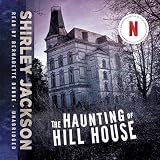
- Audible Audiobook
- Shirley Jackson (Author) - Bernadette Dunne (Narrator)
- English (Publication Language)
- 10/04/2010 (Publication Date) - Blackstone Audio, Inc. (Publisher)
6. Analyze the Climax and Eleanor’s Surrender: Focus on Eleanor’s increasing identification with Hill House and her ultimate psychological breakdown.
- What to look for: The house’s perceived possessiveness and Eleanor’s apparent surrender to its influence, noting the finality of her fate.
- Mistake: Interpreting Eleanor’s end as a simple supernatural resolution, rather than the tragic culmination of her psychological disintegration and her merging with the house.
7. Consider Hill House as an Active Agent: Reflect on how the house itself seems to possess malevolent intent and actively influences its inhabitants.
- What to look for: Descriptions of the house’s architecture, its oppressive atmosphere, and any indications of its perceived consciousness or will.
- Mistake: Treating Hill House as a passive backdrop, rather than an active force that mirrors, manipulates, and ultimately consumes the characters’ psyches.
Common Myths About The Haunting of Hill House
- Myth: The novel is a straightforward ghost story with clearly defined supernatural antagonists.
- Why it matters: This interpretation bypasses the novel’s central achievement: its exploration of psychological horror, where the terror originates from within the characters’ minds as much as from external forces.
- Fix: Re-read with an emphasis on Eleanor’s internal state and the deliberate ambiguity of the events. Question whether the “haunting” is a projection of her own psychological turmoil.
- Myth: Theodora is a purely rational character unaffected by the house’s influence.
- Why it matters: This overlooks Theodora’s own intuitive nature and her vulnerability. She serves as a foil to Eleanor, and her own unease contributes to the pervasive atmosphere of dread.
- Fix: Pay close attention to Theodora’s moments of fear and intuition. Recognize that she, too, is susceptible to the house’s atmosphere, albeit in a different manner than Eleanor.
- Myth: Hill House is definitively haunted by a specific entity or well-documented spirits.
- Why it matters: Shirley Jackson deliberately avoids providing concrete explanations for the haunting. The power of the novel stems from this uncertainty and its psychological impact.
- Fix: Embrace the ambiguity. The horror is derived from the possibility of a haunting and its effect on fragile minds, not from a defined spectral presence.
Expert Tips for Reading The Haunting of Hill House
- Tip: Prioritize Unreliable Narration Analysis.
- Actionable Step: Maintain a log of Eleanor Vance’s emotional fluctuations and any perceived inconsistencies in her descriptions of events.
- Common Mistake to Avoid: Accepting Eleanor’s accounts of phenomena as objective reality without critically evaluating her psychological state.
- Tip: Analyze the House as a Psychological Mirror.
- Actionable Step: Note how Hill House’s physical characteristics and oppressive atmosphere seem to directly reflect or exploit the specific fears and desires of its inhabitants, especially Eleanor.
- Common Mistake to Avoid: Reading Hill House merely as a physical setting, rather than as a sentient force that interacts with and manipulates the characters’ psyches.
- Tip: Recognize the Power of Suggestion and Atmosphere.
- Actionable Step: Identify instances where the mere suggestion of a haunting, or the characters’ growing fear, leads to misinterpretations or irrational behavior, even before overt “proof” of supernatural activity.
- Common Mistake to Avoid: Waiting for undeniable supernatural manifestations to acknowledge the horror; the true terror lies in the psychological impact of uncertainty and dread.
Literary Analysis of The Haunting of Hill House by Shirley Jackson
Shirley Jackson’s “The Haunting of Hill House,” published in 1959, remains a cornerstone of psychological horror, distinguished by its nuanced exploration of fear, isolation, and the subjective nature of reality. The novel transcends conventional ghost story tropes by focusing on the internal landscape of its characters, particularly Eleanor Vance, a woman whose profound loneliness makes her susceptible to the perceived malevolence of Hill House.
The narrative follows Eleanor as she joins a group investigating paranormal phenomena at the infamous estate. Led by the academic Dr. Montague, the group includes the intuitive Theodora and the skeptical heir Luke Sanderson. Jackson masterfully builds dread not through jump scares, but through a pervasive atmosphere of unease and the gradual erosion of Eleanor’s grip on sanity. The house itself is depicted as a character, its unsettling architecture and oppressive presence mirroring and amplifying the characters’ internal disturbances.
Thematic Depth and Narrative Strengths
A central strength of “The Haunting of Hill House” is its profound examination of isolation and the desperate human need for belonging. Eleanor’s life has been one of quiet servitude and emotional neglect, leaving her yearning for acceptance and a place to call home. Hill House, with its dark history, becomes a perverse magnet for her, a place where she finally feels a sense of identity and attention, even if that attention is terrifying. This psychological vulnerability is key to understanding her descent.
Jackson’s atmospheric mastery and use of suggestion are paramount to the novel’s effectiveness. The descriptions of Hill House are vivid and unsettling: “Whatever walked in the house walked heavily.” The author deliberately blurs the lines between supernatural occurrences and Eleanor’s psychological state. Unexplained noises, disembodied voices, and chilling phenomena are presented with an ambiguity that forces the reader to question the source of the terror. This uncertainty is not a flaw but the novel’s core strength, compelling active engagement with the text.
The novel also excels in its complex characterization, particularly Eleanor. Her internal monologue reveals a deeply troubled individual, prone to fantasy and increasingly detached from objective reality. Her interactions with Theodora, initially a source of potential solace, devolve into suspicion and jealousy, further isolating Eleanor and intensifying her internal conflict.
Limitations and Reader Reception
The primary limitation, for some readers, lies in the very ambiguity that defines the novel’s brilliance. Those seeking a traditional ghost story with definitive supernatural explanations may find Jackson’s refusal to provide clear answers frustrating. The novel demands a tolerance for psychological complexity and unresolved questions.
Furthermore, the slow, deliberate pacing of the psychological horror might not appeal to readers accustomed to faster-paced narratives. The terror is cumulative, building through subtle disturbances and internal dread rather than overt shocks.
Reading Context and Verdict
“The Haunting of Hill House” is best appreciated with an understanding of its psychological underpinnings and its place within the gothic literary tradition. It is a novel that rewards careful reading and rereading, allowing for a deeper appreciation of the subtle clues and psychological nuances Jackson weaves throughout the narrative.
Verdict: “The Haunting of Hill House by Shirley Jackson” is a profound and deeply unsettling work of psychological horror. Its enduring power stems from its masterful exploration of isolation, madness, and the terrifying malleability of the human mind. It is an essential read for anyone interested in literary horror, psychological depth, and sophisticated storytelling.
Failure Mode: Over-Reliance on External Haunting Interpretation
A prevalent failure mode for readers engaging with “The Haunting of Hill House by Shirley Jackson” is the tendency to interpret the novel solely as a traditional ghost story, focusing exclusively on identifying external supernatural forces. This approach overlooks the novel’s profound exploration of psychological disintegration and the subjective nature of reality.
How to Detect This Failure Mode Early:
- Frustration with Ambiguity: If you find yourself repeatedly searching for definitive proof of ghosts and become frustrated by the lack of clear-cut supernatural events, this indicates a focus on external causes.
- Dismissal of Eleanor’s Internal State: If you view Eleanor’s experiences primarily as objective occurrences happening to her, rather than events filtered through her increasingly unstable perception, you are likely misinterpreting the narrative’s core.
- Prioritizing Plot Over Psychology: If the narrative feels slow because you are anticipating overt supernatural action rather than appreciating the subtle shifts in Eleanor’s mental state, this failure mode is present.
Correction: Shift your analytical focus from what is haunting the house to how the house, and the very idea of a haunting, affects Eleanor. Consider Hill House not merely as a physical location but as a catalyst that exacerbates her internal breakdown. Recognize that the most terrifying element may be Eleanor’s own mind, amplified by her environment and her desperate need for validation. Jackson’s genius lies in prompting the reader, alongside Eleanor, to question the nature of reality itself.
Quick Comparison
| Feature | “The Haunting of Hill House by Shirley Jackson” | Alternative (Generic Horror) |
|---|---|---|
| <strong>Primary Focus</strong> | Psychological disintegration, unreliable narration, atmosphere | External supernatural threats, jump scares, clear antagonists |
| <strong>Narrative Strength</strong> | Ambiguity, internal dread, character depth | Direct plot progression, explicit horror elements |
| <strong>Reader Engagement</strong> | Active interpretation, questioning reality | Passive consumption of scares |
| <strong>Best For</strong> | Readers who appreciate psychological depth and nuanced horror | Readers seeking straightforward thrills and supernatural encounters |
Decision Rules
- If your primary interest is in the psychological underpinnings of horror and the exploration of mental fragility, “The Haunting of Hill House by Shirley Jackson” is the superior choice.
- If you prefer a narrative with clear supernatural antagonists and a more direct approach to scares, you might find other horror novels more to your liking.
- If the nuanced portrayal of character and the construction of atmosphere are key to your reading enjoyment, Jackson’s novel offers significant depth.
FAQ
- Q: Is “The Haunting of Hill House” a straightforward ghost story?
- A: Shirley Jackson deliberately crafts ambiguity, blurring the lines between supernatural events and psychological breakdown. The novel’s power lies in this uncertainty, making it a masterclass in psychological horror rather than a traditional ghost story with definitive spectral entities.
- Q: What are the primary themes explored in “The Haunting of Hill House”?
- A: Key themes include isolation, the fragility of the human psyche, the deep-seated desire for belonging, and the multifaceted nature of fear. The novel examines how internal vulnerabilities can be amplified by external environments.
- Q: Why is Eleanor Vance considered the central focus of the novel?
- A: Eleanor is the primary lens through which the reader experiences the unsettling events. Her internal monologue, past traumas, and desperate need for a home make her the most susceptible to the house’s perceived influence, driving the narrative’s psychological tension and horror.
- **Q: How does Shirley Jackson build