Sean O’Casey’s The Shadow of a Gunman: A Play’s Impact
The Shadow Of A Gunman by Sean O’Casey: Quick Answer
- The Shadow Of A Gunman by Sean O’Casey is a seminal work of 20th-century Irish drama, critically examining the disillusionment following the Irish Civil War.
- It is essential for understanding Sean O’Casey’s evolving dramatic style and his unflinching portrayal of violence’s human cost.
- The play’s enduring impact lies in its stark contrast between romanticized rebellion and the harsh realities faced by ordinary citizens.
Who This Is For
- Readers interested in significant 20th-century Irish literature and theatre.
- Students and scholars of political drama and the social impact of conflict.
What to Check First
- Historical Setting: Familiarize yourself with the Irish Civil War (1922-1923) and the political climate post-Anglo-Irish Treaty. This context is critical for understanding the play’s tensions.
- Sean O’Casey’s Dramatic Arc: O’Casey’s work evolved from realism to a more symbolic and tragic style. Understanding this progression clarifies The Shadow of a Gunman‘s position in his oeuvre.
- Central Themes: Identify key themes such as the chasm between idealism and brutal reality, the nature of courage under duress, and the devastating psychological effects of violence.
- Character Dynamics: Analyze the motivations of Donal Davoren, the poet posing as a gunman, and Seumas Shields, his cynical neighbor, as their interactions drive the play’s core conflicts.
Step-by-Step Plan: Analyzing The Shadow Of A Gunman by Sean O’Casey
1. Initial Reading and Atmosphere: Read The Shadow Of A Gunman by Sean O’Casey in its entirety.
- What to look for: Note your initial impressions of the characters, the claustrophobic setting of the tenement, and the prevailing atmosphere of fear and uncertainty.
- Mistake to avoid: Rushing through the text without absorbing the mood and the palpable tension O’Casey establishes.
2. Character Deconstruction: Focus on the central characters, Donal Davoren and Seumas Shields.
- What to look for: Trace Davoren’s descent from poetic posturing to abject terror. Analyze Shields’s pragmatic cynicism and his reactions to Davoren’s deception.
- Mistake to avoid: Labeling characters too early; their complexities unfold through their interactions and reactions to escalating danger.
3. Dialogue and Language: Examine O’Casey’s distinctive use of language.
- What to look for: Identify how the blend of poetic imagery and Dublin vernacular reveals character, foreshadows events, and underscores social commentary.
- Mistake to avoid: Dismissing the colloquial dialogue as mere realism; it serves a crucial dramatic purpose in grounding the heightened emotional states.
4. Symbolism and Motif Identification: Identify recurring symbolic elements.
- What to look for: The significance of the titular “gunman,” the pervasive imagery of shadows, and the contrast between private anxieties and public conflict.
- Mistake to avoid: Treating symbols as isolated elements rather than integral components of the play’s thematic structure.
For a deeper understanding of this pivotal Irish drama, acquiring a copy of ‘The Shadow Of A Gunman by Sean O’Casey’ is essential.
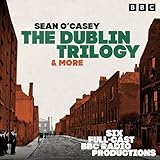
The Dublin Trilogy & more: Six BBC Radio Full-Cast Productions including Shadow of a Gunman & Juno and the Paycock
- Audible Audiobook
- Sean O'Casey (Author) - Sorcha Cusack, John Kavanagh, Elaine Cassidy (Narrators)
- English (Publication Language)
- 11/06/2025 (Publication Date) - BBC Digital Audio (Publisher)
5. Thematic Assessment: Evaluate the play’s core messages.
- What to look for: How does the play dismantle romantic notions of warfare and rebellion? What is O’Casey’s commentary on the human cost of political violence?
- Mistake to avoid: Assuming the play advocates for a specific political stance; its power lies in its critique of the consequences of conflict.
6. Impact and Legacy: Consider The Shadow Of A Gunman‘s reception and influence.
- What to look for: How did this play depart from contemporary theatrical norms? What new territory did it break in its psychological portrayal of war’s impact?
- Mistake to avoid: Underestimating its revolutionary impact on Irish theatre and its role in establishing O’Casey as a major dramatist.
Common Mistakes
- Mistake: Assuming the play is a straightforward endorsement of Irish Republicanism.
- Why it matters: This interpretation misses O’Casey’s critical examination of how political ideals can lead to personal tragedy and disillusionment.
- Fix: Focus on the play’s portrayal of the devastating human consequences of political conflict, regardless of the specific ideology.
- Mistake: Overlooking the dark humor and irony present in the dialogue.
- Why it matters: O’Casey uses humor to highlight the absurdity of the characters’ situations and the tragic ironies of their lives, underscoring the pathos.
- Fix: Recognize that the humor serves to amplify the tragedy by contrasting moments of levity with the underlying dread and despair.
- Mistake: Viewing Donal Davoren as a heroic figure.
- Why it matters: The play deliberately deconstructs the myth of the heroic gunman. Davoren’s false bravado crumbles when faced with genuine danger.
- Fix: Analyze Davoren as a tragic figure whose illusions are shattered by reality, emphasizing his vulnerability and the destructive nature of his deception.
- Mistake: Underestimating the significance of the setting.
- Why it matters: The cramped, dilapidated tenement serves as a microcosm of Dublin under siege, reflecting the characters’ internal states and the oppressive atmosphere of the time.
- Fix: Consider the setting not just as a backdrop but as an active element that contributes to the play’s tension, confinement, and sense of impending doom.
Expert Tips
- Tip: Pay close attention to the play’s silences and unspoken tensions.
- Actionable Step: During your reading, pause after significant lines or events and consider what the characters are not saying or doing.
- Common Mistake to Avoid: Focusing only on explicit dialogue and missing the subtext that reveals character anxieties and the pervasive atmosphere of fear.
- Tip: Analyze the contrast between poetic language and vernacular speech.
- Actionable Step: Highlight instances of elevated language used by Davoren and compare them to the grounded, often humorous, dialogue of other characters like Shields or Mrs. Grigson.
- Common Mistake to Avoid: Dismissing the vernacular as merely realistic detail, without recognizing how O’Casey uses it to create social commentary and dramatic contrast.
- Tip: Understand the play’s tragic trajectory as a critique of romanticism.
- Actionable Step: Track how Davoren’s initial romanticized self-image as a gunman is systematically dismantled by the play’s events, leading to his ultimate downfall.
- Common Mistake to Avoid: Interpreting the play’s ending as a simple failure of courage, rather than a profound statement on the destructive nature of romanticized political ideals.
Decision Criteria for The Shadow Of A Gunman by Sean O’Casey
- Criterion: Historical Nuance vs. Thematic Universality.
- Impact: If your primary interest is a deep dive into the specific socio-political climate of post-Civil War Dublin, the play offers exceptional historical nuance. However, if you are seeking a more universally applicable exploration of how idealism clashes with violent reality, the play’s thematic universality remains potent even without exhaustive historical knowledge.
BLOCKQUOTE_0
| Aspect | Strengths | Limitations | Audience Consideration |
|---|---|---|---|
| Thematic Depth | Powerful critique of romanticized rebellion; stark portrayal of violence’s human cost. | Can be emotionally challenging due to its bleak and unflinching depiction of despair. | Readers seeking nuanced, critical perspectives on political conflict and its psychological impact. |
| Characterization | Complex, flawed characters; realistic portrayal of fear and disillusionment. | Some characters might seem archetypal without sufficient historical context. | Those who appreciate psychologically driven drama and character studies that explore human vulnerability. |
| Language | Masterful blend of poetic prose and authentic Dublin vernacular; rich and evocative. | The specific dialect may require reader effort for full appreciation of nuance. | Readers who value linguistic richness and are willing to engage with authentic, culturally specific dialogue. |
| Historical Context | Provides a visceral, human perspective on the Irish Civil War’s impact. | Assumes a degree of reader familiarity with the era for complete contextual understanding. | Individuals interested in Irish history and its dramatic representation, particularly the social aftermath of conflict. |
| Overall Impact | Seminal work in 20th-century Irish drama; challenges simplistic heroic narratives. | Its tragic nature might deter readers seeking lighthearted or overtly optimistic narratives. | Those interested in significant theatrical works that offer profound social commentary and artistic innovation. |
Decision Rules
- If reliability is your top priority for The Shadow Of A Gunman by Sean O’Casey, choose the option with the strongest long-term track record and support.
- If value matters most, compare total ownership cost instead of headline price alone.
- If your use case is specific, prioritize fit-for-purpose features over generic ‘best overall’ claims.
FAQ
- Q: What is the central message of The Shadow Of A Gunman?
- A: The central message revolves around the disillusionment that arises when romanticized ideals of rebellion and heroism confront the brutal, often senseless, reality of violence.
- Q: How does O’Casey’s portrayal of the Irish Civil War differ from other works?
- A: O’Casey’s distinction lies in his focus on the psychological toll of the conflict on ordinary civilians and his critique of the romantic idealism often associated with the struggle, rather than glorifying the fight itself.
- *Q: Is The Shadow Of A Gun