Russell Banks’s Epic Novel: Cloudsplitter
Cloudsplitter by Russell Banks: A Summary
- Cloudsplitter is Russell Banks’s ambitious novel that uses abolitionist John Brown as a focal point to explore the moral and theological complexities of violence and conviction in pre-Civil War America.
- The narrative is primarily channeled through the introspective and conflicted consciousness of John Brown’s son, Owen, offering a deeply philosophical and character-driven examination rather than a straightforward historical account.
- This work is best suited for readers who appreciate dense thematic exploration, intricate character studies, and a deliberate, often fragmented, narrative structure that demands intellectual engagement.
Who This Is For
- Readers interested in the profound philosophical and theological debates that fueled the American abolitionist movement and the nation’s descent into Civil War.
- Individuals who value literary fiction that grapples with difficult moral questions, the nature of faith, and the justification of radical action, and who are prepared for a challenging but rewarding reading experience.
What to Check First
- Narrative Lens: Understand that the story is predominantly filtered through Owen Brown’s perspective. His internal struggles, doubts, and complex relationship with his father are central to the novel’s unfolding.
- Thematic Depth vs. Plot Pace: Be aware that Cloudsplitter prioritizes philosophical and theological inquiry over a fast-moving plot. The novel’s power lies in its exploration of ideas and character interiority.
- Historical Interpretation: Recognize that Russell Banks uses historical figures and events as a foundation for a profound character study and thematic exploration, rather than aiming for strict biographical accuracy.
- Structural Approach: The novel employs a non-linear and often fragmented structure, mirroring the complexities of memory and consciousness. Patience and an openness to this style are crucial.
- The Role of Violence: Violence is depicted not gratuitously but as a direct consequence of deeply held, often conflicting, beliefs. The novel interrogates its justification within specific moral and theological frameworks.
For those seeking a deeply philosophical and character-driven examination of pre-Civil War America, Russell Banks’s ambitious novel, Cloudsplitter, is an excellent choice. It uses abolitionist John Brown as a focal point to explore the moral and theological complexities of violence and conviction.
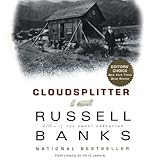
- Audible Audiobook
- Russell Banks (Author) - Pete Larkin (Narrator)
- English (Publication Language)
- 11/12/2013 (Publication Date) - Harper Perennial (Publisher)
Step-by-Step Plan for Engaging with Cloudsplitter
1. Understand the Historical Context of Cloudsplitter by Russell Banks:
- Action: Familiarize yourself with the political and social climate of the mid-19th century United States, specifically the escalating tensions over slavery and the rise of radical abolitionism.
- What to look for: The key figures and events associated with John Brown’s crusade, such as the Pottawatomie Massacre and the raid on Harpers Ferry. This provides the factual bedrock for the novel’s thematic explorations.
- Mistake to avoid: Assuming the novel will present a purely objective historical record; Banks uses history as a canvas for his philosophical and psychological inquiries.
2. Embrace Owen Brown’s Internal Conflict:
- Action: Focus on Owen’s internal monologues and his reactions to his father’s actions and beliefs. His perspective is the primary lens through which the reader experiences the narrative.
- What to look for: Owen’s spiritual doubts, his moral reservations about violence, and his struggle to reconcile filial duty with his own conscience. This internal drama is the novel’s emotional core.
- Mistake to avoid: Expecting Owen to be a passive observer or an uncritical admirer of his father; his ambivalence and questioning are vital to the novel’s complexity.
3. Engage with the Theological and Philosophical Debates:
- Action: Pay close attention to the extended discussions and internal reflections on faith, predestination, free will, and the divine mandate.
- What to look for: How these abstract concepts directly inform the characters’ motivations and justify their extreme actions. The novel posits that understanding these ideas is key to understanding the characters.
- Mistake to avoid: Skimming or dismissing these sections as digressions; they are the thematic engine of the novel and essential for grasping its arguments about conviction and consequence.
4. Appreciate Banks’s Evocative Prose:
- Action: Notice the descriptive language, recurring motifs, and sensory details that Banks employs to create atmosphere and convey meaning.
- What to look for: The stark portrayal of the natural landscape, the harshness of frontier life, and the internal psychological terrain of the characters. The language itself carries significant thematic weight.
- Mistake to avoid: Rushing through descriptive passages in pursuit of plot points; the literary style is integral to the novel’s immersive quality and thematic resonance.
5. Contextualize the Violence:
- Action: Analyze the acts of violence not as mere plot devices but as direct manifestations of the characters’ deeply held, often conflicting, belief systems.
- What to look for: The justifications offered for violence, whether perceived as divine will, necessary action for justice, or a product of fanaticism.
- Mistake to avoid: Judging the characters’ actions solely through a modern ethical lens without considering the historical context and their specific, often radical, theological frameworks.
6. Navigate the Novel’s Structure:
- Action: Accept and engage with the non-linear and fragmented narrative. Understand that this structure reflects the complexities of memory, trauma, and the human mind.
- What to look for: How the shifts in time and perspective gradually build a more layered and nuanced understanding of the characters and the events.
- Mistake to avoid: Becoming disoriented by the fragmentation and losing sight of the thematic through-lines. Embrace the structure as an intentional element that enhances the novel’s exploration of consciousness.
Cloudsplitter by Russell Banks: Themes and Counterpoints
Russell Banks’s Cloudsplitter is a monumental work that employs the figure of John Brown, the fervent abolitionist, as a lens through which to examine the profound moral and theological schisms of 19th-century America. The novel deliberately sidesteps a conventional biographical approach, instead immersing the reader in the troubled, introspective consciousness of Owen Brown, John Brown’s son. This narrative choice immediately establishes a contrarian perspective, eschewing hagiography for a complex, often agonizing, exploration of faith, the nature of conviction, and the devastating consequences of divinely sanctioned violence. The novel’s primary strength lies in its ambitious scope and its unwavering commitment to dissecting the philosophical and theological underpinnings of a nation on the brink of civil war. Banks meticulously reconstructs the historical milieu, but his true focus is on the internal landscapes of his characters, particularly Owen’s profound unease with his father’s radical, God-ordained mission.
Thematic core of Cloudsplitter by Russell Banks revolves around the dangerous nexus of absolute conviction and destructive action. John Brown, driven by what he perceives as a divine mandate to end slavery, emerges as a figure of immense power and terrifying certainty. Banks, through Owen’s hesitant and often horrified gaze, interrogates this certainty. He presents a nuanced portrayal of a man whose righteous fury, while aimed at a profound injustice, leads to immense bloodshed. The novel challenges readers to confront the difficult question of whether necessary evil can ever truly be justified, and where the line blurs between divine calling and personal obsession. Owen’s internal struggle—a poignant blend of filial love and moral revulsion—serves as a powerful counterpoint to the fervent, often uncritical, zeal of other abolitionists. This internal conflict is the engine of the narrative, compelling readers to grapple with the complex, often uncomfortable, truths about the genesis of the Civil War.
However, the novel’s profound thematic density and its deliberately measured pace can also be perceived as limitations. Readers who anticipate a brisk plot or traditional character arcs may find the extensive internal monologues and theological debates demanding. The narrative structure, often fragmented and recursive, requires sustained reader engagement and a tolerance for ambiguity. The sheer weight of intellectual inquiry, while deeply rewarding for some, can occasionally overshadow the emotional resonance of the story. For instance, Owen’s profound detachment, while crucial to his character, can make it challenging for readers to forge a strong emotional connection with him or the unfolding historical drama. Cloudsplitter is a novel that rewards patience and a willingness to wrestle with complex ideas, rather than offering immediate catharsis or straightforward resolution.
BLOCKQUOTE_0
This observation, embedded within the narrative, encapsulates the novel’s central tension: the fine line between visionary conviction and destructive fanaticism. The decision criterion for engaging with Cloudsplitter hinges on your tolerance for ambiguity and your interest in the philosophical roots of historical conflict. If your primary goal is to dissect the complex moral and theological justifications for revolutionary violence and its human cost, this novel offers an unparalleled, though challenging, exploration. If, conversely, you seek a more direct narrative or character-driven emotional journey, other works might better align with your reading preferences.
Common Myths About Cloudsplitter
- Myth 1: Cloudsplitter is a straightforward historical biography of John Brown.
- Correction: While John Brown is a central figure, the novel is primarily filtered through the introspective and conflicted consciousness of his son, Owen. Banks prioritizes philosophical inquiry and character psychology over a linear, factual historical account.
- Myth 2: The novel unequivocally glorifies John Brown’s actions.
- Correction: Russell Banks presents a deeply ambivalent portrayal. Owen’s perspective highlights the moral and spiritual cost of his father’s radicalism, critically examining the justification of violence even in the pursuit of a righteous cause.
- Myth 3: The extensive philosophical and theological discussions are secondary to the plot and can be skimmed.
- Correction: These dialogues and internal monologues are the thematic heart of the novel. They provide the essential context for the characters’ motivations and Banks’s exploration of faith, free will, and justice. Skipping them significantly diminishes the reading experience and comprehension.
Expert Tips for Engaging with Cloudsplitter
- Tip 1: Establish a Historical and Thematic Anchor.
- Actionable Step: Before diving deep into the novel, read a concise summary of John Brown’s historical role and the key events leading up to the Civil War. Simultaneously, identify the novel’s central thematic questions (e.g., divine will vs. human agency, the morality of violence
Quick Comparison
| Option | Best for | Pros | Watch out |
|---|---|---|---|
| Cloudsplitter by Russell Banks A Summary | General use | Cloudsplitter is Russell Banks’s ambitious novel that uses abolitionist Joh… | Mistake to avoid: Assuming the novel will present a purely objective historic… |
| Who This Is For | General use | The narrative is primarily channeled through the introspective and conflicted… | Mistake to avoid: Expecting Owen to be a passive observer or an uncritical ad… |
| What to Check First | General use | This work is best suited for readers who appreciate dense thematic exploratio… | Mistake to avoid: Skimming or dismissing these sections as digressions; they… |
| Step-by-Step Plan for Engaging with Cloudsplitter | General use | Readers interested in the profound philosophical and theological debates that… | Mistake to avoid: Rushing through descriptive passages in pursuit of plot poi… |
Decision Rules
- If reliability is your top priority for Cloudsplitter by Russell Banks, choose the option with the strongest long-term track record and support.
- If value matters most, compare total ownership cost instead of headline price alone.
- If your use case is specific, prioritize fit-for-purpose features over generic ‘best overall’ claims.