Rupert Brooke’s Collected Poems: A Comprehensive Look
This review offers a focused examination of Rupert Brooke’s collected works, providing a critical perspective for readers considering this volume. It delves into the thematic content, stylistic elements, and overall literary significance, with an emphasis on providing actionable insights for potential readers.
The Collected Poems Of Rupert Brooke by Rupert Brooke: Who This Is For
- Readers interested in early 20th-century British poetry, particularly those exploring the transition from Georgian to Modernist sensibilities.
- Individuals seeking to understand Brooke’s poetic legacy beyond his war sonnets, examining the breadth of his lyrical output.
What to Check First
- Publication Date and Edition: Verify the specific edition being considered. Later editions may include additional poems or editorial commentary that alters the reader’s experience.
- Table of Contents: Review the included poems. Does it align with your expectations of Brooke’s work, or does it feature lesser-known pieces that might offer a different perspective?
- Critical Introduction: If present, assess the introduction’s tone and focus. A scholarly introduction can provide valuable context, while a more superficial one might offer little insight.
- Physical Condition (for print editions): Check for binding integrity, paper quality, and any signs of damage that could impede reading or longevity.
The Collected Poems Of Rupert Brooke by Rupert Brooke: A Thematic Analysis
Examining The Collected Poems Of Rupert Brooke by Rupert Brooke reveals a poet grappling with themes of idealized love, the beauty of the English countryside, and, most famously, a fervent patriotism that became inextricably linked with his wartime image. While the war sonnets are often the primary entry point for readers, the collection showcases a broader range of lyrical meditations. Poems like “The Old Vicarage, Grantchester” offer a nostalgic, often ironic, portrayal of rural English life, contrasting with the more direct emotional appeals found in pieces such as “The Soldier.” The strength of this collection lies in its consistent, if sometimes singular, focus on beauty and devotion, whether directed towards a person or a nation. However, a potential limitation is the relative lack of thematic diversity compared to some of his contemporaries, which can lead to a sense of repetition for readers seeking a wider exploration of human experience.
- Concrete Takeaway: Prioritize reading “The Old Vicarage, Grantchester” to grasp Brooke’s nuanced, often humorous, perspective on pastoral ideals before diving into the more somber war poems.
Step-by-Step Plan for Engaging with The Collected Poems Of Rupert Brooke
1. Begin with the Early Lyrical Work: Start with poems preceding the war, such as “The Fish” or “The Sentimentalists.”
- Action: Read these poems aloud to appreciate their musicality and imagery.
- What to Look For: Observe Brooke’s early command of rhythm and rhyme, and the prevalent themes of nature and youthful idealism.
- Mistake to Avoid: Assuming these early poems are merely preludes to his war poetry; they possess their own distinct merit.
2. Transition to the War Sonnets: Move to the well-known sonnets like “The Soldier” and “The Dead.”
- Action: Analyze the language and tone used to describe patriotism and sacrifice.
- What to Look For: Note the contrast between the idealized vision of death for one’s country and the stark reality of war.
- Mistake to Avoid: Overlooking the context of their creation; these were written early in World War I, reflecting a particular, now historical, national sentiment.
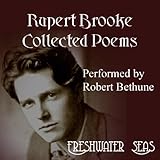
- Audible Audiobook
- Rupert Brooke (Author) - Robert Bethune (Narrator)
- English (Publication Language)
- 01/21/2009 (Publication Date) - Freshwater Seas (Publisher)
3. Explore the “Grantchester” Poems: Dedicate time to “The Old Vicarage, Grantchester.”
- Action: Read this poem in its entirety, paying attention to its shifting moods and ironic observations.
- What to Look For: Identify the blend of affection and gentle mockery directed at English village life and intellectual circles.
- Mistake to Avoid: Dismissing the humor as mere lightheartedness; it serves as a critical lens on the very ideals Brooke often champions.
4. Examine Less Familiar Pieces: Seek out poems not typically anthologized.
- Action: Read at least two poems from the latter sections of the collection that you do not recognize.
- What to Look For: Assess if these poems offer new thematic angles or stylistic variations, or if they reinforce existing patterns.
- Mistake to Avoid: Skipping these sections under the impression that the “best” of Brooke is already covered by the famous works.
5. Consider the Volume’s Structure: Reflect on how the poems are ordered.
- Action: Note any apparent chronological or thematic groupings.
- What to Look For: Understand if the editor’s arrangement guides a particular reading experience or highlights specific connections.
- Mistake to Avoid: Reading poems in isolation without considering their placement within the larger collection.
Common Myths About Rupert Brooke’s Collected Poems
- Myth: Rupert Brooke’s poetry is solely defined by simplistic jingoism.
- Why it Matters: This view reduces his work to propaganda, ignoring the lyrical beauty and genuine emotion present even in his patriotic verses. It also overlooks his earlier, non-war-related poetry.
- Fix: Read “The Old Vicarage, Grantchester” for its complex blend of affection and irony, and consider the formal craftsmanship in his love lyrics to gain a more balanced perspective.
- Myth: His collected works offer a comprehensive view of early 20th-century poetic innovation.
- Why it Matters: While Brooke was a contemporary of major Modernist figures, his style remained largely rooted in traditional forms and themes, differing significantly from the experimental approaches of poets like T.S. Eliot or Ezra Pound.
- Fix: Compare Brooke’s use of language and structure to works by poets like Wilfred Owen or Siegfried Sassoon, who also wrote about war but with distinctly different stylistic and thematic concerns, to understand the spectrum of poetic responses to the era.
Decision Rules
- If reliability is your top priority for The Collected Poems Of Rupert Brooke by Rupert Brooke, choose the option with the strongest long-term track record and support.
- If value matters most, compare total ownership cost instead of headline price alone.
- If your use case is specific, prioritize fit-for-purpose features over generic ‘best overall’ claims.
FAQ
- Q: Is The Collected Poems Of Rupert Brooke by Rupert Brooke suitable for someone new to poetry?
A: Yes, the lyrical quality and accessible themes of many poems make it a good entry point, particularly if one starts with his less overtly patriotic works.
- Q: How does Brooke’s poetry in this collection compare to that of other WWI poets?
A: Brooke’s work, especially his war sonnets, often expresses an idealized, romantic view of dying for one’s country, written early in the conflict. Other poets like Wilfred Owen or Siegfried Sassoon, writing later, frequently depicted the brutal realities and disillusionment of trench warfare with starker, more visceral language.
- Q: What is the significance of “The Old Vicarage, Grantchester”?
A: This long, narrative poem is significant for its witty, affectionate, yet critical portrayal of English rural life and intellectual society, offering a broader glimpse into Brooke’s sensibilities beyond his more famous patriotic verses.
- Q: Are there any poems in this collection that are particularly challenging to understand?
A: While generally accessible, some of the more abstract lyrical pieces or those referencing specific widely referenced works of his era might require a bit more contextual understanding. However, no poem is inherently obscure.
Expert Tips for Reading Rupert Brooke
- Tip: Read Brooke’s war sonnets in chronological order if possible.
- Actionable Step: Identify the publication or composition dates for sonnets like “The Soldier,” “The Dead,” and “The Great Lover” within your edition.
- Common Mistake to Avoid: Treating all war poems as monolithic expressions of patriotism; their placement in time reveals a developing national mood and personal perspective.
- Tip: Pay attention to the recurring imagery of nature and beauty.
- Actionable Step: Keep a running list of natural elements (e.g., sky, earth, stars, flowers) and abstract concepts (e.g., beauty, love, truth) that appear frequently.
- Common Mistake to Avoid: Focusing solely on the narrative or thematic content without appreciating the sensory details and idealized descriptions that form the bedrock of his style.
- Tip: Consider the biographical context, but do not let it overshadow the text.
- Actionable Step: Briefly research Brooke’s life and his early death in WWI before or after reading the collection.
- Common Mistake to Avoid: Reducing the poems to mere reflections of his biography, thereby missing the universal or formal qualities of the verse itself.
| Poem Title | Primary Theme(s) | Notable Stylistic Feature(s) |
|---|---|---|
| The Old Vicarage, Grantchester | Nostalgia, Irony, English Countryside | Narrative, Conversational Tone |
| The Soldier | Patriotism, Sacrifice, Idealized Death | Sonnet Form, Direct Address |
| The Fish | Nature, Beauty, Freedom | Lyrical, Vivid Imagery |
| The Great Lover | Love, Beauty, Mortality | Romantic Diction, Reflection |
| The Dead | Patriotism, Sacrifice, Eternal Rest | Sonnet Form, Solemnity |
BLOCKQUOTE_0