Robert Kiyosaki’s ‘Rich Dad, Poor Dad’ Financial Lessons
Rich Dad, Poor Dad by Robert T. Kiyosaki: Quick Answer
- Rich Dad, Poor Dad by Robert T. Kiyosaki promotes a philosophy of financial independence through asset acquisition, challenging traditional employment paradigms.
- The core tenet is differentiating between income-generating assets and liabilities, urging readers to prioritize the former.
- Its primary impact is a mindset shift; practical application requires supplementary research and careful risk assessment.
Who This Is For
- Individuals seeking to question conventional wisdom regarding career progression and wealth accumulation.
- Readers aiming to understand foundational concepts of financial literacy and asset-based income generation.
What to Check First
- Author’s Philosophy: Robert Kiyosaki presents a personal philosophy derived from his experiences. It is not a regulated financial advisory guide.
- Asset Definition: Kiyosaki defines assets as items that generate income (e.g., rental properties, dividend stocks) and liabilities as items that incur expenses (e.g., mortgages on personal homes, car loans).
- Narrative Approach: The book uses a story format to illustrate financial principles. It is inspirational rather than a prescriptive step-by-step financial plan.
- Risk Underestimation: While advocating for investment, the book can understate the significant risks and capital requirements inherent in entrepreneurship and real estate.
Step-by-Step Plan for Applying Rich Dad Principles
1. Deconstruct Your Financial Beliefs:
- Action: Reflect on your core assumptions about money, work, and security.
- What to Look For: Identify if your financial motivations stem from a desire for job security or from the pursuit of financial independence.
- Mistake: Assuming that a steady paycheck from employment inherently guarantees long-term financial security without actively building income-generating assets.
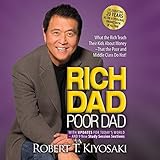
- Audible Audiobook
- Robert T. Kiyosaki (Author) - Tom Parks (Narrator)
- English (Publication Language)
- 05/14/2019 (Publication Date) - Brilliance Audio (Publisher)
2. Categorize Your Financial Holdings:
- Action: List all your current assets and liabilities, assessing their impact on your cash flow.
- What to Look For: Distinguish between items that consistently put money in your pocket (assets) and those that consistently take money out (liabilities). A personal residence, for instance, is often a liability due to ongoing costs.
- Mistake: Equating ownership of assets that appreciate in value (like a primary home) with wealth creation, without accounting for their continuous expenses.
3. Prioritize Income-Generating Asset Acquisition:
- Action: Direct capital towards investments that produce regular income, such as dividend-paying stocks, rental properties, or businesses.
- What to Look For: Investments where the generated income reliably exceeds associated ownership and operating costs.
- Mistake: Focusing solely on asset appreciation without considering immediate cash flow, delaying the realization of financial independence.
4. Commit to Continuous Financial Education:
- Action: Dedicate regular time to learning about finance, investing, and business.
- What to Look For: Educational resources that explain financial concepts clearly and offer practical examples.
- Mistake: Relying exclusively on formal education or external advice without developing your own informed understanding of financial principles.
5. Understand Business and Legal Structures:
- Action: Learn how business entities can optimize financial management and asset protection.
- What to Look For: The strategic advantages of structures like Limited Liability Companies (LLCs) for managing investments and business activities.
- Mistake: Conducting all financial activities as an individual, potentially exposing personal assets to business risks and missing tax efficiencies.
6. Focus on Skill Acquisition Over Salary:
- Action: Seek roles that offer valuable skill development, even if initial compensation is lower.
- What to Look For: Opportunities to gain experience in sales, marketing, management, or accounting.
- Mistake: Staying in a job solely for its salary, neglecting chances for long-term skill enhancement and professional growth that can fuel asset building.
Common Myths About Financial Independence
- Myth: You need a high income to become wealthy.
- Why it Matters: This belief discourages individuals with moderate incomes from pursuing wealth-building strategies. Kiyosaki emphasizes financial literacy and smart asset acquisition over sheer income level.
- Fix: Focus on managing your money effectively, increasing your financial IQ, and acquiring income-generating assets, regardless of your current salary.
- Myth: Investing is only for the wealthy.
- Why it Matters: This myth creates a barrier to entry, making people feel excluded from investment opportunities. Kiyosaki highlights that starting small and consistently is key.
- Fix: Explore accessible investment options like fractional shares, low-cost index funds, or real estate investment trusts (REITs) that allow for smaller initial capital.
- Myth: A stable job is the safest path to financial security.
- Why it Matters: This perspective can lead to a reliance on a single income source, making individuals vulnerable to economic downturns or job loss. Kiyosaki advocates for diversifying income streams through assets.
- Fix: While maintaining a job, actively work on building a portfolio of assets that generate passive income, creating multiple sources of financial security.
- Myth: Real estate investing requires substantial upfront capital and is inherently risky.
- Why it Matters: This can deter potential investors from exploring real estate as a wealth-building tool. Kiyosaki, while acknowledging risk, demonstrates strategies for acquiring property.
- Fix: Research creative financing options, consider lower-cost markets, and thoroughly understand property management and market analysis to mitigate risks.
Expert Tips for Applying Rich Dad Principles
1. Tip: Develop a “mind your own business” mindset.
- Action: Allocate at least one hour per week to working on your asset column, separate from your primary job responsibilities.
- Mistake to Avoid: Consistently deferring actions related to your personal investments or side ventures due to perceived lack of time or energy.
2. Tip: Master the language of finance.
- Action: Study basic accounting principles, focusing on how income statements and balance sheets reflect financial health.
- Mistake to Avoid: Delegating all financial understanding to accountants or advisors without grasping the fundamental metrics yourself.
3. Tip: Leverage debt strategically for asset acquisition.
- Action: Learn to distinguish between “good debt” (used to acquire assets that generate income) and “bad debt” (used for depreciating liabilities).
- Mistake to Avoid: Taking on consumer debt for depreciating assets like cars or electronics, or failing to calculate the ROI of debt used for investment properties.
Decision Rules
- If your goal is a mindset shift toward financial independence, Rich Dad, Poor Dad by Robert T. Kiyosaki serves as a powerful catalyst.
- If you seek specific, actionable investment strategies, supplement this book with more detailed financial planning resources.
- If you are risk-averse, critically evaluate Kiyosaki’s examples and conduct thorough due diligence before implementing any investment.
Quick Comparison
| Option | Best for | Pros | Watch out |
|---|---|---|---|
| Rich Dad Poor Dad by Robert T Kiyosaki Quick Answer | General use | Rich Dad, Poor Dad by Robert T. Kiyosaki promotes a philosophy of financial i… | Mistake: Assuming that a steady paycheck from employment inherently guarantee… |
| Who This Is For | General use | The core tenet is differentiating between income-generating assets and liabil… | Mistake: Equating ownership of assets that appreciate in value (like a primar… |
| What to Check First | General use | Its primary impact is a mindset shift; practical application requires supplem… | Mistake: Focusing solely on asset appreciation without considering immediate… |
| Step-by-Step Plan for Applying Rich Dad Principles | General use | Individuals seeking to question conventional wisdom regarding career progress… | Mistake: Relying exclusively on formal education or external advice without d… |
FAQ
- Q: Is Rich Dad, Poor Dad by Robert T. Kiyosaki still relevant in today’s economy?
- A: The core principles of financial literacy, asset acquisition, and developing a proactive mindset remain highly relevant. However, specific market dynamics and investment vehicles have evolved, requiring contemporary research alongside the book’s teachings.
- Q: Does the book advocate for illegal tax avoidance?
- A: No, Kiyosaki advocates for understanding and legally utilizing tax laws to one’s advantage, particularly through business ownership, which is distinct from illegal tax evasion.
- Q: What is the primary difference between the “Rich Dad” and “Poor Dad” philosophies?
- A: “Poor Dad” represents the traditional advice of working for money, prioritizing job security, and saving. “Rich Dad” emphasizes financial education, acquiring assets that generate income, and having money work for you.
- Q: Can I become wealthy solely by reading this book?
- A: Reading the book can provide a crucial shift in perspective and understanding of financial concepts. However, achieving wealth requires consistent action, learning, and practical application of these principles over time.
Understanding Financial Education Through Rich Dad, Poor Dad by Robert T. Kiyosaki
The long-term relevance of Rich Dad, Poor Dad by Robert T. Kiyosaki stems from its potent challenge to conventional financial thinking. It contrasts the advice of Kiyosaki’s highly educated but financially constrained biological father (“Poor Dad”) with that of his friend’s entrepreneurial father (“Rich Dad”). Poor Dad champions job security and diligent saving, while Rich Dad advocates for financial literacy, asset acquisition, and making money work for you. The book’s strength lies in its narrative power to reframe a reader’s perception of work, money, and wealth creation, positioning financial education as paramount. It serves as a compelling introduction for those questioning the traditional path of employment for financial success.
However, the book’s limitations are significant for readers seeking direct guidance. Kiyosaki’s approach is largely philosophical and anecdotal, often lacking the detailed, actionable financial strategies and rigorous market analysis found in prescriptive investment guides. While he promotes entrepreneurship and real estate, the significant risks and capital requirements involved are sometimes understated. Consequently, Rich Dad, Poor Dad by Robert T. Kiyosaki functions most effectively as a motivational primer, inspiring readers to seek out more detailed, practical financial education from a variety of credible sources.
BLOCKQUOTE_0
This foundational quote encapsulates the book’s central thesis: a shift from being an employee to becoming an owner and investor. It urges readers to move beyond trading time for income and to focus on building an asset column that generates passive income. While this principle is critical for wealth accumulation, its practical implementation demands a thorough understanding of investment vehicles, market dynamics, and comprehensive risk management—areas only broadly touched upon within the book’s narrative.