Robert Jackson Bennett’s Epic Fantasy Of Magic And Revolution
Quick Answer
- Foundryside by Robert Jackson Bennett features a meticulously constructed magic system called “scriving,” which operates on principles analogous to programming code within its fantasy setting.
- The novel’s strength lies in its intricate world-building and the logical consistency of its magic, appealing to readers who value complex systems and a narrative blending heist elements with societal revolution.
- Readers who prefer straightforward magic or character-centric plots without extensive world-building may find the detailed mechanics to be a significant hurdle.
Who This Is For
- Readers who appreciate intricate, hard magic systems with clearly defined rules and consistent application, similar to logical programming paradigms.
- Fans of heist narratives and stories exploring societal upheaval and the ramifications of radical change, set within an industrial-era fantasy context.
What to Check First
- Magic System Complexity: Evaluate your inclination towards detailed, rule-based magic systems. Foundryside’s “scriving” is a central element that necessitates understanding its underlying principles.
- Pacing and Plot Focus: Determine your preference for narrative speed. Foundryside offers a deliberate pace that allows for extensive world-building and exploration of its magical engine.
- Character vs. System Emphasis: Consider whether your primary interest is in deep character development or in the exploration of a unique and functional magic system.
- Genre Blend: Be aware that the book synthesizes elements of fantasy, heist, and social commentary, which may not align with expectations for all traditional epic fantasy readers.
Step-by-Step Plan for Understanding Foundryside’s Engine
1. Grasp the Core Concept of Scriving:
- Action: Engage with the initial explanations of how “scriving” functions, focusing on the concept of imbuing objects with commands.
- What to Look For: Understand that scriving is not an innate magical ability but a learned craft that modifies an object’s fundamental properties through inscribed runes.
- Mistake: Perceiving scriving as akin to traditional fantasy spellcasting; it more closely resembles object-oriented programming.
2. Identify Key Scriving Principles:
- Action: Pay close attention to how various scrives affect objects, such as altering their weight, speed, or durability.
- What to Look For: Note the inherent limitations and costs associated with scriving, including material requirements, energy expenditure, and the potential for paradoxes.
- Mistake: Overlooking the logical constraints and energy costs; the system is designed for functional consistency, not boundless capability.
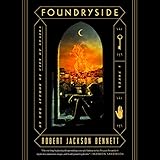
- Audible Audiobook
- Robert Jackson Bennett (Author) - Tara Sands (Narrator)
- English (Publication Language)
- 20 Pages - 08/21/2018 (Publication Date) - Random House Audio (Publisher)
3. Understand the “Hierarchies”:
- Action: Recognize how different factions or individuals leverage scriving to advance their agendas, thereby establishing power structures.
- What to Look For: Observe how the control and application of scriving define the social and economic hierarchies within the city of Tevanne.
- Mistake: Focusing exclusively on individual scrivers without considering the broader societal ramifications of their craft.
4. Analyze the Heist Elements:
- Action: Follow the narrative of the central heist, noting the specific ways scriving is employed to bypass security measures and achieve objectives.
- What to Look For: Appreciate the ingenious application of scriving mechanics to resolve logistical and physical challenges inherent in the heist.
- Mistake: Underestimating the integral role of the magic system in facilitating the heist; the plot is intrinsically linked to its operational mechanics.
5. Examine the Revolutionary Undertones:
- Action: Track the characters’ motivations and the societal commentary embedded within the narrative.
- What to Look For: Understand how the concentrated control of scriving by specific groups fuels discontent and drives the revolutionary plot.
- Mistake: Treating the revolution as a secondary plotline; it is a direct consequence of the magic system’s unequal distribution.
6. Evaluate the Consequences of Scriving:
- Action: Observe the long-term effects of scriving on individuals and society, including potential dangers and ethical considerations.
- What to Look For: Note any instances where the misuse or over-reliance on scriving leads to detrimental outcomes.
- Mistake: Assuming the magic system is solely a tool for progress without acknowledging its inherent risks and ethical implications.
Foundryside by Robert Jackson Bennett: A Contrarian’s Perspective
While many commend the intricate magic system of Foundryside, a contrarian viewpoint highlights that its very strength can serve as a significant barrier. The detailed, almost engineering-level explanation of “scriving”—the act of inscribing runes onto objects to alter their physical properties and behavior—demands considerable reader engagement. This is not magic that simply occurs; it is a system with explicit rules, energy costs, and logical consequences, functioning much like a complex software program.
The appeal of Foundryside lies precisely in this precision. Bennett constructs a world where magic is as tangible and comprehensible as any mechanical process. However, for readers who prefer a more intuitive or character-driven magical experience, the extensive exposition on scriving’s mechanics can feel more like a didactic lecture than an immersive narrative. The plot, while engaging, often functions as a vehicle to demonstrate these principles, potentially leading to pacing issues for those less invested in the technical aspects of the magic.
Common Myths
- Myth: Foundryside’s magic is a variation of standard fantasy spellcasting.
- Correction: Scriving is a distinct system that alters object properties through inscribed commands, not through inherent magical ability or incantations. It operates on principles of physical alteration and logical commands, akin to engineering.
- Myth: The magic system is merely a backdrop for the narrative.
- Correction: The magic system is foundational to the story. The heist, the societal structures, and the revolutionary conflict are all direct consequences of how scriving functions and who controls its application.
Expert Tips for Engaging with the World of Foundryside
- Tip: Approach scriving as a form of applied physics or coding.
- Actionable Step: When encountering a scrived object, ask yourself: “What command has been inscribed, and what physical property is it altering?”
- Common Mistake to Avoid: Attempting to apply traditional magic logic; instead, think of it as manipulating object data through a specific interface (runes).
- Tip: Focus on the “why” behind the scrives, not solely the “what.”
- Actionable Step: Consider who benefits from a particular scrive and how it influences the power dynamics within Tevanne.
- Common Mistake to Avoid: Becoming engrossed in the technical details without connecting them to the characters’ motivations and the broader societal implications.
- Tip: Embrace the world-building as a primary feature.
- Actionable Step: Actively seek out descriptions of the city, its technology, and the social stratification driven by scriving.
- Common Mistake to Avoid: Skimming over the world-building sections; these are crucial for understanding the characters’ actions and the plot’s progression.
Foundryside by Robert Jackson Bennett: A Unique Approach to Magic
The innovation within Foundryside stems from its “hard magic” system, where the rules are meticulously defined and consistently applied. This approach represents a significant departure from softer, more ethereal magic systems frequently found in fantasy literature. Bennett’s engine of scriving functions as a programmable interface for reality, enabling objects to be imbued with specific commands. For example, a sword could be scrived to always return to its wielder’s hand, or a door to open only for designated individuals. This detailed, logical framework stands as the book’s most distinctive attribute.
However, this very strength can also present a limitation. The depth of explanation required to establish this system can lead to initial pacing that feels slow for readers accustomed to more immediate immersion. The narrative frequently pauses to detail the mechanics of scriving, which, while fascinating for those who appreciate intricate world-building, might be perceived as exposition dumps by others. The characters, while functional within the plot, often cede prominence to the exploration of the magic system and its societal impact.
| Scriving Application | Functionality Example | Societal Impact | Reader Constraint |
|---|---|---|---|
| Transportation | “Weightless” scrives for faster movement of goods. | Drives industrial efficiency and economic disparities. | High |
| Defense | “Impenetrable” scrives for armor and fortifications. | Creates security for the elite, vulnerability for others. | Moderate |
| Personal Use | “Self-heating” scrives for comfort. | Demonstrates class divide; accessibility is key. | Low |
Decision Criterion: Magic System Depth vs. Narrative Momentum
For readers prioritizing narrative momentum and character-driven plots, Foundryside by Robert Jackson Bennett might present a challenging read. The extensive focus on the mechanics of scriving, while brilliant in its construction, can impede the plot’s progression. Conversely, for readers who value deeply realized and logically consistent magic systems where the world-building is as vital as the characters, Foundryside offers a richly rewarding experience. This distinction in reader preference directly influences the recommendation.
BLOCKQUOTE_0
Decision Rules
- If reliability is your top priority for Foundryside by Robert Jackson Bennett, choose the option with the strongest long-term track record and support.
- If value matters most, compare total ownership cost instead of headline price alone.
- If your use case is specific, prioritize fit-for-purpose features over generic ‘best overall’ claims.
FAQ
- Q: Is Foundryside a standalone novel?
- A: No, Foundryside is the first book in The Founders trilogy. Subsequent books continue the story and expand upon the established world and magic system.
- Q: How complex is the “scriving” magic system?
- A: It is highly complex and logically structured, functioning akin to programming code. Understanding its rules and limitations is key to appreciating the novel.
- Q: Are the characters well-developed?
- A: The characters are functional within the plot and serve the narrative’s exploration of the magic system and societal themes. However,