Robert J. Sawyer’s ‘Hominids’: An Evolutionary Tale
Robert J. Sawyer’s novel Hominids presents a compelling speculative scenario where two distinct intelligent hominid species coexist. This analysis focuses on its scientific underpinnings, thematic depth, and suitability for specific reader interests, offering a structured evaluation.
Quick Answer
- Hominids by Robert J. Sawyer explores a scientifically plausible evolutionary divergence resulting in two sapient hominid species, forcing a re-evaluation of intelligence and consciousness.
- The novel’s strength lies in its rigorous scientific extrapolation and profound philosophical inquiries into identity and humanity.
- This book is recommended for readers of hard science fiction who appreciate detailed world-building and thought-provoking ethical explorations.
Who This Is For
- Readers who enjoy hard science fiction grounded in evolutionary biology, anthropology, and neuroscience.
- Individuals seeking a novel that challenges anthropocentric viewpoints and explores complex philosophical questions about consciousness.
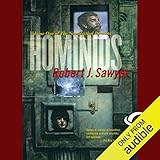
- Audible Audiobook
- Robert J. Sawyer (Author) - Jonathan Davis, Robert J. Sawyer (Narrators)
- English (Publication Language)
- 04/21/2008 (Publication Date) - Audible Studios (Publisher)
What to Check First
Before diving into Hominids, consider these key aspects:
- Authorial Intent and Method: Robert J. Sawyer is known for his commitment to scientific accuracy and logical extrapolation. His narratives often serve as thought experiments built upon current scientific understanding.
- Core Concept’s Uniqueness: The novel’s central premise—that sapience could evolve along divergent hominid paths—is a significant counter-intuitive angle. It posits that intelligence is not a singular, human-exclusive trait but a potential outcome of various evolutionary pressures.
- Scientific Exposition Density: Be prepared for detailed scientific explanations. Sawyer prioritizes the biological and neurological foundations of his speculative world, which can impact narrative pacing for readers less inclined toward scientific detail.
- Philosophical Underpinnings: The book is less about action and more about ideas. Its primary goal is to provoke thought on what defines intelligence, consciousness, and personhood through the lens of interspecies interaction.
Step-by-Step Plan for Understanding Hominids
1. Identify the Divergence Point: Understand the proposed evolutionary event that led to two distinct intelligent hominid species.
- Action: Note the environmental or genetic factors Sawyer suggests caused the split between Homo sapiens and a parallel lineage, such as Australopithecus robustus.
- What to look for: The specific biological and ecological pressures that shaped each species’ unique evolutionary path.
- Mistake to avoid: Assuming the parallel species is merely a less advanced precursor; it represents a distinct, sapient evolutionary outcome.
2. Analyze Cognitive and Social Divergences: Examine the distinct mental and societal structures of each hominid group.
- Action: Observe how Sawyer describes each species’ perception, communication, and societal organization.
- What to look for: Sawyer’s exploration of how different neurological architectures might foster fundamentally different forms of consciousness.
- Mistake to avoid: Imposing human social norms or cognitive frameworks onto the parallel species without acknowledging their potentially alien nature.
3. Track Inter-Species Encounters: Follow the narrative’s progression as the two intelligent hominid species interact.
- Action: Observe the challenges and conflicts arising from communication and cultural disparities.
- What to look for: The ethical dilemmas and philosophical questions that emerge from this forced coexistence.
- Mistake to avoid: Focusing solely on plot mechanics and overlooking the deeper implications of the interspecies relationship.
4. Evaluate Scientific Foundations: Recognize the scientific theories Sawyer employs to support his narrative’s plausibility.
- Action: Pay attention to references in genetics, neuroscience, evolutionary biology, and potentially quantum physics.
- What to look for: How these concepts are integrated to provide a credible basis for the novel’s speculative elements.
- Mistake to avoid: Dismissing scientific exposition as mere background; it is integral to the novel’s thematic weight and internal consistency.
5. Reflect on Philosophical Ramifications: Consider the broader questions the novel raises about intelligence, identity, and humanity.
- Action: Ponder the novel’s challenge to anthropocentrism and its redefinition of what constitutes a “person.”
- What to look for: The novel’s exploration of consciousness as a spectrum rather than a binary state.
- Mistake to avoid: Treating the book as a simple adventure story, thereby missing its profound existential inquiries.
Hominids by Robert J. Sawyer: Strengths and Limitations
Sawyer’s novel is a meticulously crafted work that excels in its intellectual ambition, though its density may present challenges for some readers.
Strengths
- Scientific Plausibility and Depth: The novel’s most significant strength lies in its rigorous application of scientific principles to a speculative premise. Sawyer constructs a compelling case for how two intelligent hominid species could have evolved in parallel. For instance, the detailed explanations of genetic drift and differing neurological architectures for the Australopithecus robustus species provide a robust framework that feels grounded in real-world science. This attention to detail makes the core concept of Hominids by Robert J. Sawyer feel less like fantasy and more like a logical extrapolation.
- Thematic Resonance and Philosophical Inquiry: Hominids transcends typical genre fare by engaging deeply with profound philosophical questions. The novel forces readers to confront anthropocentric biases by presenting an alien yet intelligent species. The exploration of what constitutes consciousness, personhood, and ethics, particularly through the interactions between the two hominid groups, is thought-provoking. Sawyer prompts readers to reconsider their definitions of intelligence and life, making the book a valuable catalyst for introspection.
Limitations
- Narrative Density and Accessibility: The novel’s commitment to scientific detail can, at times, create a dense reading experience. Readers unfamiliar with evolutionary biology or neuroscience might find certain passages challenging to digest, potentially slowing the narrative flow. For example, extended discussions on quantum mechanics or detailed neurological functions, while scientifically accurate, can interrupt the story’s momentum for a less specialized audience.
- Character Emotional Arc: While the characters effectively serve to explore the novel’s scientific and philosophical themes, their emotional development can sometimes feel secondary. The focus is heavily on the intellectual journey and the exploration of ideas, which may leave some readers desiring more deeply developed emotional connections with the characters. The narrative prioritizes the concepts being explored over the intimate emotional lives of its protagonists.
Expert Tips for Engaging with Hominids
- Tip 1: Embrace the Counterfactual.
- Actionable Step: Before reading, actively consider the implications of a world where human evolution was not the sole path to sapience.
- Common Mistake to Avoid: Dismissing the premise as unrealistic; Sawyer’s strength is in making the improbable plausible through scientific reasoning.
- Tip 2: Track the Scientific Anchors.
- Actionable Step: Make a mental note of the key scientific concepts (e.g., convergent evolution, quantum entanglement, neurological plasticity) that Sawyer uses as foundational elements.
- Common Mistake to Avoid: Skimming over the scientific explanations; they are crucial for understanding the novel’s internal logic and thematic weight.
- Tip 3: Analyze the Ethical Frameworks.
- Actionable Step: As interactions between the two hominid species occur, pause to consider the ethical considerations from each species’ perspective.
- Common Mistake to Avoid: Judging the actions of the Australopithecus robustus species solely through a human ethical lens, rather than appreciating their potentially alien moral structures.
Common Myths About Hominids by Robert J. Sawyer
- Myth 1: The novel presents a simple “us vs. them” conflict between humans and primitive beings.
- Why it matters: This mischaracterizes the sophisticated nature of the depicted hominid species and the nuanced conflict.
- Correction: Sawyer portrays both Homo sapiens and the Australopithecus robustus species as intelligent and sapient, each with complex societies and unique ways of understanding the world. The conflict arises from fundamental differences in perspective and existence, not from a simple hierarchy of intelligence.
- Myth 2: The science in the book is purely speculative fantasy with no basis in reality.
- Why it matters: This overlooks Sawyer’s dedication to scientific accuracy and extrapolation.
- Correction: Sawyer grounds his narrative in established principles of evolutionary biology, genetics, and neuroscience. The novel explores plausible outcomes of these scientific theories, making it hard science fiction rather than pure fantasy.
- Myth 3: The book is inaccessible to readers without a science background.
- Why it matters: This might deter readers interested in the philosophical and thematic aspects of the novel.
- Correction: While scientifically rich, Hominids explores universal themes of consciousness, identity, and what it means to be sentient. Sawyer explains complex concepts clearly, making the novel engaging for a broader audience interested in thought-provoking speculative ideas.
Comparative Table: Hominids by Robert J. Sawyer
| Aspect | Description | Significance for Reader | Potential Pitfall |
|---|---|---|---|
| Scientific Rigor | Detailed extrapolation of evolutionary biology, genetics, and neuroscience. | Provides a plausible foundation for the speculative premise, enhancing reader immersion and intellectual engagement. | Can lead to dense passages that may require careful reading or external research for full comprehension. |
| Philosophical Depth | Explores consciousness, identity, anthropocentrism, and the definition of “human.” | Challenges readers’ assumptions and prompts deep reflection on fundamental aspects of existence and intelligence. | May overshadow character emotional development, potentially leaving some readers seeking more personal narrative arcs. |
| Narrative Pacing | Driven by scientific exposition and philosophical exploration, with plot progression often stemming from intellectual discovery. | Rewards readers who prioritize concept exploration |
Decision Rules
- If reliability is your top priority for Hominids by Robert J. Sawyer, choose the option with the strongest long-term track record and support.
- If value matters most, compare total ownership cost instead of headline price alone.
- If your use case is specific, prioritize fit-for-purpose features over generic ‘best overall’ claims.