Roald Dahl’s Charlie And The Chocolate Factory: A Sweet Adventure
Charlie And The Chocolate Factory, by Roald Dahl: Quick Answer
- Core Themes: Explores themes of greed, entitlement, morality, and the consequences of poor behavior through distinct character archetypes.
- Literary Significance: Offers a cautionary tale wrapped in fantastical elements, critiquing societal vices through child protagonists and their flawed adult counterparts.
- Reader Takeaway: Provides a framework for discussing ethical behavior and the impact of choices, making it a valuable text for both entertainment and moral education.
Who This Is For
- Readers interested in literary analysis of children’s literature, particularly its underlying moral and thematic structures.
- Educators and parents seeking to discuss themes of behavior, consequences, and morality with younger audiences using a familiar and engaging text.
What to Check First
- Authorial Intent: Consider Roald Dahl’s known penchant for dark humor and moral lessons, often delivered through exaggerated scenarios. This context is crucial for understanding the satirical edge.
- Character Archetypes: Identify the distinct flaws embodied by each child (Augustus Gloop – gluttony, Veruca Salt – greed/spoiled, Violet Beauregarde – pride/competitiveness, Mike Teavee – obsession/addiction) and their corresponding fates.
- Symbolism of the Factory: Analyze the Everlasting Gobstopper, the Wonka Bar, and other confections not just as treats, but as catalysts for revealing character and driving the narrative’s moral progression.
- Willy Wonka’s Role: Assess Wonka’s motivations and methods. Is he a benevolent guide, a detached observer, or an active arbiter of justice? His enigmatic nature is central to the story’s ambiguity.
Step-by-Step Plan: Deconstructing Charlie And The Chocolate Factory
1. Identify the Central Conflict: The primary conflict revolves around Charlie Bucket’s inherent goodness and poverty contrasted with the moral failings of the other Golden Ticket winners.
- Action: Note Charlie’s humble origins and his family’s genuine affection versus the ostentatious displays of wealth and entitlement from the other families.
- What to Look For: Evidence of Charlie’s selflessness (e.g., sharing his own candy) and the other children’s blatant disregard for others.
- Mistake to Avoid: Assuming Charlie’s poverty is merely a plot device; it serves as a moral counterpoint to the wealth-driven vices of others.
2. Analyze the “Bad” Children’s Demise: Each child’s downfall is directly linked to their defining vice, serving as a clear consequence.
- Action: Map each child’s primary flaw to their specific fate within the factory.
- What to Look For: Augustus Gloop’s gluttony leads him to the chocolate river; Veruca Salt’s greed results in her being deemed a “bad nut”; Violet Beauregarde’s pride in chewing gum leads to her becoming a blueberry; Mike Teavee’s obsession with television is literalized.
- Mistake to Avoid: Viewing the fates as mere whimsical punishments; they are precise, thematic consequences designed to reinforce the moral lesson.
3. Examine Willy Wonka’s Judgment: Wonka’s actions are not random; they are deliberate tests and judgments.
- Action: Observe Wonka’s reactions and commentary as each child succumbs to their vice.
- What to Look For: Wonka’s often dry, sardonic, or seemingly indifferent responses, which mask a clear moral evaluation of the children’s behavior. He does not prevent their self-destruction; he allows it to unfold.
- Mistake to Avoid: Interpreting Wonka as a purely benevolent figure; he is an active participant in the moral reckoning.
4. Assess Charlie’s Virtue: Charlie’s consistent goodness and humility are key to his survival and eventual reward.
- Action: Track Charlie’s interactions and choices throughout his tour of the factory.
- What to Look For: Charlie’s honesty, his empathy for others (even those who are rude), and his lack of entitlement. His final act of returning the Everlasting Gobstopper is pivotal.
- Mistake to Avoid: Underestimating the significance of Charlie’s moral compass; it is the explicit reason for his selection.
5. Understand the Factory as a Microcosm: The chocolate factory functions as a controlled environment where societal vices are amplified and judged.
- Action: Consider the factory’s fantastical elements as metaphors for real-world temptations and moral challenges.
- What to Look For: The Oompa-Loompas’ songs, which explicitly moralize the children’s downfall, act as public pronouncements of their character flaws.
- Mistake to Avoid: Focusing solely on the magical aspects and missing the underlying social commentary on consumerism, greed, and superficiality.
6. Evaluate the Ending’s Message: The resolution reinforces the narrative’s moral framework.
- Action: Analyze Charlie’s inheritance of the factory and what it signifies.
- What to Look For: The reward is not just material wealth but the responsibility that comes with it, earned through integrity.
- Mistake to Avoid: Seeing the ending as a simple “happily ever after”; it implies a continuous commitment to the values Charlie has demonstrated.
For those looking to dive into Roald Dahl’s classic tale, the book itself offers a delightful and thought-provoking experience. It’s a perfect read for understanding the themes discussed.
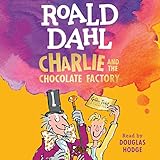
- Audible Audiobook
- Roald Dahl (Author) - Douglas Hodge (Narrator)
- English (Publication Language)
- 06/13/2013 (Publication Date) - Listening Library (Publisher)
Common Mistakes
- Myth: The Oompa-Loompas are simply magical workers who sing songs.
- Why it Matters: This overlooks their crucial narrative function as moral commentators and judges, reinforcing the story’s didactic purpose.
- Fix: Recognize the Oompa-Loompas as a Greek chorus, their songs explicitly detailing the moral failings and deserved fates of the disobedient children.
- Myth: Willy Wonka is a whimsical, eccentric candy maker with no real agenda.
- Why it Matters: This simplifies Wonka’s character and diminishes the story’s critique of societal values.
- Fix: Understand Wonka as a discerning evaluator, using his factory as a crucible to test the moral fortitude of potential heirs. His “whimsy” is a tool for observation and judgment.
- Myth: The story is primarily about the magic of candy and chocolate.
- Why it Matters: This superficial reading misses the deeper thematic concerns about human nature and ethics.
- Fix: Prioritize the allegorical nature of the factory and its contents, where temptations and excesses serve as catalysts for revealing character flaws.
Thematic Elements in Charlie And The Chocolate Factory, by Roald Dahl
Roald Dahl’s Charlie And The Chocolate Factory is more than just a fantastical journey into a world of sweets; it is a carefully constructed allegory examining the corrosive effects of societal vices. The narrative operates on a principle of clear moral consequence, where each child’s downfall is a direct, almost clinical, result of their dominant character flaw. This operates as a fundamental mechanism of the story: temptation presented, flaw exploited, consequence enacted.
The structure of the narrative, particularly the progression through distinct rooms of the factory, serves as a series of trials. Willy Wonka, the enigmatic proprietor, acts not as a protector but as an observer and arbiter, his seemingly detached demeanor masking a rigorous moral evaluation. The Oompa-Loompas, with their rhyming indictments, function as the narrative’s moralizing agents, explicitly stating the lessons derived from each child’s fate. This consistent application of cause and effect, amplified by the fantastical setting, forms the core of the book’s thematic strength.
Failure Mode: Misinterpreting Wonka’s Benevolence
A common reader failure mode with Charlie And The Chocolate Factory, by Roald Dahl is the assumption that Willy Wonka is a purely benevolent, albeit eccentric, figure. This perspective overlooks his role as a stern judge and the deliberate nature of his “tests.” Readers who adopt this view often miss the critical commentary on morality and consequence that Dahl embeds within the narrative.
- Detection: This misinterpretation surfaces when readers express surprise or confusion at Wonka’s seemingly callous reactions to the children’s predicaments. Phrases like “Why didn’t Wonka just save them?” or “He seemed to enjoy their misfortune” are indicators.
- Consequence: This leads to a superficial understanding of the book, reducing it to a whimsical adventure rather than a profound, albeit dark, exploration of ethics and human nature. The cautionary aspect of the tale is lost.
- Correction: Readers should be encouraged to view Wonka’s actions through the lens of consequence and accountability. His factory is a controlled environment designed to reveal character, and the children are subjected to the logical outcomes of their own choices, not random misfortune. The Oompa-Loompas’ songs are not mere entertainment but moral pronouncements.
Strengths and Limitations
Strengths:
- Moral Clarity: The book presents clear, albeit harsh, moral lessons that are easily grasped by younger readers. The direct correlation between vice and consequence is a powerful teaching tool.
- Imaginative World-Building: Dahl’s creation of Willy Wonka’s factory is a masterpiece of imaginative detail, offering a rich and captivating setting that fuels reader engagement.
- Satirical Edge: The novel effectively satirizes contemporary societal issues such as consumerism, greed, and the spoiling of children, providing a critique that remains relevant.
Limitations:
- Darkness of Consequences: The fates of the children, while thematically consistent, can be perceived as excessively dark or frightening for very young or sensitive readers.
- Ambiguity of Wonka: While his ambiguity adds depth, Wonka’s character can be challenging to fully reconcile, leaving some readers questioning his ultimate motivations and morality.
Expert Tips for Analyzing the Text
- Tip: Focus on the Oompa-Loompas’ songs as narrative devices.
- Actionable Step: For each child’s departure, analyze the specific lyrics of the Oompa-Loompa song. Identify the vice being addressed and the moral lesson being imparted.
- Common Mistake to Avoid: Treating the songs as mere filler or lighthearted diversions; they are the explicit moral commentary of the narrative.
- Tip: Compare and contrast the children’s motivations.
- Actionable Step: Create a chart detailing each child’s primary vice, their specific action that leads to their downfall, and Willy Wonka’s reaction.
- Common Mistake to Avoid: Grouping all the “bad” children together without acknowledging the specific nuance of each individual failing.
- Tip: Consider the role of poverty as a moral counterpoint.
- Actionable Step: Examine Charlie’s consistent humility and kindness, and how his lack of material wealth does not compromise his integrity. Contrast this with the wealth-driven entitlement of the other children.
- Common Mistake to Avoid: Viewing Charlie’s poverty solely as a plot device to make him sympathetic, rather than as a thematic element highlighting the corrupting influence of wealth and indulgence.
Literary Context and Significance
Charlie And The Chocolate Factory, by Roald Dahl emerged during a post-war era where discussions around childhood, morality, and societal values were prominent. Dahl’s work often challenged conventional fairy tale narratives by introducing darker, more complex themes and characters. The book’s enduring legacy lies in its ability to engage readers with a fantastical premise while simultaneously offering a potent critique of human failings. It serves as a foundational text in discussions about the ethics of desire and the importance of character development, making it a valuable work for literary analysis across age groups.
| Child’s Name | Primary Vice | Factory Incident | Thematic Consequence |
|---|---|---|---|
| Augustus Gloop | Gluttony | Fell into the chocolate river | Drowning in excess |
| Veruca Salt | Greed/Spoiled | Fell down the garbage chute | Becoming worthless refuse |
| Violet Beauregarde | Pride/Competitiveness | Turned into a blueberry | Bloated by self-importance |
| Mike Teavee | Obsession/Addiction | Shrunk by television | Literalized by technology |
| Charlie Bucket | Humility/Goodness | Showed integrity and honesty | Inherited the factory |
Decision Rules
- If reliability is your top priority for Charlie And The Chocolate Factory, by Roald Dahl, choose the option with the strongest long-term track record and support.
- If value matters most, compare total ownership cost instead of headline price alone.
- If your use case is specific, prioritize fit-for-purpose features over generic ‘best overall’ claims.
FAQ
- Q: What is the primary theme Roald Dahl explores in Charlie And The Chocolate Factory?
A: The primary theme is the exploration of vice and virtue, specifically how unchecked greed, gluttony, pride, and obsession lead to downfall, while humility, kindness, and honesty are rewarded.
- Q: Is Willy Wonka a good or bad character?
A: Wonka is an ambiguous character. He is not inherently malicious, but his methods are unconventional and he allows the children to face the consequences of their own poor choices. He acts as a judge and a dispenser of a particular brand of justice.
- Q: Why do the children get punished in such strange ways?
A: The fantastical punishments are symbolic. They are exaggerated manifestations of the children’s own vices, serving as clear, memorable lessons about the consequences of their behavior. For example, Augustus Gloop’s gluttony literally drowns him in chocolate.
- Q: What makes Charlie And The Chocolate Factory endure as a classic?
A: Its enduring appeal lies in its vivid imagination, its memorable characters, and its potent, albeit dark, moral lessons that resonate with both children and adults. The story taps into universal themes of desire, consequence, and the nature of goodness.