Richard Powers’ Bewilderment: Key Themes
Richard Powers’ novel Bewilderment offers a profound exploration of human connection, scientific inquiry, and the escalating ecological crisis. This guide provides a concise overview of its key themes, audience suitability, and practical advice for readers seeking to engage deeply with its complex narrative.
Quick Answer
- Bewilderment centers on the relationship between a grieving neuroscientist father and his eccentric son, using their dynamic to examine empathy, consciousness, and environmental interconnectedness.
- The novel masterfully integrates scientific concepts, particularly neuroscience and ecology, into a deeply emotional and philosophically rich narrative.
- It is best suited for readers who appreciate literary fiction that grapples with complex contemporary issues through intellectual depth and nuanced character development.
Who This Is For
- Readers interested in literary fiction that deliberately engages with scientific principles and ecological concerns, such as those found in Powers’ The Overstory.
- Individuals seeking narratives that explore the intricacies of human consciousness, empathy, and the challenges of parenting in a world facing environmental upheaval.
What to Check First
Before embarking on Bewilderment, consider these aspects to enhance your reading experience:
- Authorial Style: Richard Powers is known for his intellectually rigorous prose and his tendency to weave intricate scientific and philosophical ideas into his narratives. Be prepared for a contemplative pace.
- Thematic Depth: The novel tackles significant themes including grief, neurodiversity, artificial intelligence, and the existential threat of climate change. A willingness to engage with these weighty subjects is essential.
- Narrative Structure: Powers often employs unconventional narrative techniques. Familiarity with his previous works, like The Echo Maker, can offer insight into his approach to exploring consciousness and perception.
- Emotional Landscape: The story is driven by Theo Byrne’s grief over his wife’s death and his efforts to parent his son, Robin. The emotional intensity of this relationship is central to the novel’s impact.
Step-by-Step Plan for Engaging with Bewilderment by Richard Powers
To fully appreciate the layers of Bewilderment, a structured approach can be beneficial. This plan outlines key areas to focus on during your reading:
1. Establish the Father-Son Dynamic: Focus on the relationship between Theo Byrne, a neuroscientist, and his son, Robin. Observe how their individual challenges and their deep bond form the narrative’s emotional core.
- What to look for: Theo’s attempts to manage Robin’s behavioral and emotional intensity, his own grief, and their shared intellectual explorations.
- Mistake to avoid: Underestimating the father-son relationship as the primary vehicle for the novel’s broader philosophical and scientific inquiries.
2. Track the Integration of Neuroscience: Pay close attention to how Theo’s professional work on empathy and animal cognition directly informs his understanding of Robin and the world.
- What to look for: Specific scientific theories, experiments, and observations Theo shares with Robin, and how these relate to consciousness, empathy, and interconnectedness.
- Mistake to avoid: Dismissing the scientific explanations as mere exposition; they are integral to the characters’ internal lives and the novel’s thematic architecture.
3. Analyze the Ecological Underpinnings: Recognize how the novel mirrors the broader ecological anxieties of the present day within the characters’ personal lives and their immediate environment.
- What to look for: References to climate change, species extinction, and the interconnectedness of all life forms, often framed through Theo’s scientific lens.
- Mistake to avoid: Reading the environmental elements as a separate subplot; they are deeply interwoven with the personal narratives and the characters’ emotional states.
4. Deconstruct Robin’s Imaginative Narratives: Observe Powers’ use of Robin’s unique “neurophenomenological” stories and his imaginative world-building.
- What to look for: The interplay between Theo’s scientific perspective and Robin’s imaginative interpretations, and how these offer different ways of understanding reality and consciousness.
- Mistake to avoid: Becoming frustrated by unconventional storytelling; these techniques are designed to evoke specific states of consciousness and perception, reflecting the novel’s core themes.
5. Explore the Concept of “Bewilderment”: Reflect on the title’s multiple meanings—the characters’ emotional states, the overwhelming nature of the natural world, and the profound mysteries of existence.
- What to look for: Moments where characters experience confusion, awe, disorientation, or a loss of familiar bearings.
- Mistake to avoid: Limiting the interpretation of “bewilderment” to a single, negative connotation; it encompasses wonder, the edge of understanding, and the disorientation that precedes new insight.
6. Evaluate the Ethical Considerations: Examine the novel’s exploration of ethical dilemmas, particularly regarding intervention, natural processes, and the responsibilities of individuals in a complex and fragile ecosystem.
- What to look for: Theo’s internal debates and the choices he makes in relation to Robin, his scientific pursuits, and his understanding of the natural world.
- Mistake to avoid: Seeking simple moral answers; the novel often presents complex ethical landscapes without easy resolutions, mirroring real-world complexities.
7. Synthesize Core Thematic Resonance: As you progress, synthesize how the personal, scientific, and ecological threads converge to explore the nature of empathy, connection, and resilience in the face of crisis.
- What to look for: Recurring motifs and ideas that link the micro-level of family dynamics to the macro-level of global challenges.
- Mistake to avoid: Compartmentalizing the novel’s themes; their power and impact lie in their profound interconnectedness.
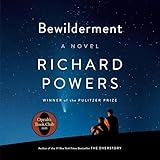
- Audible Audiobook
- Richard Powers (Author) - Edoardo Ballerini (Narrator)
- English (Publication Language)
- 09/21/2021 (Publication Date) - Random House Audio (Publisher)
Bewilderment by Richard Powers: Navigating Empathy and Ecology
Richard Powers’ Bewilderment is a meticulously crafted novel that delves into the intricate tapestry of human consciousness, personal loss, and the urgent realities of our planet’s ecological state. At its heart is the relationship between Theo Byrne, a neuroscientist grappling with the death of his wife, and his son, Robin. Robin’s unique and often overwhelming sensory experiences and behavioral patterns serve as a focal point for Theo’s scientific investigations into empathy and consciousness. This exploration is not confined to the laboratory; it permeates their daily lives, forcing Theo to confront the limits of scientific understanding and the profound mysteries of connection.
Powers masterfully integrates complex scientific concepts, drawing from neuroscience and ecology to illuminate the interconnectedness of all living systems. Theo’s research into how different species experience the world, particularly their capacity for empathy, becomes a lens through which he attempts to understand and parent Robin. This scientific framework is not presented as dry exposition but is woven into the emotional fabric of the narrative, demonstrating how our understanding of the natural world can inform our understanding of ourselves and our relationships. The novel posits that a deeper, scientifically-informed empathy might offer a pathway to addressing the profound alienation and environmental degradation of our era.
The title, Bewilderment, resonates on multiple levels. It describes Robin’s often disoriented and overstimulated state, Theo’s profound grief and confusion as a single parent, and the collective human disorientation in the face of ecological collapse and existential threats. Powers suggests that this state of bewilderment, while challenging, can also be a catalyst for new perspectives and a deeper engagement with the world. The novel, much like Powers’ other acclaimed works such as The Overstory, urges readers to reconsider their place within the natural world and to embrace a more interconnected and empathetic way of being.
BLOCKQUOTE_0
This underlying sentiment underscores the novel’s exploration of agency and responsibility, suggesting that while external circumstances may seem insurmountable, internal transformation and collective action remain vital possibilities.
Common Misconceptions About Bewilderment by Richard Powers
- Myth: Bewilderment is primarily a story about a difficult child and parental struggles.
- Why it matters: This perspective limits the novel’s scope, overlooking its ambitious engagement with scientific theory, ecological crisis, and the nature of consciousness.
- Fix: Recognize that while the father-son relationship is the emotional anchor, it serves as the primary vehicle for Powers’ exploration of profound scientific and philosophical themes.
- Myth: The scientific explanations within the novel are too technical for a general reader.
- Why it matters: This misconception may deter readers who are not specialists in neuroscience or ecology, causing them to miss crucial thematic elements that Powers carefully integrates.
- Fix: Approach the scientific concepts as integral to the characters’ worldview and their attempts to understand themselves and the world. Powers uses these ideas to foster a sense of interconnectedness, not to alienate readers.
- Myth: The novel offers straightforward solutions to contemporary issues like climate change or mental health.
- Why it matters: This can lead to reader disappointment if the expectation is for prescriptive answers. Powers’ approach is more about exploring complexity and posing questions.
- Fix: Understand that Bewilderment is more interested in the profound exploration of these complex issues and the human experience within them, rather than providing definitive, simplistic solutions. The value lies in the thoughtful engagement with the problems themselves.
Expert Tips for Reading Bewilderment
- Tip 1: Embrace the Interdisciplinary Nature.
- Actionable Step: Actively seek connections between Theo’s scientific research, Robin’s unique perceptions, and the ecological issues presented.
- Common Mistake to Avoid: Treating the scientific and ecological discussions as separate from the emotional core of the story; they are designed to be mutually informative.
- Tip 2: Prioritize Robin’s Imaginative Contributions.
- Actionable Step: Read Robin’s “neurophenomenological” stories and descriptions of his world with the same critical attention you give Theo’s perspective; they are vital for understanding the novel’s exploration of consciousness.
- Common Mistake to Avoid: Skimming or dismissing Robin’s imaginative narratives as mere childish fancy, thereby missing key thematic explorations of perception and reality.
- **Tip
Quick Comparison
| Option | Best for | Pros | Watch out |
|---|---|---|---|
| Quick Answer | General use | Bewilderment centers on the relationship between a grieving neuroscientist… | Mistake to avoid: Underestimating the father-son relationship as the primary… |
| Who This Is For | General use | The novel masterfully integrates scientific concepts, particularly neuroscien… | Mistake to avoid: Dismissing the scientific explanations as mere exposition;… |
| What to Check First | General use | It is best suited for readers who appreciate literary fiction that grapples w… | Mistake to avoid: Reading the environmental elements as a separate subplot; t… |
| Step-by-Step Plan for Engaging with Bewilderment by Richard Powers | General use | Readers interested in literary fiction that deliberately engages with scienti… | Mistake to avoid: Becoming frustrated by unconventional storytelling; these t… |
Decision Rules
- If reliability is your top priority for Bewilderment by Richard Powers, choose the option with the strongest long-term track record and support.
- If value matters most, compare total ownership cost instead of headline price alone.
- If your use case is specific, prioritize fit-for-purpose features over generic ‘best overall’ claims.