Richard Brautigan’s A Confederate General from Big Sur
Richard Brautigan’s A Confederate General from Big Sur is a novel that defies easy categorization, existing as a distinct and often challenging work within the author’s oeuvre. This review aims to provide a clear-eyed assessment for potential readers, focusing on its unique narrative approach, thematic depth, and audience suitability. We will explore why this particular book might resonate or prove difficult, offering a precise understanding of its literary merits and limitations.
A Confederate General From Big Sur by Richard Brautigan: Quick Answer
- Narrative Structure: Features a fragmented, impressionistic style rather than a linear plot, focusing on atmosphere and internal monologue.
- Thematic Focus: Explores themes of identity, alienation, and the search for meaning within the context of the 1960s counter-culture.
- Reader Recommendation: Best suited for readers who appreciate experimental fiction and are willing to engage with ambiguity and unconventional storytelling.
Who This Is For
- Readers seeking to explore the more experimental and less conventional aspects of Richard Brautigan’s writing, beyond his more accessible works.
- Individuals interested in literary fiction that prioritizes mood, thematic exploration, and stylistic innovation over traditional plot progression.
What to Check First
Before commencing A Confederate General from Big Sur, consider these critical points:
- Brautigan’s Stylistic Tendencies: Assess your comfort level with Brautigan’s characteristic blend of gentle absurdity, poignant observation, and non-linear narrative construction. This novel is a strong example of his more challenging stylistic choices.
- Appreciation for Ambiguity: The novel deliberately avoids clear resolutions and straightforward character arcs. Its strength lies in its evocative atmosphere and associative insights, not in explicit narrative clarity.
- Interest in Counter-Cultural Narratives: The story is deeply rooted in the San Francisco counter-culture of the late 1960s. Understanding this context can enhance comprehension of the characters’ motivations and the novel’s thematic underpinnings.
- Symbolic Interpretation: Be prepared to engage with the text on a symbolic level, as many elements, including the titular General, function as metaphors rather than literal representations.
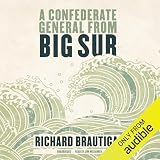
- Audible Audiobook
- Richard Brautigan (Author) - Jim Meskimen (Narrator)
- English (Publication Language)
- 03/28/2017 (Publication Date) - Blackstone Audio, Inc. (Publisher)
Step-by-Step Plan for Engaging with A Confederate General From Big Sur
Engaging with A Confederate General from Big Sur requires a deliberate approach to its unconventional structure and thematic presentation.
1. Acknowledge the Epigraph: Note the opening quotation from The Iliad. What to look for: This immediately establishes a contrast between epic themes and the novel’s contemporary, often mundane, setting, signaling its engagement with grand narratives in an unexpected context. Mistake to avoid: Overlooking this as a mere literary flourish; it sets a foundational tone and thematic precedent for the entire work.
2. Embrace the Fragmented Structure: Approach the narrative as a collection of interconnected moments and observations rather than a sequential plot. What to look for: Recurring motifs, shifts in perspective, and the cumulative effect of disparate scenes that build a particular mood or understanding. Mistake to avoid: Becoming frustrated by the lack of traditional plot development; the novel’s power derives from its mosaic-like quality.
3. Focus on the Narrator’s Voice: Pay close attention to the internal monologues and observations of the protagonist, Lee. What to look for: The distinctive blend of detachment, longing, and wry humor that shapes his perception of the world and the events around him. Mistake to avoid: Expecting deep psychological exposition; Brautigan prioritizes impressionistic portrayal and subjective experience over explicit character analysis.
4. Identify Recurring Thematic Threads: Actively seek out the exploration of identity, the quest for belonging, the commodification of culture, and underlying disillusionment. What to look for: The symbolic invocation of the Confederate General figure and the contrasting landscapes of San Francisco and Big Sur. Mistake to avoid: Over-interpreting individual symbols in isolation; themes emerge through their repeated and varied appearances across the narrative.
5. Recognize the Absurdist Humor: Appreciate the subtle, often understated, humor that arises from the juxtaposition of the ordinary with the bizarre or unexpected. What to look for: Moments of ironic observation or unexpected silliness that serve as both commentary and coping mechanism. Mistake to avoid: Taking every event at face value without considering the underlying satirical or observational intent.
6. Consider the “Confederate General” as Symbol: Understand that the titular figure is not a literal historical entity but a potent allegorical device. What to look for: How this symbol is invoked and what it represents in relation to Lee’s search for identity, connection, and a sense of place. Mistake to avoid: Searching for a historical backstory or a conventional character arc for the general; his significance is primarily conceptual and symbolic.
7. Reflect on the Ambiguous Conclusion: Allow the novel’s ending to resonate without demanding a definitive resolution. What to look for: The lingering mood, the sense of unresolved journeys, and the overall impact of the novel’s unique experience. Mistake to avoid: Seeking closure or a neat summation; the novel’s lasting impression often lies in its open-endedness and the questions it leaves the reader contemplating.
A Confederate General From Big Sur by Richard Brautigan: Unpacking the Narrative
Richard Brautigan’s A Confederate General from Big Sur presents a narrative that eschews traditional plot structures in favor of a more impressionistic and associative style. The novel unfolds through a series of vignettes and internal reflections, primarily following the protagonist, Lee, as he navigates the counter-culture milieu of 1960s San Francisco and the coastal environment of Big Sur. The titular “Confederate General” functions not as a literal historical figure, but as a potent symbol representing a displaced sense of history, a romanticized yet ultimately hollow ideal, and a complex exploration of identity and rebellion.
The novel’s distinctiveness lies in its unique atmosphere and Brautigan’s signature blend of gentle melancholy and offbeat humor. He captures the spirit of a specific era—its idealism and its underlying disillusionment—with a delicate, understated touch. The prose is often poetic, utilizing simple language to convey profound emotional complexity. For readers accustomed to linear storytelling, this fragmented approach can prove disorienting. However, for those willing to engage with its unconventional form, A Confederate General from Big Sur offers clear insights into themes of alienation, the search for meaning, and the elusive nature of identity in a rapidly changing world. It is a work that rewards patience and an openness to its inherent ambiguities.
Common Myths About A Confederate General From Big Sur
- Myth: The novel is a historical account of a specific Confederate General.
- Why it matters: This misunderstanding can lead readers to expect factual historical events and character development that are absent, causing confusion and disappointment.
- Fix: Recognize that the “Confederate General” is a symbolic construct, representing abstract concepts like misplaced history, romanticized rebellion, or a distorted sense of identity, rather than a literal historical personage.
- Myth: The book is intentionally obscure and lacks any discernible meaning or purpose.
- Why it matters: This perception can discourage readers who might otherwise appreciate Brautigan’s unique literary style and thematic depth when approached correctly.
- Fix: Approach the novel with an openness to its non-linear structure and associative logic. The meaning is cumulative, emerging from recurring motifs, character observations, and the overall atmosphere, rather than explicit exposition.
- Myth: The protagonist, Lee, is an unreliable narrator in the traditional sense of deliberate deception.
- Why it matters: Labeling Lee solely as unreliable might dismiss the genuine emotional resonance and insightful observations embedded in his subjective perspective.
- Fix: Understand Lee’s narration as impressionistic and subjective, reflecting his internal state and the surreal environment he inhabits. His perspective offers a unique, albeit filtered, truth about his experiences and perceptions.
Expert Tips for Reading A Confederate General From Big Sur
- Tip: Prioritize atmospheric immersion over plot tracking.
- Actionable Step: Read passages aloud to fully appreciate Brautigan’s lyrical prose and the sonic texture of his sentences, allowing the mood to develop organically.
- Common Mistake to Avoid: Rushing through the text in pursuit of plot points; the novel’s impact is primarily atmospheric, emotional, and thematic.
- Tip: Pay attention to the symbolic weight of recurring images and concepts.
- Actionable Step: Keep a mental or physical note of recurring images (e.g., the general, the ocean, specific cars) and consider their potential symbolic connections to the characters’ internal states or broader themes.
- Common Mistake to Avoid: Treating every element as literal; Brautigan frequently employs symbolism to convey deeper thematic concerns and emotional landscapes.
- Tip: Contextualize the novel within its historical and cultural setting.
- Actionable Step: Briefly research the San Francisco counter-culture movement of the late 1960s to better understand the characters’ motivations, the social milieu, and the novel’s thematic relevance.
- Common Mistake to Avoid: Reading the novel in a vacuum, without appreciating how its themes and characters reflect the significant social and cultural shifts of its time.
A Confederate General From Big Sur by Richard Brautigan: A Thematic Overview
A Confederate General from Big Sur by Richard Brautigan delves into profound themes through its distinctive narrative lens. The novel is less concerned with external events and more with the internal landscape of its characters, particularly the protagonist, Lee. His journey, or rather his wandering, through the bohemian enclaves of San Francisco and the rugged beauty of Big Sur serves as a backdrop for a deep exploration of alienation and the search for identity. The titular “General” acts as a potent, if enigmatic, symbol. He represents a historical anachronism, a romanticized ideal of rebellion, and a figure that Lee grapples with as he attempts to define himself against the backdrop of a rapidly changing society and his own internal uncertainties. The novel questions the nature of authenticity and the difficulty of finding genuine connection in a world increasingly shaped by
Quick Comparison
| Option | Best for | Pros | Watch out |
|---|---|---|---|
| A Confederate General From Big Sur by Richard Brautigan Quick Answer | General use | Narrative Structure: Features a fragmented, impressionistic style rather than… | Appreciation for Ambiguity: The novel deliberately avoids clear resolutions a… |
| Who This Is For | General use | Thematic Focus: Explores themes of identity, alienation, and the search for m… | Common Mistake to Avoid: Rushing through the text in pursuit of plot points;… |
| What to Check First | General use | Reader Recommendation: Best suited for readers who appreciate experimental fi… | Common Mistake to Avoid: Treating every element as literal; Brautigan frequen… |
| Step-by-Step Plan for Engaging with A Confederate General From Big Sur | General use | Readers seeking to explore the more experimental and less conventional aspect… | Common Mistake to Avoid: Reading the novel in a vacuum, without appreciating… |
Decision Rules
- If reliability is your top priority for A Confederate General From Big Sur by Richard Brautigan, choose the option with the strongest long-term track record and support.
- If value matters most, compare total ownership cost instead of headline price alone.
- If your use case is specific, prioritize fit-for-purpose features over generic ‘best overall’ claims.