Return To Narnia: Exploring C. S. Lewis’s ‘Prince Caspian
This analysis of C. S. Lewis’s Prince Caspian is designed for readers seeking a deeper literary appreciation, moving beyond plot summary to examine its thematic underpinnings, narrative construction, and its specific contribution to the Chronicles of Narnia series. It provides a critical perspective for those interested in the nuanced development of Lewis’s world and characters.
Prince Caspian by C. S. Lewis: Who This Is For
- Readers interested in a nuanced examination of Prince Caspian‘s themes, including the nature of faith, the challenges of leadership, and the perception of time.
- Individuals already familiar with the Chronicles of Narnia series who want to understand how this installment expands upon established characters and world-building from earlier books.
What To Check First
Before engaging with a detailed analysis of Prince Caspian, consider these preliminary points:
- Series Chronology: Prince Caspian is the second published book in the Chronicles of Narnia, but it chronologically follows The Lion, the Witch and the Wardrobe. Understanding the initial state of Narnia and the Pevensies’ first reign is essential for appreciating the changes Lewis depicts.
- Mythological and Folkloric Influences: Lewis integrated elements from classical mythology and European folklore. Recognizing these influences can clarify the symbolism and character archetypes present in the narrative.
- Theological Framework: Like all of Lewis’s Narnia books, Prince Caspian contains significant Christian allegory. An awareness of these undertones will enhance the reader’s comprehension of the story’s deeper messages.
- Thematic Contrast: The book presents a stark contrast between the Narnia of the Pevensies’ first reign and the Narnia under Telmarine rule. This contrast is central to the narrative’s exploration of memory, belief, and cultural decay.
Step-by-Step Plan: Analyzing Prince Caspian by C. S. Lewis
To gain a comprehensive understanding of Prince Caspian, a structured approach to reading and analysis is recommended.
1. Initial Return and Disorientation: Read the opening chapters detailing the Pevensies’ return to England and their subsequent, disorienting transport back to Narnia.
- Action: Focus on the contrast between the familiar English setting and the jarring experience of returning to a Narnia that is vastly different.
- What to Look For: Observe the children’s initial confusion and the evident decline in Narnia’s appearance and societal structure compared to their previous visit.
- Mistake to Avoid: Underestimating the significance of these introductory passages; they are critical for establishing the temporal displacement and the core conflict of the narrative. For example, the Pevensies are suddenly pulled from a train station platform, a jarring transition that immediately signals something is amiss in their relationship with Narnia.
For those eager to dive into the world of Narnia, C. S. Lewis’s ‘Prince Caspian’ is a foundational text. This installment offers a rich exploration of themes like faith, leadership, and the passage of time, making it essential reading for any fan of the series.
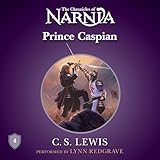
- Audible Audiobook
- C. S. Lewis (Author) - Lynn Redgrave (Narrator)
- English (Publication Language)
- 05/10/2005 (Publication Date) - HarperCollins (Publisher)
2. Understanding the Central Conflict: Identify the struggle between the Telmarine usurpers and the remnants of the Old Narnians.
- Action: Track the interactions between the Pevensies, Prince Caspian, and the various Narnian creatures who have been forced into hiding.
- What to Look For: The pervasive suppression of magic and the clandestine existence of Narnians under Telmarine dominion. The Telmarines’ fear of the woods and their hunting of magical creatures highlights this oppression.
- Mistake to Avoid: Concentrating solely on the action sequences without grasping the underlying oppression and the deep yearning for Narnia’s magical past to be restored. Missing this context reduces the Telmarines to simple villains rather than agents of cultural suppression.
3. Examining Prince Caspian’s Character Development: Observe Caspian’s evolution from a hesitant prince to a decisive leader.
- Action: Analyze Caspian’s motivations and his reliance on both his inherited legacy and the guidance provided by Aslan.
- What to Look For: His internal conflict between his Telmarine upbringing and his emerging Narnian identity and destiny. His initial fear and eventual courage in leading the Old Narnians demonstrate this growth.
- Mistake to Avoid: Perceiving Caspian as a static character; his personal growth is a central element in the narrative’s exploration of leadership and self-discovery. For instance, his initial reliance on the Pevensies gradually shifts to him taking initiative, such as planning the strategic retreat.
4. Analyzing Aslan’s Role and Intervention: Understand Aslan’s presence and the specific methods he employs to guide the Narnians.
- Action: Note the instances of Aslan’s appearance and the nature of his interventions in the unfolding events.
- What to Look For: Aslan’s emphasis on faith, courage, and the belief in the improbable, rather than overt displays of overwhelming power. His songs and guidance, rather than direct physical intervention, are key.
- Mistake to Avoid: Expecting Aslan to resolve all conflicts directly; his primary role is often to inspire and empower the characters to take action themselves. This contrasts with his more direct role in The Lion, the Witch and the Wardrobe.
5. Evaluating the Theme of Faith vs. Doubt: Consider how Lewis contrasts the belief in Narnia’s inherent magic with the Telmarines’ rational skepticism and denial.
- Action: Observe the reactions of various characters when confronted with the reappearance of magic and mythical creatures.
- What to Look For: The struggle of the Telmarines to accept Narnia’s true nature and the Narnians’ persistent hope rooted in their ancient beliefs. The Telmarine king’s fear and disbelief are central to this.
- Mistake to Avoid: Underestimating the significance of this thematic conflict; it is fundamental to the entire narrative and reflects Lewis’s broader philosophical concerns about belief in the unseen.
6. Appreciating the Narrative Pacing: Recognize how Lewis balances moments of quiet reflection with periods of intense action and suspense.
- Action: Note the shifts in the story’s tempo and the purpose of descriptive passages versus plot-driven events.
- What to Look For: The effectiveness of the pacing in building suspense, developing characters, and enhancing emotional resonance. The journey to Aslan’s How, for example, blends travelogue with moments of tension and character interaction.
- Mistake to Avoid: Interpreting slower sections as mere filler; these passages often serve the crucial purpose of deepening characterization and exploring thematic complexities.
7. Considering the Ending’s Implications: Reflect on the resolution of the conflict and its impact on both Narnia and the Pevensies.
- Action: Analyze the final decisions made by the characters and the state of Narnia following the resolution of the war.
- What to Look For: The establishment of a new order and the Pevensies’ evolving understanding of their role within Narnia’s long history. The incorporation of the Telmarines into Narnian society signifies a complex reconciliation.
- Mistake to Avoid: Treating the ending as simply conclusive; it effectively sets the stage for future developments within the Chronicles of Narnia series, particularly regarding the Pevensies’ unique connection to Narnia.
Common Myths About Prince Caspian
- Myth: Prince Caspian is merely a rehash of The Lion, the Witch and the Wardrobe with a different plot.
- Why it Matters: This perspective fails to acknowledge the significant thematic and narrative advancements Lewis introduces.
- Correction: While both books involve the Pevensies returning to save Narnia, Prince Caspian critically examines themes of decline, restoration, and the evolution of faith over extended periods. It contrasts the initial Narnian innocence with a world that has largely forgotten its magical heritage, presenting a more complex challenge for the returning heroes. The narrative focus shifts from liberation to restoration, a different kind of heroism.
- Myth: The Telmarines are inherently evil and irredeemable antagonists.
- Why it Matters: This simplification overlooks the narrative’s nuance and the historical context Lewis provides for their actions.
- Correction: The Telmarines are depicted as having lost touch with Narnia’s true, magical essence, driven more by fear and a pragmatic, anti-magical worldview than by inherent malice. Prince Caspian himself, a Telmarine, actively rejects his people’s ways, illustrating that the conflict is fundamentally one of belief and heritage, not a simple dichotomy of good versus evil. Their fear stems from their own history of being usurped and hiding, creating a cycle of denial.
Expert Tips for Reading Prince Caspian
- Tip: Focus on the symbolic representation of the “Old Narnians.”
- Action: Identify the various creatures (talking beasts, dwarves, centaurs) and consider what they collectively represent in terms of Narnia’s lost magic, heritage, and ancient wisdom.
- Common Mistake: Treating these creatures as purely fantastical elements without recognizing their allegorical weight, particularly their connection to faith and the enduring spirit of Narnia. For example, the Old Narnians embody the suppressed truths and forgotten magic that Aslan seeks to reawaken.
- Tip: Pay close attention to Lewis’s exploration of “Narnian Time.”
- Action: Note the significant discrepancies between the time elapsed in Narnia and the time that has passed on Earth for the Pevensies during their returns.
- Common Mistake: Assuming a direct, linear correlation between time in Narnia and Earth; Lewis utilizes this narrative device to explore themes of divine providence and the unique, non-linear nature of the magical realm. The hundreds of years in Narnia compared to the single year on Earth highlight this concept.
- Tip: Analyze the contrast between the Pevensies’ initial rule and Caspian’s subsequent reign.
- Action: Compare the Pevensies’ first experience ruling Narnia with the specific challenges Caspian faces in restoring it from its diminished state.
- Common Mistake: Viewing the Pevensies solely as static saviors; their return in *
Quick Comparison
| Option | Best for | Pros | Watch out |
|---|---|---|---|
| Who This Is For | General use | Readers interested in a nuanced examination of <em>Prince Caspian</em>’s themes, inc… | Mistake to Avoid: Underestimating the significance of these introductory pass… |
| What To Check First | General use | Individuals already familiar with the <em>Chronicles of Narnia</em> series who want… | Mistake to Avoid: Concentrating solely on the action sequences without graspi… |
| Step-by-Step Plan Analyzing Prince Caspian by C S Lewis | General use | Series Chronology: <em>Prince Caspian</em> is the second published book in the *Chro… | Mistake to Avoid: Perceiving Caspian as a static character; his personal grow… |
| Common Myths About Prince Caspian | General use | Mythological and Folkloric Influences: Lewis integrated elements from classic… | Mistake to Avoid: Expecting Aslan to resolve all conflicts directly; his prim… |
Decision Rules
- If reliability is your top priority for Prince Caspian by C. S. Lewis, choose the option with the strongest long-term track record and support.
- If value matters most, compare total ownership cost instead of headline price alone.
- If your use case is specific, prioritize fit-for-purpose features over generic ‘best overall’ claims.