Ray Dalio’s ‘Principles’: A Guide to Life and Work
Principles by Ray Dalio: Quick Answer
- Principles by Ray Dalio offers a framework for decision-making based on radical truth and transparency.
- It details Dalio’s personal principles for life and work, derived from decades of experience in finance and management.
- The book is a dense, actionable guide for those seeking to systematize their approach to problem-solving and growth.
Who This Is For
- Individuals seeking a structured methodology for making better decisions in personal and professional life.
- Leaders and managers aiming to build more effective and transparent organizations.
What to Check First
- Your current decision-making process: How do you currently approach problems and make choices?
- Your tolerance for radical transparency: Are you prepared for direct, often uncomfortable, feedback?
- Your definition of success: What outcomes are you aiming for that might be enhanced by a principled approach?
- Your available time for deep study: This book requires focused attention and reflection.
Step-by-Step Plan for Applying Principles by Ray Dalio
Implementing the concepts from Principles by Ray Dalio is an ongoing process, not a one-time task. It requires consistent application and refinement.
1. Identify Core Principles:
- Action: Begin by reading the life principles section of the book. Select 3-5 principles that resonate most with your current challenges or aspirations.
- What to look for: Principles that address recurring problems or areas where you feel you lack clarity. Examples include “Truth-first” or “Embrace reality and deal with it.”
- Mistake: Trying to adopt all principles at once, leading to overwhelm and ineffectiveness.
2. Document Your Principles:
- Action: Write down your chosen principles in a dedicated notebook or digital document. Add a brief explanation of why each principle is important to you and a specific situation where you will attempt to apply it.
- What to look for: Clear, concise statements that you can easily recall and reference.
- Mistake: Keeping principles abstract without concrete examples, making them difficult to apply in real-time.
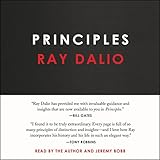
- Audible Audiobook
- Ray Dalio (Author) - Ray Dalio, Jeremy Bobb (Narrators)
- English (Publication Language)
- 09/19/2017 (Publication Date) - Simon & Schuster Audio (Publisher)
3. Practice Radical Open-mindedness:
- Action: When faced with a decision, actively seek out perspectives that differ from your own. Consider the possibility that your initial view might be wrong.
- What to look for: Opportunities to engage in thoughtful disagreement and to genuinely consider alternative viewpoints, even if they challenge your assumptions.
- Mistake: Dismissing opposing views without proper consideration, reinforcing existing biases.
4. Embrace Algorithmic Thinking:
- Action: For recurring problems, develop a systematic, step-by-step approach based on your principles. Document this process.
- What to look for: Patterns in challenges that can be addressed with a repeatable method. Consider how to encode your principles into decision rules.
- Mistake: Relying on intuition alone for complex or frequent decisions, leading to inconsistency.
5. Implement Idea Meritocracy:
- Action: In group settings, create an environment where the best ideas win, regardless of who proposed them. Establish protocols for discussion and decision-making that prioritize factual evidence and logical reasoning.
- What to look for: Mechanisms for surfacing and evaluating ideas objectively, such as structured brainstorming or debate sessions.
- Mistake: Allowing hierarchy or personal relationships to dictate the acceptance of ideas, stifling innovation.
6. Conduct Painful Truth-Seeking:
- Action: Regularly review your decisions and outcomes. Identify mistakes and understand their root causes, even if the analysis is uncomfortable.
- What to look for: Clear evidence of where your principles were not applied or where they led to suboptimal results. Use “issue logs” to track problems and their resolutions.
- Mistake: Avoiding introspection or blaming external factors for failures, preventing learning.
7. Iterate and Refine:
- Action: Based on your truth-seeking, update your principles and decision-making processes. Treat your principles as a living document that evolves with your experience.
- What to look for: Evidence that your adjustments are leading to improved outcomes and a more effective approach.
- Mistake: Sticking rigidly to outdated principles even when evidence suggests they are no longer optimal.
Common Mistakes
- Mistake: Treating the book as a set of rigid rules.
- Why it matters: Principles are meant to be adaptable frameworks, not dogma. Rigidity can lead to misapplication in novel situations.
- Fix: Focus on understanding the underlying logic of each principle and how it can be applied contextually.
- Mistake: Over-reliance on radical transparency without empathy.
- Why it matters: While truth is paramount, the delivery and reception of feedback impact relationships and organizational cohesion.
- Fix: Balance directness with tact. Ensure feedback is constructive and aimed at improvement, not just criticism.
- Mistake: Failing to document and track decisions.
- Why it matters: Without a record, it’s difficult to analyze past performance, identify patterns, or learn from mistakes.
- Fix: Implement a system for logging key decisions, the principles applied, and the outcomes.
- Mistake: Not involving others in the process.
- Why it matters: Principles are often most powerful when applied within a team or organization, fostering shared understanding and accountability.
- Fix: Discuss your principles with trusted colleagues or team members and encourage their adoption and feedback.
Quick Comparison
| Option | Best for | Pros | Watch out |
|---|---|---|---|
| Quick Answer | General use | Principles by Ray Dalio offers a framework for decision-making based on radic… | Mistake: Trying to adopt all principles at once, leading to overwhelm and ine… |
| Who This Is For | General use | It details Dalio’s personal principles for life and work, derived from decade… | Mistake: Keeping principles abstract without concrete examples, making them d… |
| What to Check First | General use | The book is a dense, actionable guide for those seeking to systematize their… | Mistake: Dismissing opposing views without proper consideration, reinforcing… |
| Step-by-Step Plan for Applying Principles by Ray Dalio | General use | Individuals seeking a structured methodology for making better decisions in p… | Mistake: Relying on intuition alone for complex or frequent decisions, leadin… |
Decision Rules
- If reliability is your top priority for Principles by Ray Dalio, choose the option with the strongest long-term track record and support.
- If value matters most, compare total ownership cost instead of headline price alone.
- If your use case is specific, prioritize fit-for-purpose features over generic ‘best overall’ claims.
FAQ
- Q: Is “Principles by Ray Dalio” suitable for someone without a finance background?
- A: Yes. While Dalio’s background is in finance, the life principles are universal and applicable to any field or personal endeavor. The core concepts focus on decision-making, learning, and managing reality.
- Q: How can I start applying the principles if I’m not in a leadership position?
- A: You can begin by applying the life principles to your personal decision-making, problem-solving, and learning processes. Practice radical open-mindedness in your interactions and seek truthful feedback.
- Q: The book is very dense. What is the most effective way to read it?
- A: Read it actively. Take notes, highlight key passages, and pause to reflect on how each principle applies to your own life. Consider discussing concepts with others to deepen your understanding.
- Q: How often should I review and update my principles?
- A: Regular review is essential. Aim for quarterly self-assessments and more frequent check-ins after significant decisions or challenges. Treat your principles as a dynamic tool that evolves with your experiences.
Applying Principles: A Decision-Making Framework
To effectively integrate Principles by Ray Dalio into your life, consider a structured approach to decision-making. This involves identifying the problem, gathering information, evaluating options based on your principles, and learning from the outcome.
Here is a pseudo-code example of how you might evaluate a significant decision using a simplified principle-based algorithm:
CODEBLOCK_0
This algorithmic approach, while simplified here, reflects Dalio’s emphasis on systematizing decision-making to reduce emotional bias and increase the probability of successful outcomes. The key is to define the `AssessPrincipleFit` function based on your understanding of the principle and the specific context of the decision.
Expert Tips
- Tip: Start with the “Life Principles” section.
- Actionable Step: Dedicate time to thoroughly read and reflect on the first half of the book before diving into the “Work Principles.” Identify 3-5 life principles that most directly address your current personal challenges.
- Common Mistake to Avoid: Skipping the life principles and jumping directly to the work principles, missing the foundational context and personal relevance.
- **Tip