Rafael Sabatini’s Swashbuckling Adventure, Captain Blood
Quick Answer
- Captain Blood by Rafael Sabatini offers a classic swashbuckling adventure with a compelling anti-hero, Peter Blood.
- Its strengths lie in its fast-paced plot, historical setting, and exploration of themes like justice and rebellion.
- Readers seeking straightforward action and historical romance will find it rewarding, though those preferring deep character studies might find it less engaging.
Who This Is For
- Readers who enjoy historical adventure novels with a focus on daring escapades, sword fights, and naval battles.
- Those interested in tales of injustice, rebellion, and the transformation of an unlikely hero.
What to Check First
- The Protagonist’s Arc: Observe Peter Blood’s transition from a wrongfully accused physician to a feared pirate captain. This is central to the narrative’s appeal.
- Historical Context: While fictionalized, the novel draws inspiration from the late 17th century. Understanding the backdrop of colonial Caribbean life and political unrest enhances appreciation.
- Pacing and Action: Sabatini excels at creating momentum. Note how the plot propels forward through a series of escalating challenges and daring maneuvers.
- Thematic Undertones: Look beyond the action for themes of honor, loyalty, and the blurred lines between piracy and legitimate authority.
Step-by-Step Plan: Understanding Captain Blood’s Appeal
1. Analyze the Inciting Incident: Examine the unjust accusation and conviction of Dr. Peter Blood.
- What to look for: The stark contrast between Blood’s medical ethics and the brutal punishment he receives.
- Mistake to avoid: Dismissing this as mere plot setup; it establishes the moral foundation for Blood’s later actions.
For a classic swashbuckling adventure that’s both fast-paced and historically rich, you can’t go wrong with the original. This edition of Captain Blood by Rafael Sabatini is a fantastic entry point into the world of Peter Blood.
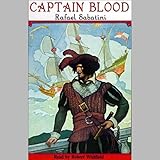
- Audible Audiobook
- Rafael Sabatini (Author) - Robert Whitfield (Narrator)
- English (Publication Language)
- 03/18/2004 (Publication Date) - Blackstone Audio, Inc. (Publisher)
2. Trace the Transformation to Piracy: Follow Blood’s initial experiences as a slave and his eventual rise to leadership among pirates.
- What to look for: The gradual shift in his motivations from survival to defiance and strategic command.
- Mistake to avoid: Assuming Blood becomes a villain; his piracy is often framed as a response to systemic corruption.
3. Evaluate the Swashbuckling Elements: Appreciate the detailed descriptions of naval battles, swordplay, and daring raids.
- What to look for: Sabatini’s skill in rendering exciting action sequences that feel both thrilling and plausible within the genre.
- Mistake to avoid: Focusing solely on the violence; the action serves the narrative and character development.
4. Consider the Romantic Subplot: Observe the relationship between Peter Blood and Arabella.
- What to look for: How this relationship influences Blood’s decisions and adds an emotional dimension to his quest.
- Mistake to avoid: Treating the romance as a secondary element; it is a significant driver for Blood’s personal stakes.
5. Examine the Theme of Justice: Assess how the novel explores the concept of justice, both as it is administered by the authorities and as it is enacted by the pirates.
- What to look for: Instances where Blood’s actions challenge the established legal and political order, often in the name of a higher form of justice.
- Mistake to avoid: Accepting the official narrative of justice without questioning its fairness, as the novel encourages.
Common Myths About Captain Blood by Rafael Sabatini
- Myth: Peter Blood is a purely heroic figure who always does the right thing.
- Why it matters: This overlooks the moral complexity of his character and the compromises he makes.
- Fix: Recognize that Blood operates in a gray area, often resorting to actions that are illegal but justifiable within the novel’s moral framework. His heroism is often pragmatic and born of necessity.
- Myth: The novel is a simple adventure story with no deeper meaning.
- Why it matters: This diminishes the novel’s exploration of significant themes like social injustice, corruption, and the nature of authority.
- Fix: Engage with the underlying commentary on political systems and the consequences of oppression, which elevates the story beyond mere escapism.
- Myth: Captain Blood’s pirate activities are solely driven by greed.
- Why it matters: This misinterprets Blood’s primary motivations, which are rooted in his wrongful conviction and subsequent pursuit of retribution and a better life for his crew.
- Fix: Understand that while plunder is involved, Blood’s leadership is often characterized by a code of conduct and a desire to challenge the established, corrupt powers that wronged him.
Decision Rules
- If reliability is your top priority for Captain Blood by Rafael Sabatini, choose the option with the strongest long-term track record and support.
- If value matters most, compare total ownership cost instead of headline price alone.
- If your use case is specific, prioritize fit-for-purpose features over generic ‘best overall’ claims.
FAQ
- Q: Is Captain Blood by Rafael Sabatini historically accurate?
- A: The novel is a work of historical fiction, meaning it uses a historical setting and context but is not a factual account. Sabatini took liberties with events and characters for narrative effect.
- Q: What makes Captain Blood a compelling character?
- A: Blood’s appeal lies in his transformation from an innocent victim to a cunning and capable leader who defies oppressive systems. His intelligence, resourcefulness, and underlying sense of justice make him a memorable protagonist.
- Q: How does the writing style of Captain Blood compare to modern adventure novels?
- A: Sabatini’s prose is more formal and descriptive than many contemporary adventure stories. It emphasizes eloquent dialogue and detailed descriptions of settings and action, contributing to its classic feel.
- Q: Should I read other books by Rafael Sabatini after Captain Blood?
- A: If you enjoyed the blend of adventure, historical setting, and charismatic protagonists in Captain Blood, you might also appreciate Sabatini’s Scaramouche or The Sea Hawk, which share similar thematic and stylistic elements.
Expert Tips for Reading Captain Blood
- Tip: Pay close attention to the initial chapters detailing Peter Blood’s life as a physician and his subsequent trial.
- Actionable Step: Identify specific passages that highlight his ethical grounding and the injustice he faces.
- Common Mistake to Avoid: Skipping over these early chapters, assuming they are merely exposition; they are crucial for understanding Blood’s moral compass and the driving force behind his rebellion.
- Tip: Appreciate Sabatini’s use of historical detail to ground the fantastical elements of piracy.
- Actionable Step: Note descriptions of ship types, naval tactics, and colonial settings.
- Common Mistake to Avoid: Treating the historical elements as mere window dressing; Sabatini uses them to lend credibility and atmosphere to the narrative, making the adventure feel more immersive.
- Tip: Recognize that “piracy” in Captain Blood often serves as a means to achieve a form of justice or autonomy denied by legitimate authority.
- Actionable Step: Analyze Blood’s decisions regarding targets and his treatment of captives, looking for patterns beyond simple plunder.
- Common Mistake to Avoid: Judging Blood’s actions solely by modern legal standards; the novel operates within its own internal logic of justice and rebellion against tyranny.
BLOCKQUOTE_0
Strengths of Captain Blood
- Compelling Protagonist: Peter Blood is an anti-hero who evolves significantly, driven by circumstances and a desire for justice. His intelligence and strategic thinking are as prominent as his combat skills.
- Engaging Plot: The narrative is propelled by a series of exciting events, from escapes and naval battles to political maneuvering. Sabatini masterfully balances action with character development.
- Atmospheric Setting: The novel vividly portrays the Caribbean of the late 17th century, immersing the reader in the era of pirates, colonial governors, and naval warfare.
Limitations of Captain Blood
- Character Archetypes: While Blood is complex, some supporting characters can lean towards archetypes common in adventure fiction, such as the loyal crewmate or the formidable antagonist.
- Pacing in Later Sections: While generally fast-paced, certain political subplots in the latter half of the book might feel slightly less dynamic compared to the earlier, more action-driven sequences.
- Dated Language: The prose, while elegant, reflects its early 20th-century origins and may require some adjustment for readers accustomed to more contemporary writing styles.
Reading Context for Captain Blood
- Ideal Reading Order: Captain Blood can be read as a standalone novel. For readers interested in Sabatini’s other works, Scaramouche (1921) or The Sea Hawk (1915) are good companions, offering similar historical adventure themes.
- Comparison: It fits within the tradition of historical adventure fiction pioneered by authors like Robert Louis Stevenson, but with a greater emphasis on the protagonist’s intellectual rather than purely romantic heroism.
Captain Blood by Rafael Sabatini: A Thematic Overview
| Theme | Description | Example |
|---|---|---|
| Justice vs. Law | The conflict between what is legally sanctioned and what is morally right. | Peter Blood’s actions as a pirate are often presented as a response to the corrupt and unjust legal system. |
| Rebellion | The act of resisting established authority, particularly when that authority is oppressive. | Blood’s transformation from a slave to a pirate captain who challenges colonial powers. |
| Identity | The formation of self through adversity and the forging of a new destiny. | Blood’s struggle to redefine himself after being stripped of his former life and identity. |
| Honor | The personal code of conduct maintained even in lawless environments. | Blood’s adherence to certain principles, distinguishing his crew from common brigands. |