Rafael Sabatini’s Scaramouche: An Overview
Quick Answer
- Core Appeal: Scaramouche by Rafael Sabatini delivers a classic adventure narrative centered on a protagonist’s quest for identity and revenge during the French Revolution, characterized by swashbuckling action and sharp wit.
- Key Strengths: The novel is noted for its brisk pacing, intricate plot construction, and the compelling development of its central character, Andre-Louis Moreau.
- Consideration: While a celebrated work of historical adventure, its focus on romantic and daring exploits may overshadow the historical context for some readers.
Who This Is For
- Readers seeking a well-structured adventure novel featuring a resourceful protagonist and a strong sense of intrigue.
- Individuals interested in historical fiction where the setting enhances a personal drama of justice and self-discovery.
What to Check First
- Protagonist’s Journey: Examine the evolution of Andre-Louis Moreau from a provincial law student to the masked figure of “Scaramouche.” Identify the motivations behind his transformation.
- Narrative Pacing: Assess how Sabatini balances action sequences with moments of reflection and dialogue to maintain momentum.
- Dialogue and Wit: Observe the sharpness and intelligence present in the character interactions, particularly those involving Moreau.
- Role of the French Revolution: Understand that the historical period serves as a dramatic backdrop rather than the primary focus of historical analysis.
Step-by-Step Plan: Engaging with Scaramouche by Rafael Sabatini
1. Establish the Inciting Incident: Begin by understanding Andre-Louis Moreau’s initial circumstances and the event that compels him to leave his home.
- Action: Read the early chapters detailing Moreau’s life as a lawyer’s apprentice and the conflict that forces his flight.
- Look for: The specific injustice that ignites his desire for retribution and the initial steps he takes toward a new life.
- Mistake to Avoid: Underestimating the impact of these early events on Moreau’s subsequent character development and strategic choices.
2. Track the Persona Development: Follow Moreau’s deliberate adoption of the Scaramouche identity and the skills he acquires.
- Action: Observe his immersion in the world of theatre and his rigorous training in fencing and acting.
- Look for: The methods by which he hones his abilities and the strategic advantages of operating under a mask.
- Mistake to Avoid: Assuming his transformation is instantaneous; recognize the gradual process of skill acquisition and psychological adaptation.
3. Analyze the Romantic Subplots: Examine Moreau’s complex relationships, particularly his affections for Aline de Solilhac and others.
- Action: Identify the key romantic interests and their influence on Moreau’s decisions and emotional state.
- Look for: The interplay between personal desires, loyalties, and his overarching mission for justice.
- Mistake to Avoid: Overlooking the emotional depth of these relationships, which are integral to Moreau’s character arc and motivations.
For those seeking a classic adventure with a strong protagonist and sharp wit, Rafael Sabatini’s Scaramouche is an excellent choice. This novel delivers a compelling quest for identity and revenge during the French Revolution.
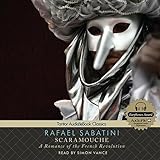
- Audible Audiobook
- Rafael Sabatini (Author) - Simon Vance (Narrator)
- English (Publication Language)
- 05/16/2011 (Publication Date) - Tantor Audio (Publisher)
4. Evaluate the Swashbuckling Sequences: Appreciate the detailed descriptions of swordplay and combat.
- Action: Note the tactical elements and physical prowess displayed in the duels and confrontations.
- Look for: How these action scenes serve to advance the plot, reveal character, and underscore the theme of asserting agency.
- Mistake to Avoid: Dismissing these as mere spectacle; they are crucial to Moreau’s assertion of his newfound identity and capabilities.
5. Observe the Revolutionary Undercurrents: Recognize the pervasive influence of the French Revolution on the narrative.
- Action: Note the references to political factions, social unrest, and the broader revolutionary atmosphere.
- Look for: How these external societal forces shape the characters’ actions, create obstacles, and provide context for their personal struggles.
- Mistake to Avoid: Treating the historical setting as superficial ornamentation; it provides the essential framework for the personal drama and thematic explorations.
6. Assess the Narrative Resolution: Understand how Moreau’s quest for justice and self-definition culminates.
- Action: Read the concluding chapters carefully, paying attention to the outcomes of key conflicts.
- Look for: The ultimate resolution of Moreau’s personal vendetta and his achievement of self-understanding.
- Mistake to Avoid: Expecting a simplistic or entirely triumphant conclusion; Sabatini often provides nuanced resolutions that reflect the complexities of the era and human nature.
Common Mistakes
- Mistake: Focusing excessively on historical minutiae.
- Why it Matters: Scaramouche by Rafael Sabatini uses the French Revolution as a vibrant backdrop for adventure, not a detailed historical account. Overemphasis on strict accuracy can detract from the narrative’s core strengths.
- Fix: Appreciate the historical setting for its atmospheric contribution and its role in driving the plot, rather than seeking documentary-level precision.
- Mistake: Underestimating the protagonist’s intellectual agility.
- Why it Matters: Andre-Louis Moreau’s intelligence, wit, and strategic thinking are as vital to his success as his swordsmanship. Missing this aspect diminishes the character’s complexity.
- Fix: Pay close attention to the dialogue and Moreau’s clever responses, recognizing them as key components of his character and problem-solving approach.
- Mistake: Expecting a straightforward heroic trajectory.
- Why it Matters: Moreau’s path involves moral ambiguity, the use of deception, and navigating the turbulent currents of revolution. His journey is multifaceted, not a simple linear progression.
- Fix: Embrace the character’s complexity and the nuanced nature of his quest for justice and identity.
- Mistake: Prioritizing plot over character development.
- Why it Matters: The novel’s enduring appeal lies significantly in Moreau’s transformation and internal struggles, alongside the exciting plot.
- Fix: Engage with Moreau’s evolving motivations and psychological growth throughout the narrative to fully appreciate the novel’s depth.
Expert Tips for Scaramouche by Rafael Sabatini
- Tip 1: Embrace the Theatricality: Recognize that Moreau’s journey is deeply intertwined with performance, both on and off the stage. His adoption of personas is a strategic and personal exploration.
- Actionable Step: Actively observe how Moreau uses his acting skills and the concept of disguise to navigate social hierarchies and achieve his objectives.
- Common Mistake to Avoid: Viewing the theatrical elements as mere embellishments; they are fundamental to the novel’s exploration of identity and deception.
- Tip 2: Appreciate Sabatini’s Narrative Control: Understand that Sabatini masterfully controls the pace, weaving together moments of intense action with periods of dialogue and character reflection.
- Actionable Step: Note how Sabatini manipulates narrative tempo to build suspense, develop character relationships, and deliver plot twists effectively.
- Common Mistake to Avoid: Becoming impatient during slower passages, which are often crucial for character development or setting up subsequent action.
- Tip 3: Contextualize the Revolution’s Impact: While not a historical treatise, the French Revolution provides the essential socio-political climate that fuels the narrative’s conflicts and character motivations.
- Actionable Step: Consider how the prevailing social unrest and political ideologies of the era influence the choices and dangers faced by the characters.
- Common Mistake to Avoid: Disregarding the historical context entirely, which can lead to a superficial understanding of the characters’ stakes and motivations.
Decision Rules
- If your primary objective is a reliable, classic adventure narrative with consistent pacing, Scaramouche by Rafael Sabatini is a strong candidate.
- If your preference leans towards historical fiction that prioritizes character development and witty dialogue over strict historical accuracy, this novel fits the criteria.
- If you are seeking a story where the protagonist’s journey of self-discovery is central, even within a backdrop of political upheaval, Scaramouche offers a compelling case.
FAQ
- Q: Is Scaramouche by Rafael Sabatini historically accurate?
A: Sabatini employs the French Revolution as a dramatic setting, but the narrative and characters are fictionalized for adventure and plot. It is not intended as a historically precise account.
- Q: What are the primary themes explored in Scaramouche?
A: The novel centrally explores themes of identity, revenge, justice, and self-discovery, particularly through Andre-Louis Moreau’s quest to assert himself against societal and personal adversaries.
- Q: Who would most appreciate Scaramouche?
A: Readers who enjoy classic adventure tales, swashbuckling action, intelligent dialogue, and character-driven narratives set against a historical backdrop are likely to find Scaramouche highly engaging.
- Q: How does Scaramouche compare to other works by Rafael Sabatini?
A: Similar to other Sabatini novels like Captain Blood, Scaramouche features a charismatic protagonist, intricate plotting, and thrilling action sequences. It is often regarded as one of his most iconic and enduring works.
BLOCKQUOTE_0
| Narrative Element | Description | Reader Benefit |
|---|---|---|
| <strong>Protagonist’s Arc</strong> | Andre-Louis Moreau’s transformation from a wronged individual to the masked avenger, “Scaramouche.” | Offers a compelling journey of self-discovery and the pursuit of justice, providing a strong anchor for reader investment. |
| <strong>Pacing and Plot</strong> | The skillful interweaving of action, political intrigue, and personal vendettas. | Maintains |