Rabindranath Tagore’s Gitanjali: A Poetic Journey
Quick Answer
- Gitanjali by Rabindranath Tagore is a collection of 103 poems translated by the author from Bengali into English, focusing on devotional themes and the poet’s spiritual communion with the divine.
- The work is characterized by its lyrical quality, introspective tone, and exploration of themes like surrender, longing, and the immanence of the divine in nature and human life.
- It is a foundational text in modern Indian literature and gained international acclaim, contributing significantly to Tagore’s Nobel Prize in Literature in 1913.
Who This Is For
- Readers interested in devotional poetry that emphasizes personal spiritual experience and a universal connection to the divine.
- Individuals seeking to understand the literary and cultural impact of Rabindranath Tagore and his contribution to world literature.
What to Check First
- Authorial Translation: Recognize that Tagore himself translated Gitanjali, a process that imbues the English version with his specific voice and intent, yet still involves interpretive choices.
- Spiritual Context: Familiarity with Indian philosophical and devotional traditions, particularly the Bhakti movement, can illuminate the poems’ exploration of love, longing, and surrender to the divine.
- Nobel Prize Significance: The 1913 Nobel Prize in Literature, awarded for “his profoundly sensitive, fresh and beautiful verse, by which, with consummate skill, he has made his poetic thought, expressed in his own English words, a part of the literature of the West,” highlights the work’s reception and impact.
- Structure as a Collection: Understand that Gitanjali is a collection of individual poems, each a meditation or prayer, rather than a narrative with a sequential plot.
For those seeking to immerse themselves in profound devotional poetry, the collection Gitanjali by Rabindranath Tagore offers a deeply spiritual and lyrical experience.
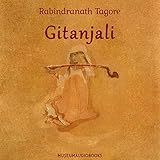
- Audible Audiobook
- Rabindranath Tagore (Author) - Michael Fitzpatrick (Narrator)
- English (Publication Language)
- 10/07/2019 (Publication Date) - MuseumAudiobooks.com (Publisher)
Step-by-Step Plan: Engaging with Gitanjali by Rabindranath Tagore
1. Read the Introductory Essay: Begin with the preface by W.B. Yeats, which contextualizes the poems for a Western audience and highlights their perceived spiritual resonance.
- Action: Read Yeats’s introduction carefully.
- What to look for: Yeats’s emphasis on the poems’ “spiritual quality” and their departure from conventional Western verse.
- Mistake to avoid: Accepting Yeats’s interpretation as definitive; it represents an early Western reception, not the sole understanding of the work.
2. Experience the Lyrical Flow: Read the poems aloud to appreciate their musicality and meditative rhythm.
- Action: Recite several poems from the collection.
- What to look for: The smooth, flowing language and the cadence that encourages reflection.
- Mistake to avoid: Skimming the verses, which can diminish their sonic and emotional impact.
3. Identify Core Themes: Focus on recurring motifs such as devotion, surrender, the divine presence, and the relationship between the earthly and the spiritual.
- Action: Keep a reading journal to note down recurring concepts and imagery.
- What to look for: The consistent address to an abstract, beloved divine entity.
- Mistake to avoid: Treating each poem as an isolated unit, rather than recognizing the interconnectedness of its themes throughout the collection.
4. Analyze Natural Imagery: Observe how Tagore uses natural elements (flowers, rivers, light) to symbolize spiritual states or the divine.
- Action: List specific instances of natural imagery and their symbolic function.
- What to look for: The use of everyday nature to express profound spiritual concepts, e.g., a flower offered in devotion.
- Mistake to avoid: Dismissing the imagery as mere decoration; it is integral to conveying the poems’ spiritual meaning.
5. Understand the Concept of Surrender: Grasp the central theme of the poet’s willing surrender of self to a higher power.
- Action: Examine poems that explicitly discuss yielding or offering one’s life and will.
- What to look for: Expressions of humility, trust, and a desire for spiritual union.
- Mistake to avoid: Interpreting this surrender as passivity; in Gitanjali, it represents an active, profound spiritual strength and acceptance.
6. Contemplate the Divine Presence: Engage with the abstract and often elusive nature of the divine figure addressed in the poems.
- Action: Reflect on how the divine is invoked and experienced, even in its ineffability.
- What to look for: The poet’s attempts to connect with the divine through intuition and sensory experience.
- Mistake to avoid: Expecting concrete, literal descriptions of the divine, which contradicts the spiritual essence of the work.
7. Recognize Life as Offering: Identify how daily actions, labor, and experiences are framed as acts of worship and offering to the divine.
- Action: Note instances where mundane activities are elevated to spiritual practice.
- What to look for: The transformation of ordinary life into a devotional ritual.
- Mistake to avoid: Viewing these “offerings” as purely transactional; they are expressions of love and dedication.
8. Connect to Tagore’s Broader Philosophy: Briefly research Tagore’s philosophical views to contextualize the themes of universalism and spiritual interconnectedness.
- Action: Read a concise overview of Tagore’s philosophy of nature and humanity.
- What to look for: Reinforcement of themes of unity and the divine immanence.
- Mistake to avoid: Isolating Gitanjali from Tagore’s wider intellectual and artistic contributions, which can enrich its interpretation.
Common Mistakes
- Treating Gitanjali as a Narrative Novel:
- Why it matters: Gitanjali is a collection of lyrical poems, not a story with a linear plot. Expecting a narrative can lead to misinterpretation and disappointment.
- Fix: Approach each poem as a distinct spiritual meditation or prayer, focusing on its emotional and thematic resonance.
- Over-Reliance on the English Translation:
- Why it matters: While Tagore’s English translation is celebrated, the original Bengali poems possess their own distinct linguistic beauty and cultural nuances that are inevitably altered in translation.
- Fix: Acknowledge the inherent limitations of translation and seek out scholarly analyses that discuss the original Bengali or the nuances of Tagore’s translation choices.
- Reducing Devotion to Mere Sentimentality:
- Why it matters: The poems are deeply emotional and experiential. Focusing solely on the intellectual or philosophical aspects can obscure the profound spiritual yearning and lived devotion they convey.
- Fix: Allow yourself to engage with the emotional weight and spiritual longing expressed in the verses, appreciating the felt experience of devotion.
- Seeking Definitive Spiritual Answers:
- Why it matters: Gitanjali explores the experience and the journey of spirituality and the relationship with the divine, rather than providing theological doctrines or concrete answers to spiritual questions.
- Fix: Embrace the sense of mystery and ambiguity inherent in the poems, appreciating the process of seeking and questioning over the pursuit of absolute certainty.
- Misinterpreting “Surrender” as Passivity:
- Why it matters: Tagore’s concept of surrender is an active, conscious yielding rooted in trust and love, not a sign of resignation or lack of agency. It is an act of profound spiritual strength.
- Fix: Recognize surrender in Gitanjali as a powerful spiritual choice and a pathway to deeper connection, rather than a passive acceptance of fate.
Gitanjali by Rabindranath Tagore: A Counter-Intuitive Perspective
The long-term relevance of Gitanjali often leads readers to view it as a straightforward expression of spiritual peace and divine union. However, a less obvious, yet crucial, element is the profound sense of spiritual struggle and the persistent awareness of the divine’s elusiveness, even amidst profound devotion. Tagore doesn’t shy away from depicting moments of doubt, longing, and a palpable sense of the divine being just beyond reach. This underlying tension, this constant seeking and questioning, is what imbues the poems with their raw authenticity and prevents them from becoming purely saccharine. The “peace” described is often earned through this ongoing engagement with the divine’s inscrutability.
This perspective challenges the assumption that devotional poetry must always be serene. In Gitanjali, the divine is often portrayed as a playful, sometimes distant, lover, whose absence is as keenly felt as its presence. The poet’s offerings—his songs, his labor, his very life—are not always met with immediate solace, but rather with a continued invitation to deeper seeking. This dynamic of pursuit and the acknowledgment of spiritual yearning are central to understanding the work’s true depth, moving beyond simple adoration to a more complex, human spiritual engagement.
Thematic Breakdown and Reader Takeaways
| Theme | Presentation in Gitanjali | Reader Takeaway |
|---|---|---|
| Devotional Longing | Expressed through a deep, personal yearning for communion, often framed as an intense love for an absent beloved. | Understanding devotion as an active, emotional pursuit characterized by both presence and absence, rather than constant, unclouded bliss. |
| Spiritual Struggle | Moments of doubt, questioning, and the awareness of the divine’s elusiveness are present, creating a sense of ongoing seeking. | Recognizing that spiritual journeys often involve challenges and periods of seeking, not just moments of attained peace. |
| Divine Immanence | The divine is found within nature, everyday life, and the poet’s own being, though often experienced indirectly. | Cultivating a practice of looking for the sacred in the mundane and appreciating the subtle manifestations of the divine in the world. |
| Life as Offering | Daily tasks, creative endeavors, and one’s very existence are presented as acts of worship and dedication to the divine. | Reflecting on how ordinary activities can be imbued with spiritual significance and used as forms of devotion. |
| Active Surrender | The poet’s willingness to yield his ego and desires is depicted as a deliberate act of trust and spiritual strength. | Perceiving surrender not as a sign of weakness, but as a powerful choice that fosters freedom and deeper connection. |
BLOCKQUOTE_0
Expert Tips for Engaging with Gitanjali
- Tip 1: Understand the Bhakti Tradition: Gitanjali is deeply influenced by the Bhakti movement, a tradition emphasizing intense, personal devotion to a deity.
- Actionable Step: Read a brief overview of the Bhakti movement’s key tenets, such as ecstatic love for God and the importance of personal experience over ritual.
- Common Mistake to Avoid: Reading the poems without appreciating the historical and spiritual lineage that informs their devotional intensity and personal nature.
- Tip 2: Consider the Nobel Prize Citation’s Emphasis: The Nobel committee specifically praised Tagore’s “consummate skill” in making his poetic thought, expressed in his own English words, part of Western literature.
- Actionable Step: Research the full Nobel Prize citation for Rabindranath Tagore to understand the specific qualities that led to his recognition.
- Common Mistake to Avoid: Overlooking the historical context of the award and its implications for how Gitanjali was received and understood internationally.
- Tip 3: Explore Tagore’s own reflections on translation: Tagore was involved in translating his own Bengali works into English. His process offers insight into his intentions.
- Actionable Step: Look for any essays or statements by Tagore where he discusses the challenges or intentions behind translating Gitanjali.
- Common Mistake to Avoid: Assuming the English translation is a direct, unmediated representation of the original Bengali, without considering Tagore’s own role in shaping it for an English-speaking audience.
Decision Rules
- If your primary goal is to understand the literary and cultural impact of Gitanjali by Rabindranath Tagore, focus on its reception history and its role in bridging Eastern and Western literary traditions.
- If you seek personal spiritual reflection, engage with the poems’ themes of devotion and surrender, allowing their lyrical quality to guide your contemplation.
- If you are interested in the nuances of translation and authorial intent, investigate Tagore’s own process in rendering his Bengali work into English.
FAQ
- Q1: Is Gitanjali a collection of prayers?
- A1: While many poems in Gitanjali function as prayers or meditations, it is more accurately described as a collection of devotional poems exploring the poet’s personal relationship with the divine, rather than a formal prayer book.
- Q2: What is the central theme of Gitanjali?
- A2: The central theme is the poet’s profound devotion and surrender to the divine, expressed through a longing for spiritual union and the recognition of the divine presence in all aspects of existence.
- Q3: How did Gitanjali influence Western literature?
- A3: Gitanjali‘s English translation introduced Western readers to a form of lyrical, spiritual poetry rooted in Indian traditions. Its success, amplified by the Nobel Prize, fostered greater interest in Indian literature and philosophy in the West.
- Q4: What is the significance of nature in Gitanjali?
- A4: Nature serves as a vital medium through which Tagore expresses spiritual concepts and the presence of the divine. Natural imagery—flowers, rivers, light—is used to symbolize spiritual states and illustrate the interconnectedness of the human and the divine.