Phil Knight’s ‘Shoe Dog’: The Nike Origin Story
Phil Knight’s memoir, Shoe Dog, details the challenging, often improbable, journey of Blue Ribbon Sports’ evolution into Nike. This review examines the book’s narrative structure, thematic depth, and its value for readers seeking understanding of entrepreneurial drive. It offers a candid perspective on the relentless pursuit that characterized Nike’s founding, highlighting the human aspect behind a global brand.
Who This Is For
- Readers interested in the foundational narrative of iconic brands: The book provides a direct account of how Nike, from its inception as an importer of Japanese running shoes, navigated early challenges to establish its identity.
- Individuals seeking inspiration from entrepreneurial struggles: Those who appreciate stories of perseverance, risk-taking, and the sheer tenacity required to build a business from the ground up will find Shoe Dog particularly resonant.
What to Check First
- Authorial Voice and Bias: Phil Knight is the sole narrator. Recognize that the memoir is his personal perspective, shaping the portrayal of events and the people involved.
- Emphasis on Crisis Management: The narrative is dominated by near-constant financial precarity and operational crises. This is not a story of smooth growth but of survival.
- Chronological and Thematic Structure: The book follows a chronological path through the early years, but also circles back to recurring themes of innovation, competition, and the human cost of ambition.
- Absence of a Strategic Playbook: Expect a personal history, not a prescriptive guide. The “how-to” elements are embedded in the narrative of action and reaction, not explicit instruction.
Step-by-Step Plan for Engaging with Shoe Dog by Phil Knight
1. Establish the Core Premise: Begin by understanding that Shoe Dog by Phil Knight is a personal chronicle of entrepreneurial struggle, not a business strategy manual. Look for: Knight’s initial motivation to import Onitsuka Tiger shoes and his early observations about the running shoe market. Mistake to avoid: Expecting a step-by-step guide for launching a footwear company.
2. Analyze the Financial Tightrope: Pay close attention to the recurring themes of cash shortages and the desperate measures taken to secure funding. Look for: Specific instances of financial near-collapse and the creative, often unconventional, methods used to stay afloat. Mistake to avoid: Underestimating the sheer resilience and adaptability required for continuous financial survival.
3. Map Key Relationships and Conflicts: Identify the pivotal figures who shaped Blue Ribbon Sports, particularly Bill Bowerman. Look for: The dynamics of these relationships, how they were tested, and the contributions of early employees and athletes. Mistake to avoid: Attributing Nike’s success solely to Knight’s individual vision without acknowledging the collective effort.
4. Trace Brand and Product Evolution: Observe how the company evolved from importing to designing and manufacturing its own products. Look for: The genesis of the Nike name and the iconic Swoosh logo. Mistake to avoid: Assuming the brand’s identity was meticulously planned from the outset; much of it emerged organically.
5. Examine Competitive and Legal Challenges: Be aware of the intense competition and the legal battles faced, particularly with Onitsuka Tiger. Look for: The recurring patterns of innovation driven by necessity and the aggressive tactics employed to gain market share. Mistake to avoid: Glossing over the morally ambiguous decisions or the ethical compromises made in the pursuit of growth.
6. Appreciate the Narrative Arc of Persistence: Recognize the memoir’s structure as a testament to relentless pursuit and overcoming systemic obstacles. Look for: The cyclical pattern of crisis, improvisation, and eventual resolution that defines the book’s early chapters. Mistake to avoid: Treating each chapter as an isolated event rather than part of a continuous, high-stakes struggle.
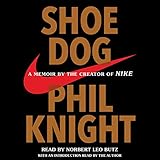
- Audible Audiobook
- Phil Knight (Author) - Norbert Leo Butz (Narrator)
- English (Publication Language)
- 04/26/2016 (Publication Date) - Simon & Schuster Audio (Publisher)
Common Myths About Shoe Dog by Phil Knight
Myth: Shoe Dog provides a direct roadmap for guaranteed business success.
Why it matters: This misconception can lead readers to seek a formula, overlooking the unique context, personal resilience, and significant luck detailed in the book.
Fix: Approach Shoe Dog by Phil Knight as a case study in perseverance and adaptability. Recognize that Knight’s journey involved high-risk tolerance, opportune timing, and a substantial degree of improvisation.
Myth: The book solely highlights the triumph of a singular visionary entrepreneur.
Why it matters: This narrative risks oversimplifying the complex collaborative efforts and the crucial contributions of many individuals, potentially diminishing the importance of teamwork.
Fix: Actively identify and consider the roles of other key figures, such as Bill Bowerman, Jeff Johnson, and early athletes. Understand that Nike’s ascent was a multifaceted achievement.
Myth: The early days of Nike were characterized by smooth innovation and meticulous strategic planning.
Why it matters: This overlooks the chaotic, often desperate nature of the company’s early operations, where immediate survival frequently superseded long-term, detailed strategy.
Fix: Focus on the constant problem-solving and the reactive, rather than purely proactive, nature of many early decisions. The book emphasizes improvisation and learning through trial and error.
Shoe Dog by Phil Knight: Lessons and Considerations
Shoe Dog by Phil Knight delivers a compelling, unvarnished account of the genesis of a global sportswear empire. Knight’s narrative is direct and unflinching, detailing the near-constant existential threats that plagued Blue Ribbon Sports in its formative years. The book’s primary strength lies in its authenticity; it confronts the financial desperation, legal entanglements, and personal sacrifices that were integral to Nike’s rise.
A significant failure mode readers may encounter is mistaking the memoir for a prescriptive business strategy guide. While lessons abound, they are woven into a deeply personal and often chaotic narrative. The relentless pursuit of funding, the fraught relationships with suppliers, and the intense competitive landscape are presented as lived experiences, not as a tactical manual. This necessitates active synthesis from the reader rather than passive absorption of instructions.
BLOCKQUOTE_0
This quote encapsulates the book’s spirit, emphasizing the power of initiative and a refusal to accept limitations. However, it also highlights the subjective nature of the narrative. The focus on “misfits” and “rebels” can overshadow the more structured business acumen and sheer luck that also played roles in Nike’s establishment.
Key Takeaways from Shoe Dog by Phil Knight
| Theme | Description | Concrete Takeaway |
|---|---|---|
| Perseverance | The constant struggle against financial ruin and operational challenges. | Understand that consistent effort, even in the face of overwhelming odds, is crucial for long-term viability. |
| Teamwork | The critical contributions of early employees and partners. | Recognize that significant achievements are rarely solitary; identify and value key collaborators. |
| Adaptability | The need to pivot and innovate in response to market demands and unforeseen obstacles. | Be prepared to adjust strategies and embrace change when circumstances dictate, rather than rigidly adhering to plans. |
| Brand Identity | The organic development of Nike’s ethos and visual elements. | Building a strong brand often involves iterative processes and a deep understanding of core values. |
| Risk Tolerance | The willingness to take substantial personal and financial risks for a vision. | Evaluate potential rewards against risks, but be aware that significant ventures often require bold, calculated gambles. |
Expert Tips for Reading Shoe Dog
- Tip: Focus on the “why” behind Knight’s decisions, not just the “what.”
- Actionable Step: When reading about a particularly risky or unconventional move, pause and ask yourself what specific problem Knight was trying to solve or what opportunity he perceived.
- Common Mistake to Avoid: Simply accepting the outcome of a decision without understanding the underlying motivations and the context of extreme uncertainty.
- Tip: Identify patterns of resilience in the face of setbacks.
- Actionable Step: Keep a running list of the major crises faced by Blue Ribbon Sports and note how Knight and his team responded. Look for recurring themes in their problem-solving.
- Common Mistake to Avoid: Reading each crisis as an isolated event without recognizing the cumulative impact of continuous adversity on the team and the business.
- Tip: Analyze the evolution of the Nike brand and its connection to running culture.
- Actionable Step: Pay attention to how Knight describes the early marketing efforts, the feedback from runners, and the development of the Swoosh logo and the name “Nike.”
- Common Mistake to Avoid: Viewing the brand’s identity as a pre-planned marketing strategy rather than an organic outgrowth of the company’s core mission and its connection to athletes.
Decision Rules
- If reliability is your top priority for Shoe Dog by Phil Knight, choose the option with the strongest long-term track record and support.
- If value matters most, compare total ownership cost instead of headline price alone.
- If your use case is specific, prioritize fit-for-purpose features over generic ‘best overall’ claims.
FAQ
Q: Is Shoe Dog suitable for someone with no prior interest in business or entrepreneurship?
A: Yes, if you appreciate a compelling narrative of struggle, ambition, and the development of a cultural icon. The human element and the story of overcoming adversity are universally engaging.
Q: Does the book offer practical advice on starting a shoe company?
A: No, it does not provide a step-by-step guide for launching a footwear business. Instead, it offers insights into the mindset, challenges, and relentless effort required to build any successful enterprise, particularly in its early, volatile stages.
Q: How does Shoe Dog compare to other business memoirs?
A: It stands out for its raw honesty and focus on the chaotic, often messy, reality of entrepreneurship. Unlike more polished accounts, Knight emphasizes the near-constant state of crisis and the improvisation required to navigate it, making it a less sanitized portrayal of business building.
Q: What is the primary lesson Phil Knight wants readers to take away from Shoe Dog?
A: The overarching message appears to be about the power of perseverance