Phil Klay’s Stories: Redeployment
Phil Klay’s Redeployment is a collection of short stories offering a visceral and unflinching look at the experiences of Marines in the Iraq War and their subsequent return to civilian life. This review provides a precise, evidence-based analysis to help readers determine if this work aligns with their reading preferences, focusing on its thematic depth, narrative construction, and audience suitability.
Who This Is For
- Readers seeking authentic, ground-level perspectives on the Iraq War: This collection is for individuals who want to understand the moral complexities, psychological impact, and daily realities of modern warfare through the eyes of those who served.
- Those interested in literary explorations of trauma, faith, and reintegration: The stories delve into the lasting effects of combat, examining how soldiers grapple with duty, violence, and the profound challenge of reconciling their wartime experiences with civilian existence.
What to Check First
Before engaging with Redeployment, consider these critical aspects:
- Authorial Credibility: Phil Klay’s background as a Marine lieutenant who served in Iraq lends significant authenticity to the narratives. This firsthand experience informs the granular detail and the internal perspectives presented.
- Structural Approach: This is not a linear novel but a collection of interconnected short stories. Each narrative offers a distinct voice, character, and temporal focus, contributing to a mosaic rather than a singular plot arc.
- Thematic Consistency: While characters and settings vary, the stories consistently explore themes of moral ambiguity, the dehumanizing nature of conflict, and the difficulty of bridging the gap between military service and civilian life.
- Prose Style: Klay employs a stark, precise, and often unvarnished prose. The writing prioritizes detailed observation and the exploration of ethical quandaries over overt emotional display or sentimentality.
Step-by-Step Plan for Engaging with Redeployment by Phil Klay
Engaging with Redeployment requires a deliberate approach to appreciate its layered construction and thematic resonance. Follow these steps for a comprehensive understanding:
1. Read the stories sequentially: Begin with the title story, “Redeployment,” and proceed through the collection in the order Klay presents it.
- Action: Read each story with focused attention.
- What to look for: Observe how Klay builds a cumulative understanding of war’s multifaceted impact, noting the introduction and development of recurring motifs and character types that gain significance through their reappearance.
- Mistake to avoid: Deviating from the established order or skipping stories can diminish the intended thematic progression and the impact of the subtle connections Klay weaves between narratives.
2. Analyze the distinct narrative voices: Pay close attention to the unique perspectives, linguistic styles, and internal monologues of each narrator.
- Action: Identify and differentiate the voice of each character.
- What to look for: Note the shifts in tone, vocabulary, and worldview that reflect each character’s background, training, and internal psychological state, from chaplains to infantrymen.
- Mistake to avoid: Assuming a singular, monolithic “soldier’s voice”; Klay deliberately crafts a range of individual experiences and internal conflicts, highlighting the diversity within military service.
3. Identify recurring ethical dilemmas: Track the moral quandaries presented across the stories, focusing on the choices characters face and their consequences.
- Action: Actively note instances of moral decision-making and its aftermath.
- What to look for: Observe how concepts of duty, justice, humanity, and survival are tested within the operational environment and in the immediate aftermath of combat engagements.
- Mistake to avoid: Underestimating the significance of subtle, often unarticulated, moral compromises or the psychological weight of decisions made under duress.
4. Examine the portrayal of faith and religion: Several stories engage with religious belief as a means of coping, a source of internal conflict, or a framework for understanding suffering.
- Action: Note discussions or internal reflections concerning faith, prayer, and divine intervention.
- What to look for: Observe how characters grapple with concepts of God’s will, the efficacy of prayer, and the perceived silence of the divine in the face of extreme violence and loss.
- Mistake to avoid: Dismissing religious elements as mere background detail; these themes are integral to many characters’ internal struggles and their attempts to find meaning or absolution.
5. Consider the function of language: Klay’s deliberate use of military jargon, formal pronouncements, euphemisms, and colloquialisms is crucial to understanding the characters and their environment.
- Action: Pay close attention to specific word choices and their contextual application.
- What to look for: Analyze how language is employed to establish psychological distance, enforce hierarchy, mask emotional realities, or facilitate operational efficiency within the military structure.
- Mistake to avoid: Overlooking the specific vocabulary and its nuances; the language is a critical indicator of characters’ mindsets and the operational realities they navigate.
6. Reflect on the transition to civilian life: Focus on the stories depicting the challenges soldiers encounter upon returning home and attempting to reintegrate into society.
- Action: Analyze the narratives that focus on post-service experiences.
- What to look for: Observe the disconnect between ingrained military behaviors and civilian expectations, and the difficulty of finding purpose or meaning outside of the structured environment of combat.
- Mistake to avoid: Assuming that the cessation of active combat marks an end to its impact; Klay emphasizes its lingering, pervasive, and often disruptive effects on individuals and their relationships.
Understanding Redeployment by Phil Klay: A Critical Perspective
While Redeployment is widely lauded for its authentic portrayal of military experience and its literary merit, a contrarian perspective suggests that its very strengths can present significant challenges for certain readers. The collection’s relentless and unvarnished realism, while undeniably potent, can feel overwhelmingly bleak, offering little in the way of catharsis or explicit narrative resolution. This is not a flaw in Klay’s craft, but rather a deliberate authorial choice that may not align with readers who prefer more straightforwardly redemptive arcs or a clear sense of closure. The author’s meticulous focus on the moral ambiguities inherent in warfare, while essential to his critique, can leave readers grappling with profound unease without definitive answers. For some, this might be perceived as an incomplete or even frustrating reading experience, demanding a willingness to sit with discomfort and uncertainty.
BLOCKQUOTE_0
This quote encapsulates a core philosophical undercurrent in the collection, highlighting the pragmatic, often grim, approach Klay’s characters adopt when navigating complex moral landscapes. The stories consistently demonstrate that clear-cut answers are rare, and frequently, the “correct” action is obscured by necessity, unforeseen consequences, and the erosion of moral certainty. This emphasis on the absence of easy solutions is a defining characteristic of the collection, demanding a reader willing to engage with discomfort and ambiguity rather than seeking straightforward moral pronouncements.
Strengths and Limitations
| Strength | Limitation |
|---|---|
| Authentic Voice: Klay captures the vernacular, mindset, and internal conflicts of soldiers with remarkable fidelity. | Relentless Bleakness: The absence of clear resolutions or overt hope can be emotionally taxing for readers seeking comfort. |
| Moral Complexity: Explores the ethical gray areas of warfare and its aftermath without offering easy answers or judgment. | Limited Character Arcs: While characters are distinct and compelling, their journeys often circle back to core struggles without definitive closure or transformation. |
| Precise Prose: Klay’s writing is sharp, economical, and impactful, utilizing specific details to convey profound meaning. | Potential for Thematic Repetition: The consistent focus on the psychological and moral toll of war, while powerful, can feel repetitive across some stories for certain readers. |
Phil Klay’s powerful collection of short stories, Redeployment, offers a raw and unflinching look at the Iraq War. If you’re looking for a deeply impactful read, this is it.
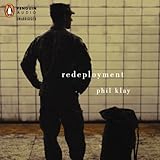
- Audible Audiobook
- Phil Klay (Author) - Craig Klein (Narrator)
- English (Publication Language)
- 8 Pages - 03/04/2014 (Publication Date) - Penguin Audio (Publisher)
Common Myths About Redeployment by Phil Klay
- Myth: Redeployment is a straightforward war narrative that glorifies combat.
- Why it matters: This misconception overlooks the collection’s critical examination of the dehumanizing aspects of war and its profound psychological toll on individuals.
- Correction: Klay’s stories are deeply critical, focusing on the moral erosion, disillusionment, and lasting trauma experienced by soldiers. They expose the brutal realities and ethical compromises inherent in conflict, rather than celebrating it.
- Myth: The book offers clear moral lessons or definitive takeaways about war.
- Why it matters: This expectation can lead to disappointment if readers search for explicit pronouncements or easily digestible messages from the author.
- Correction: Redeployment deliberately avoids providing simple answers. Its strength lies in presenting complex situations and the difficult, often ambiguous, choices characters make, prompting reader reflection rather than offering prescriptive lessons.
Expert Tips for Engaging with the Collection
- Tip 1: Focus on the Chaplain’s Perspective.
- Actionable Step: Pay particular attention to the stories narrated by the chaplain, such as “Prayer Book.”
- Common Mistake to Avoid: Dismissing these narratives as less “ground-level” than those of infantrymen; the chaplain’s perspective offers a crucial lens on faith, doubt, and the struggle to find meaning within the military structure and its moral paradoxes.
- Tip 2: Track the Evolution of Language.
- Actionable Step: Note how characters use military jargon, euphemisms, and formal language to distance themselves from reality or manage emotional exposure.
- Common Mistake to Avoid: Reading the dialogue and narration passively without analyzing the function of specific word choices; language is a critical tool Klay uses to reveal character, context, and the psychological mechanisms employed by soldiers.
- Tip 3: Consider the Role of Home.
- Actionable Step: Analyze the depictions of civilian life and the soldiers’ relationships with family and society upon their return from deployment.
- Common Mistake to Avoid: Focusing solely
Decision Rules
- If reliability is your top priority for Redeployment by Phil Klay, choose the option with the strongest long-term track record and support.
- If value matters most, compare total ownership cost instead of headline price alone.
- If your use case is specific, prioritize fit-for-purpose features over generic ‘best overall’ claims.