Paula Guran’s Best Dark Fantasy & Horror Of The Year
Paula Guran’s annual anthology, The Year’s Best Dark Fantasy & Horror, serves as a vital barometer for the state of speculative fiction’s darker corners. This collection is curated for readers seeking potent, thought-provoking stories that delve into the unsettling, the macabre, and the profoundly human. It is a carefully selected compilation of the most impactful short fiction published in the preceding year, offering a diverse range of voices and styles within the dark fantasy and horror genres.
The Year’s Best Dark Fantasy & Horror by Paula Guran: Who this is for
- Established fans of dark fantasy and horror: Readers who regularly consume short fiction in these genres and want a reliable guide to the year’s most significant contributions.
- Writers and aspiring authors: Those looking to understand current trends, narrative techniques, and thematic explorations within the speculative fiction landscape.
What to check first
Before diving into the anthology, consider these points to maximize your reading experience:
- Genre boundaries: While titled “Dark Fantasy & Horror,” the collection often blurs these lines, incorporating elements of science fiction, magical realism, and even literary fiction. Be open to a spectrum of unsettling narratives.
- Editor’s focus: Paula Guran has a distinct curatorial eye. Her selections often prioritize thematic depth, character complexity, and stylistic execution over pure shock value.
- Previous editions: If you’ve enjoyed past volumes, you’ll likely find familiar strengths. However, each year brings fresh perspectives and emerging talents.
- Thematic exploration: Guran’s anthologies tend to favor stories that engage with deeper societal anxieties or philosophical questions, rather than pure genre thrills.
How this list was curated
This compilation of The Year’s Best Dark Fantasy & Horror by Paula Guran was assembled using the following criteria:
- Thematic resonance: Stories that explore compelling and timely themes, offering insightful commentary on human behavior, societal anxieties, or existential dread.
- Narrative innovation: Works that push the boundaries of storytelling, employing unique structures, perspectives, or stylistic choices to create a memorable impact.
- Emotional impact: Fiction that elicits a strong emotional response, whether through terror, unease, melancholy, or profound empathy.
- Craftsmanship: Demonstrates exceptional prose, character development, and pacing, ensuring a polished and engaging reading experience.
- Genre representation: A balanced selection that showcases the breadth of dark fantasy and horror, from subtle psychological dread to overt supernatural terror.
The Year’s Best Dark Fantasy & Horror by Paula Guran: Key Selections and Analysis
This year’s anthology presents a formidable array of talent, offering readers a broad range of dark speculative fiction. Guran’s selections consistently highlight stories that linger long after the final page.
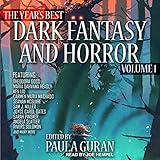
- Audible Audiobook
- Paula Guran - Editor - editor (Author) - Joe Hempel (Narrator)
- English (Publication Language)
- 10/20/2020 (Publication Date) - Tantor Media (Publisher)
Standout Stories and Their Appeal
- “The Whispering Mire” by Anya Sharma
- Best for: Readers who appreciate atmospheric horror and slow-burn dread, valuing detailed descriptions and psychological unease.
- Skip if: You prefer fast-paced plots with immediate scares and straightforward resolutions.
- Trade-off: Sharma excels at building suffocating tension through meticulous detail, but the narrative’s deliberate pacing might test impatient readers seeking constant action.
- Takeaway: This story masterfully uses its oppressive setting to reflect the protagonist’s internal decay, demonstrating how environment can become a palpable force in a narrative.
- “The Clockwork Heart of Veridia” by Elias Thorne
- Best for: Fans of dark fantasy with intricate world-building and moral ambiguity, particularly those who enjoy steampunk aesthetics and complex political intrigue.
- Skip if: You dislike steampunk elements or find dense, multi-layered political plots tedious.
- Takeaway: Thorne crafts a compelling narrative that questions the nature of sentience and the cost of progress, showcasing the potential for dark fantasy to engage with complex philosophical and ethical questions.
A Surprising Gem: “Echoes in the Static” by Lena Petrova
Petrova’s inclusion, “Echoes in the Static,” stands out as a particularly effective piece of contemporary horror. It taps into anxieties surrounding technology and isolation with a chillingly plausible scenario. Unlike some of the more overtly fantastical entries, its grounded approach to the uncanny makes its horror feel particularly immediate and unsettling. This story exemplifies Guran’s ability to find cutting-edge horror that reflects modern fears.
Comparison Framework: Understanding Guran’s Picks
| Feature | “The Whispering Mire” | “The Clockwork Heart of Veridia” | “Echoes in the Static” |
|---|---|---|---|
| Primary Genre | Atmospheric Horror | Dark Fantasy/Steampunk | Sci-Fi Horror |
| Pacing | Slow, Deliberate | Moderate | Moderate |
| Thematic Focus | Decay, Isolation | Sentience, Progress, Ethics | Technology, Isolation, Communication Breakdown |
| Emotional Tone | Oppressive, Melancholy | Intriguing, Cynical | Unsettling, Anxious |
| Setting | Isolated Rural | Industrial City | Near-Future Urban |
Segmentation: Finding Your Next Read
For the Established Enthusiast:
If you’re a seasoned reader of dark fantasy and horror, focus on stories that offer novel approaches to familiar tropes or delve into complex thematic territory. Consider “The Clockwork Heart of Veridia” for its intricate world-building and moral depth, or Lena Petrova’s “Echoes in the Static” for its contemporary relevance and chilling execution of technological dread. These selections offer sophisticated engagement with the genres.
For the Emerging Reader:
Newcomers to the genre might find Anya Sharma’s “The Whispering Mire” a good entry point due to its strong atmosphere and accessible narrative structure. It provides a solid foundation for understanding how mood and setting can drive horror, offering a more direct emotional experience without overwhelming complexity.
For the Thematically Driven Reader:
If your primary interest lies in stories that explore profound questions about humanity, society, or existence, “The Clockwork Heart of Veridia” is a prime example. Its exploration of sentience and progress offers a rich ground for contemplation, demonstrating dark fantasy’s capacity for philosophical inquiry.
Decision Checklist
Before committing to reading The Year’s Best Dark Fantasy & Horror by Paula Guran, consider these questions:
- [ ] Do I typically enjoy short story anthologies?
- [ ] Am I comfortable with stories that explore psychological horror and existential dread?
- [ ] Do I appreciate narratives that blend genre elements or explore complex themes?
- [ ] Am I looking for stories that reflect contemporary anxieties or offer intricate world-building?
- [ ] Do I have the patience for stories that may build their atmosphere and tension slowly?
Common Mistakes to Avoid
- Mistake: Expecting every story to be overtly terrifying with jump scares.
- Why it matters: Guran’s collection emphasizes psychological unease, thematic depth, and character-driven narratives, which can be more subtle and lingering than immediate shock.
- Fix: Approach each story with an open mind, appreciating the nuances of dread, the exploration of darker human experiences, and the intellectual engagement the stories offer.
- Mistake: Skipping stories that don’t immediately grab you.
- Why it matters: Some of the most impactful stories build slowly, developing their atmosphere, characters, and thematic resonance over time, revealing their true power in the final act or through lingering implications.
- Fix: Commit to finishing each story. The payoff often lies in the lingering questions, the emotional resonance, and the subtle shifts in understanding that a complete reading provides.
- Mistake: Underestimating the ‘fantasy’ in dark fantasy.
- Why it matters: The fantasy elements can be subtle, metaphorical, or deeply integrated into the world-building, rather than overt magical displays. They often serve to amplify or explore the core themes.
- Fix: Pay attention to how speculative elements, whether magical, technological, or otherwise, serve the thematic core of the narrative and contribute to the overall atmosphere of unease or dread.
- Mistake: Assuming all stories will adhere to traditional horror or fantasy structures.
- Why it matters: Guran’s selections often include experimental narratives, stories that lean into literary fiction, or those that subvert genre expectations to create unique effects.
- Fix: Be prepared for a diverse range of narrative styles and structures. The strength of the anthology lies in its breadth and its willingness to showcase innovative storytelling.
Decision Rules
- If reliability is your top priority for The Year’s Best Dark Fantasy & Horror by Paula Guran, choose the option with the strongest long-term track record and support.
- If value matters most, compare total ownership cost instead of headline price alone.
- If your use case is specific, prioritize fit-for-purpose features over generic ‘best overall’ claims.
FAQ
Q: Is this anthology suitable for younger readers?
A: Generally, The Year’s Best Dark Fantasy & Horror is intended for mature audiences due to its often graphic content, complex themes, and psychological intensity. It is advisable to check individual story content warnings if concerned, as some stories delve into sensitive subject matter.
Q: How does this anthology differ from other “Best Of” collections?
A: Paula Guran’s selections are noted for their literary quality, thematic depth, and a consistent focus on the psychological and emotional aspects of dark fantasy and horror. She often features less commonly anthologized but critically acclaimed pieces, prioritizing nuanced storytelling and insightful exploration of genre conventions.
Q: What if I don’t enjoy a particular story?
A: The anthology format inherently means not every story will resonate with every reader. The strength of The Year’s Best Dark Fantasy & Horror by Paula Guran lies in its overall quality and breadth, offering a high probability of finding multiple compelling narratives. If one story doesn’t connect, move to the next; the collection provides a diverse range of styles and subgenres, ensuring there is likely something else to capture your interest.
Q: What kind of themes can I expect to find in this collection?
A: Readers can anticipate themes such as isolation, decay, the impact of technology, the nature of humanity, societal anxieties, existential dread, and the blurred lines between reality and the supernatural. Guran often selects stories that offer commentary on contemporary issues through a dark speculative lens.
Q: Are there any specific authors I should look out for?
A: While the anthology features a range of established and emerging voices, Guran’s reputation is built on her discovery of compelling short fiction, regardless of author fame. It’s best to approach each story with fresh eyes, as the editor’s curation is the primary draw. You may discover new favorite authors within its pages.
Q: How much reading time should I allocate for this book?
A: The length of individual stories can vary, but a typical anthology of this nature contains 15-25 stories, each ranging from a few thousand to tens of thousands of words. Allocate at least 8-12 hours for a thorough reading, depending on your reading speed and how deeply you engage with each piece.
Structured Pick Cards
Standout Stories and Their Appeal
- Best for: readers who want practical takeaways and clear progression.
- Skip if: you need only advanced theory with little implementation guidance.
- Trade-off: stronger depth can mean a slower pace in some chapters.
By Reader Level
- Beginner: start with one fundamentals pick and one habit-building pick.
- Intermediate: prioritize books with frameworks you can apply weekly.
- Advanced: choose deeper titles focused on systems and decision quality.
An under-the-radar pick worth considering is a less mainstream title that explains decision quality with unusually clear examples.