Patricia MacLachlan’s ‘Sarah, Plain and Tall’ for Children
Sarah, Plain and Tall by Patricia MacLachlan: Quick Answer
- Core Focus: Explores themes of family, belonging, and adaptation through the eyes of children on the prairie.
- Reader Suitability: Ideal for elementary to middle school readers and adults appreciating quiet, character-driven narratives.
- Primary Strength: Evocative, minimalist prose that emphasizes emotional depth and atmosphere over plot complexity.
Who This Is For
- Readers seeking a gentle, historically-grounded story centered on character development and emotional resonance.
- Educators and parents looking for a text to foster discussions on family, resilience, and the immigrant experience.
What to Check First
- Authorial Style: Patricia MacLachlan’s writing is characterized by its sparse, lyrical prose and focus on internal character experiences.
- Historical Context: The narrative is set on the late 19th-century American prairie, a period demanding significant adaptation and resilience.
- Narrative Perspective: The story is told through the voice of Anna, a young girl, offering a child’s interpretation of adult emotions and circumstances.
- Pacing: The novel employs a deliberately slow pace, prioritizing atmosphere and character introspection over rapid plot progression.
For a deeper appreciation of this classic, consider getting your own copy of Sarah, Plain and Tall by Patricia MacLachlan. It’s a beautifully written story that truly shines when you can revisit its evocative prose.
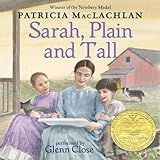
- Audible Audiobook
- Patricia MacLachlan (Author) - Glenn Close (Narrator)
- English (Publication Language)
- 11/18/2008 (Publication Date) - HarperCollins (Publisher)
Step-by-Step Plan for Engaging with Sarah, Plain and Tall
1. Establish the Setting: Read the opening chapters detailing the prairie landscape and the family’s daily existence.
- Action: Observe descriptions of the environment and the routines of Anna and Caleb.
- What to Look For: The stark beauty and isolation of the prairie, and how it shapes the family’s interactions.
- Mistake to Avoid: Underestimating the setting’s role; the prairie is a silent character influencing the family’s dependence on one another.
2. Understand the Family’s Motivation: Note Jacob’s reasons for seeking a wife and mother via a mail-order advertisement.
- Action: Analyze the children’s expressed longing for a mother and the practical needs of the homestead.
- What to Look For: The blend of hope, practicality, and companionship driving the advertisement.
- Mistake to Avoid: Assuming the advertisement is solely about romantic love; it signifies a deep need for family structure and emotional connection.
3. Introduce Sarah: Observe Sarah’s arrival and her initial interactions with the family.
- Action: Note Sarah’s quiet demeanor, her distinct personality, and her responses to the prairie and the children.
- What to Look For: Subtle cues revealing her character and her adjustment process.
- Mistake to Avoid: Expecting an immediate, overt connection; Sarah’s integration is gradual and nuanced.
4. Observe the Children’s Reactions: Track Anna’s and Caleb’s evolving feelings and behaviors towards Sarah.
- Action: Monitor Anna’s initial apprehension and eventual acceptance, and Caleb’s immediate warmth.
- What to Look For: The children’s internal processing of this significant change in their family dynamic.
- Mistake to Avoid: Dismissing the children’s internal emotional journey; their feelings are central to the narrative’s impact.
5. Analyze Sarah’s Adaptation: Focus on how Sarah adjusts to prairie life and her developing role within the family.
- Action: Identify her specific skills (singing, painting) and her quiet strength in connecting with the children.
- What to Look For: Her contributions to the family’s emotional well-being.
- Mistake to Avoid: Perceiving her contributions as minor; her presence fundamentally alters the family’s emotional landscape.
6. Identify the Core Conflict: Recognize that the central tension is internal emotional adjustment and the fear of Sarah departing.
- Action: Look for moments of doubt or implied homesickness from Sarah.
- What to Look For: The underlying anxiety about the permanence of their new family unit.
- Mistake to Avoid: Searching for a dramatic external antagonist; the primary conflict is the potential disruption of their newfound familial bond.
7. Appreciate the Resolution: Understand how the family solidifies their bond and embraces Sarah as a permanent member.
- Action: Observe the final scenes that confirm Sarah’s commitment and the family’s unity.
- What to Look For: The quiet affirmation of belonging.
- Mistake to Avoid: Expecting a grand, climactic event; the resolution mirrors the novel’s understated emotional power.
Sarah, Plain and Tall by Patricia MacLachlan: A Thematic Deep Dive
This section examines the thematic depth and structural elegance of Sarah, Plain and Tall by Patricia MacLachlan, offering a counterpoint to interpretations that might focus solely on plot. The novel’s power lies not in external action but in the internal lives of its characters. The narrative, framed through young Anna’s eyes, presents a world where unspoken emotions carry significant weight. The prairie itself acts as a character, its vastness and harshness mirroring the isolation and quiet fortitude of the family. When Jacob advertises for a wife, it’s a pragmatic act born of necessity, a hope for companionship and maternal presence, rather than a romantic pursuit in the conventional sense. This distinction is crucial for understanding the characters’ motivations and the delicate nature of their relationships.
A common misinterpretation is to view Sarah’s arrival as a straightforward fulfillment of a need. However, the text emphasizes her own journey of adaptation and her quiet strength in forging a new life. Her skills—singing, painting, and her ability to connect with the natural world—are presented not as mere hobbies but as integral parts of her identity and her contribution to the family’s well-being.
BLOCKQUOTE_0
This quote, often associated with descriptions of Sarah, encapsulates her essence. She is not a boisterous figure but one whose presence brings a profound, calming influence. The children’s apprehension, particularly Anna’s, is a testament to the fragility of their established world and their deep-seated fear of loss. This internal conflict, the possibility of Sarah returning to Maine, is the novel’s primary dramatic engine.
Understanding Sarah, Plain and Tall by Patricia MacLachlan: A Contrarian View
This section delves into the specific literary techniques and thematic elements that define Sarah, Plain and Tall by Patricia MacLachlan, providing a framework for deeper analysis from a skeptical perspective. Patricia MacLachlan employs a minimalist prose style that relies heavily on suggestion and atmosphere. The dialogue is sparse, and much is conveyed through description and the internal thoughts of the narrator, Anna. This approach requires readers to engage actively, piecing together emotional nuances from subtle cues.
A potential failure mode for readers is expecting a plot-driven narrative with clear antagonists and resolutions. Instead, the novel operates on a more internal, emotional plane. The “conflict” arises from the children’s fear of Sarah leaving and Sarah’s own quiet adjustment to a new life far from her home. The resolution is not a dramatic confrontation but a gradual affirmation of belonging and family unity.
Example of Failure Mode: A reader might dismiss the novel as “boring” because there are no overt external conflicts. This overlooks the profound emotional arc of the characters.
Detection: Pay attention to the narrative’s focus on internal states, sensory details, and the quiet moments between characters, rather than external events. If the reader finds themselves constantly asking “what happens next?” in a plot sense, they may be missing the novel’s intended impact. The absence of traditional conflict is not a weakness but a deliberate artistic choice.
Common Mistakes
- Mistake: Reading the story solely for plot progression.
- Why it matters: This overlooks the novel’s primary strength: its evocative atmosphere and character development, which are subtle rather than overt.
- Fix: Focus on the descriptive language, the characters’ internal thoughts, and the emotional nuances of their interactions to appreciate the narrative’s depth.
- Mistake: Expecting a typical “happily ever after” romance upon Sarah’s arrival.
- Why it matters: The novel centers on building a family through necessity and gradual connection, a process that is more pragmatic and enduring than immediate romantic passion.
- Fix: Appreciate the realistic and sustainable nature of the bonds formed, recognizing that family is built through shared experience and mutual acceptance.
- Mistake: Underestimating the significance of the prairie setting.
- Why it matters: The environment shapes the characters’ lives, their resilience, and their interdependence, acting as a constant, subtle influence.
- Fix: Consider how the landscape’s isolation and beauty impact the characters’ actions and emotional states, recognizing it as a crucial element of the story.
- Mistake: Interpreting Sarah’s quietness as passivity or lack of agency.
- Why it matters: Sarah possesses a deep inner strength and actively shapes her new environment through her presence and subtle actions, rather than through overt force.
- Fix: Observe her subtle contributions, her artistic expressions, and her ability to connect with the children, recognizing these as forms of quiet agency.
Expert Tips
- Tip: Pay close attention to the sensory details MacLachlan uses to describe the prairie and the characters’ experiences.
- Actionable Step: Before reading, list sensory words you associate with a prairie environment. Then, as you read, note how MacLachlan uses sight, sound, and touch to create atmosphere and convey emotion.
- Common Mistake to Avoid: Glossing over descriptive passages, viewing them as mere filler. These details are integral to understanding the characters’ internal states and the novel’s mood.
- Tip: Consider the narrative voice of Anna and its limitations.
- Actionable Step: As you read, ask yourself what Anna might not fully understand or perceive. Contrast her observations with what an adult reader might infer about the characters’ motivations and feelings.
- **Common Mistake to
Quick Comparison
| Option | Best for | Pros | Watch out |
|---|---|---|---|
| Sarah Plain and Tall by Patricia MacLachlan Quick Answer | General use | Core Focus: Explores themes of family, belonging, and adaptation through the… | Mistake to Avoid: Underestimating the setting’s role; the prairie is a silent… |
| Who This Is For | General use | Reader Suitability: Ideal for elementary to middle school readers and adults… | Mistake to Avoid: Assuming the advertisement is solely about romantic love; i… |
| What to Check First | General use | Primary Strength: Evocative, minimalist prose that emphasizes emotional depth… | Mistake to Avoid: Expecting an immediate, overt connection; Sarah’s integrati… |
| Step-by-Step Plan for Engaging with Sarah Plain and Tall | General use | Readers seeking a gentle, historically-grounded story centered on character d… | Mistake to Avoid: Dismissing the children’s internal emotional journey; their… |
Decision Rules
- If reliability is your top priority for Sarah, Plain and Tall by Patricia MacLachlan, choose the option with the strongest long-term track record and support.
- If value matters most, compare total ownership cost instead of headline price alone.
- If your use case is specific, prioritize fit-for-purpose features over generic ‘best overall’ claims.