Pamela Meyer’s Liespotting: Detecting Deception
Quick Answer
- Pamela Meyer’s Liespotting outlines methods for identifying deception by analyzing verbal and nonverbal cues, grounded in psychological research.
- The book provides actionable techniques for improving observation skills, but requires careful application due to the nuanced nature of human behavior.
- A cautious, evidence-based approach is essential, recognizing that behavioral indicators are probabilistic and context-dependent.
Who This Is For
- Individuals who want to enhance their ability to discern truthfulness in interpersonal and professional interactions.
- Professionals in fields requiring critical assessment of communication, such as sales, law enforcement, human resources, or negotiation.
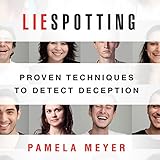
- Audible Audiobook
- Pamela Meyer (Author) - Karen Saltus (Narrator)
- English (Publication Language)
- 02/14/2012 (Publication Date) - Ascent Audio (Publisher)
What to Check First
- Core Concepts: Understand that Meyer’s framework identifies potential indicators of deception, not definitive proof. These are cues, not conclusions.
- Key Behavioral Categories: Familiarize yourself with the types of signals Meyer discusses: nonverbal (body language, microexpressions), verbal (word choice, speech patterns), and physiological.
- Contextual Significance: Recognize that behavior is highly situational. An action that seems suspicious in one context may be normal in another.
- Scientific Nuance: Be aware that deception detection is an area of ongoing scientific study. Meyer synthesizes existing research, but no single method is universally accepted as foolproof.
- Individual Baselines: Prioritize establishing a person’s typical behavior before attempting to identify deviations that might indicate deception.
Step-by-Step Plan for Applying Liespotting Principles
1. Establish Baseline Behavior: Observe an individual’s typical communication patterns during neutral, low-stakes conversations.
- Action: Engage in casual dialogue about non-controversial subjects.
- What to look for: Consistent posture, common hand gestures, typical eye contact duration, vocal tone, and response time.
- Mistake: Assuming any deviation from a generalized “normal” is indicative of deception without first establishing a personal baseline for that individual.
2. Introduce Potentially Deceptive Topics: Gradually shift the conversation toward subjects where accuracy of statements can be tested.
- Action: Ask factual questions related to claims that could be fabricated or misrepresented.
- What to look for: Observable shifts in behavior that diverge from the established baseline.
- Mistake: Over-interpreting minor behavioral changes as deception without considering alternative explanations like surprise, confusion, or genuine discomfort.
3. Analyze Nonverbal Signals: Focus on fleeting facial expressions, body posture shifts, and self-soothing behaviors.
- Action: Observe facial muscle movements (especially microexpressions), changes in hand gestures, instances of self-touching, and alterations in physical orientation.
- What to look for: Brief facial expressions that appear to contradict verbal statements, nervous fidgeting, or physical withdrawal.
- Mistake: Isolating a single nonverbal cue and treating it as definitive proof, without corroboration from other signals or the overall interactional context.
4. Evaluate Verbal Content and Delivery: Listen for inconsistencies, evasiveness, and changes in speech characteristics.
- Action: Note discrepancies in narratives, the use of passive voice, or the omission of specific details.
- What to look for: Alterations in vocal pitch or speech rate, an increased frequency of filler words, or a lack of specific, verifiable information.
- Mistake: Dismissing verbal anomalies that could stem from memory lapses, communication difficulties, or language barriers, rather than intentional deception.
5. Identify Clusters of Indicators: Look for multiple behavioral cues that manifest concurrently or in close succession.
- Action: Synthesize observations from nonverbal, verbal, and physiological channels.
- What to look for: A convergence of conflicting signals, rather than a singular, isolated behavior.
- Mistake: Relying on a single, isolated behavior as sufficient evidence for a deception judgment.
6. Assess Environmental and Situational Context: Interpret observed behaviors within the broader context of the interaction.
- Action: Consider the setting, the relationship dynamics between individuals, and any external pressures at play.
- What to look for: Plausible alternative explanations for observed behaviors that do not involve deception, such as cultural norms or situational stress.
- Mistake: Applying a universal interpretation of cues without accounting for individual differences, cultural communication styles, and situational influences.
7. Seek Corroborating Evidence: Where feasible, verify factual claims made by the individual through objective means.
- Action: Cross-reference statements with known facts or independent, verifiable sources.
- What to look for: Factual inaccuracies or inconsistencies with established information.
- Mistake: Assuming behavioral cues alone are sufficient for a definitive judgment without attempting factual verification when possible.
Common Mistakes in Liespotting
- The “Tell” Fallacy — Why it matters: The belief that a single gesture or expression is an infallible sign of deception, ignoring individual variation and context. This leads to misinterpretations. — Fix: Look for clusters of behaviors and corroborating evidence, not isolated incidents, and always consider the individual’s baseline.
- Confirmation Bias — Why it matters: The unconscious tendency to seek or interpret information in a way that confirms a pre-existing suspicion of deception. This biases the assessment. — Fix: Actively search for evidence that contradicts your suspicion and consider alternative explanations for observed behaviors.
- Over-Generalization of Cues — Why it matters: Applying universal deception indicators without accounting for cultural differences or an individual’s established baseline behavior. This can lead to inaccurate judgments based on misunderstandings. — Fix: Establish a baseline for each individual and be aware of cultural communication norms before assessing deviations.
- Ignoring the Stress Factor — Why it matters: Mistaking anxiety, nervousness, or discomfort for signs of deception, especially in high-pressure situations. This can wrongly flag honest individuals. — Fix: Differentiate between stress-induced behaviors and those specifically associated with deception by observing baseline behavior and considering situational pressures.
- Focusing Solely on Nonverbals — Why it matters: Overemphasizing body language while neglecting verbal content, or vice versa, leading to an incomplete and potentially inaccurate assessment. — Fix: Integrate analysis of both verbal and nonverbal communication for a more comprehensive understanding of the interaction.
Liespotting by Pamela Meyer: Expert Insights and Counterpoints
Pamela Meyer’s Liespotting by Pamela Meyer offers a structured approach to identifying deception, drawing on observable human behaviors. The book synthesizes research on microexpressions, body language, and verbal cues, aiming to equip readers with practical skills. However, a critical, contrarian perspective is essential: the cues discussed are probabilistic indicators, not definitive proof. The strength of Meyer’s work lies in its accessible synthesis of complex psychological concepts into actionable advice for improving observational acuity.
BLOCKQUOTE_0
Meyer correctly emphasizes that deception is not a monolithic act but a spectrum, with varying degrees of intent and complexity. Her approach advocates for a holistic view, integrating verbal and nonverbal signals, rather than relying on a single, simplistic “tell.” This aligns with a pragmatic approach to communication analysis, where understanding patterns and deviations is key to interpretation.
Understanding the Limits of Behavioral Cues
A significant limitation in deception detection, even with techniques like those outlined in Liespotting by Pamela Meyer, is the potential for misinterpretation. Many behaviors associated with deception, such as fidgeting or avoiding eye contact, can also be indicators of anxiety, shyness, or adherence to different cultural communication styles.
- Example: An individual from a culture where direct eye contact is considered impolite might appear evasive to someone unfamiliar with that norm, potentially leading to an incorrect assumption of dishonesty.
- Takeaway: Behavioral cues are best utilized as indicators for further, more detailed inquiry, rather than as definitive proof of deception.
Expert Tips for Deception Detection
Here are practical tips for applying the principles of Liespotting with a critical, evidence-based approach:
- Tip 1: Baseline Calibration is Crucial.
- Actionable Step: Before assessing for deception, dedicate sufficient time to observing an individual’s typical demeanor and communication style when they are relaxed and discussing neutral topics.
- Common Mistake to Avoid: Immediately applying deception indicators without establishing a personalized baseline, which often leads to misinterpreting normal behavior as suspicious.
- Tip 2: Seek Consistency Across Communication Channels.
- Actionable Step: Look for congruence between an individual’s verbal statements, nonverbal expressions, and vocal tone. A mismatch across multiple channels provides a stronger indication of potential deception than a single anomaly.
- Common Mistake to Avoid: Focusing exclusively on body language while neglecting verbal content, or vice versa, thereby creating an incomplete and potentially inaccurate assessment.
- Tip 3: Acknowledge the Role of Context.
- Actionable Step: Always consider the situational factors that might influence behavior, such as stress, pressure, or cultural background, before concluding that deception is occurring.
- Common Mistake to Avoid: Labeling behaviors as deceptive without evaluating whether they could be plausibly explained by external pressures or individual disposition, such as introversion or social anxiety.
Liespotting by Pamela Meyer: Decision Framework
When evaluating the application of deception detection techniques, consider the following decision points:
| Scenario | Primary Consideration | Recommended Action | Potential Pitfall |
|---|---|---|---|
| High-Stakes Negotiation | Accuracy and verification | Focus on verbal content inconsistencies and corroborating evidence; use nonverbals as secondary cues. | Over-reliance on body language, ignoring verbal evasiveness. |
| Casual Social Interaction | Maintaining rapport | Be highly cautious; prioritize understanding intent and avoid judgmental interpretations of minor cues. | Misinterpreting normal social awkwardness as deception. |
| Investigative Interview | Comprehensive data gathering | Systematically establish baseline |
Decision Rules
- If reliability is your top priority for Liespotting by Pamela Meyer, choose the option with the strongest long-term track record and support.
- If value matters most, compare total ownership cost instead of headline price alone.
- If your use case is specific, prioritize fit-for-purpose features over generic ‘best overall’ claims.