Pajtim Statovci’s ‘My Cat Yugoslavia’: A Review
My Cat Yugoslavia by Pajtim Statovci: Quick Answer
- My Cat Yugoslavia by Pajtim Statovci is a powerful, albeit challenging, exploration of identity, displacement, and inherited trauma, told through a unique narrative structure.
- Readers seeking a conventional plot may find it disorienting, but those drawn to lyrical prose and thematic depth will find it rewarding.
- Its examination of the Kosovo Albanian experience, intertwined with fantastical elements, offers a distinct perspective on post-war realities.
My Cat Yugoslavia by Pajtim Statovci: Who This Is For
- Readers interested in contemporary European literature that grapples with themes of migration, belonging, and the long shadow of conflict.
- Those who appreciate experimental narrative structures and are willing to engage with a story that prioritizes atmosphere and emotional resonance over linear progression.
What to Check First
Before diving into My Cat Yugoslavia by Pajtim Statovci, consider these points:
- Narrative Structure: The novel employs a multi-voiced, non-linear approach. Be prepared for shifts in perspective and time that can feel fragmented.
- Thematic Density: The book is rich with symbolism and explores complex issues like national identity, the immigrant experience, and the psychological impact of war.
- Tone and Mood: The overall atmosphere is often melancholic, unsettling, and at times surreal, reflecting the characters’ internal and external struggles.
- Pacing: The narrative unfolds deliberately, focusing on character interiority and thematic development rather than action-driven plot points.
Step-by-Step Plan for Engaging with My Cat Yugoslavia
Engaging with Pajtim Statovci’s novel requires a mindful approach to its distinctive structure and thematic weight.
1. Familiarize Yourself with the Author’s Background: Understand that Pajtim Statovci’s own experiences as a Kosovo Albanian refugee inform the novel’s exploration of displacement and identity.
- What to Look For: Contextual knowledge of the author’s biography can illuminate the novel’s emotional core and thematic underpinnings.
- Mistake: Assuming the novel is purely autobiographical without recognizing its fictional and allegorical elements.
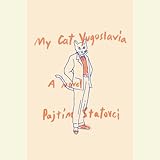
- Audible Audiobook
- Pajtim Statovci (Author) - Edoardo Ballerini, Alison Fraser (Narrators)
- English (Publication Language)
- 04/18/2017 (Publication Date) - Random House Audio (Publisher)
2. Approach the Narrative Structure with an Open Mind: The story is not told chronologically or from a single viewpoint. Expect multiple narrators and temporal shifts.
- What to Look For: Pay attention to how each voice contributes to the larger tapestry of the narrative and how the fragmented structure mirrors the characters’ fractured lives.
- Mistake: Becoming frustrated by the lack of a clear, linear plot and trying to force a conventional reading.
3. Identify Key Themes Early On: Themes of identity, memory, trauma, and the immigrant experience are central.
- What to Look For: Note recurring motifs and character preoccupations that speak to these larger issues. For instance, the animalistic transformations can be seen as metaphors for dehumanization or primal instincts.
- Mistake: Focusing solely on surface-level events without engaging with the deeper symbolic meanings Statovci imbues in the text.
4. Embrace the Lyrical Prose: Statovci’s writing is often poetic and evocative, even when describing difficult subjects.
- What to Look For: Appreciate the beauty and power of the language itself; how it shapes the mood and enhances the emotional impact of the story.
- Mistake: Skimming over descriptive passages, missing the nuanced emotional texture they provide.
5. Consider the “Cat” Motif: The titular cat and other animalistic imagery are not mere embellishments. They serve as powerful symbolic devices.
- What to Look For: Analyze how these elements connect to themes of belonging, otherness, and the struggle to maintain humanity in dehumanizing circumstances.
- Mistake: Dismissing the fantastical elements as irrelevant or gratuitous, thereby missing a crucial layer of interpretation.
6. Allow for Ambiguity: Not all questions will be answered, and some events or character motivations may remain open to interpretation.
- What to Look For: Accept that the novel is designed to provoke thought and feeling rather than provide definitive answers. The power often lies in the unanswered questions.
- Mistake: Demanding concrete explanations for every narrative element, which can lead to dissatisfaction with the novel’s artistic intent.
Comparison Framework: Literary Style and Thematic Focus
When evaluating My Cat Yugoslavia by Pajtim Statovci, comparing its approach to other contemporary novels dealing with similar themes can be insightful.
| Feature | My Cat Yugoslavia by Pajtim Statovci | Novel B (e.g., A Generational Saga) | Novel C (e.g., A Realistic Memoir) |
|---|---|---|---|
| Narrative Voice | Multiple, often fragmented, shifting perspectives; lyrical and poetic. | Typically a single, consistent narrator; more direct prose. | First-person, immediate, and often highly personal. |
| Thematic Focus | Identity, displacement, inherited trauma, surrealism, the immigrant experience. | Family history, societal change, personal growth over time. | Individual memory, specific historical events, emotional resilience. |
| Plot Structure | Non-linear, associative, dreamlike; prioritizes mood and theme. | Generally linear, chronological, with clear character arcs. | Episodic, often driven by recollection and personal reflection. |
| Symbolism | Pervasive and often surreal (e.g., animal transformations). | More conventional or allegorical symbolism. | Primarily literal, grounded in lived experience. |
Common Mistakes When Reading My Cat Yugoslavia
- Mistake: Expecting a straightforward, linear plot.
- Why it Matters: This leads to frustration and a failure to appreciate the novel’s unique narrative architecture, which mirrors fragmented identities and memories.
- Fix: Approach the book with an awareness of its experimental nature and focus on thematic resonance and emotional impact rather than plot progression.
- Mistake: Dismissing the surreal or fantastical elements.
- Why it Matters: These elements are crucial allegorical tools used by Statovci to explore the psychological and societal traumas experienced by his characters.
- Fix: Engage with the symbolism, considering what the animalistic transformations or dreamlike sequences represent about the characters’ inner states and their experiences of displacement.
- Mistake: Over-reliance on autobiographical interpretation.
- Why it Matters: While the novel is informed by the author’s background, it is a work of fiction. Treating it solely as memoir risks missing its broader artistic and thematic ambitions.
- Fix: Appreciate the personal resonance while recognizing the novel’s status as a crafted literary work that uses personal experience as a springboard for universal themes.
- Mistake: Reading too quickly, trying to “finish” the book.
- Why it Matters: The novel’s density and lyrical prose benefit from a slower, more contemplative reading pace. Rushing can lead to missed nuances.
- Fix: Allow yourself time to absorb the language, reflect on the imagery, and connect the different narrative threads. Rereading passages can also be beneficial.
- Mistake: Focusing solely on the negative aspects of the characters’ experiences.
- Why it Matters: While the novel deals with trauma, it also explores themes of resilience, love, and the persistent search for identity and belonging.
- Fix: Look for the glimmers of hope and the enduring human spirit that Statovci weaves into the narrative, even amidst hardship.
Decision Rules
- If reliability is your top priority for My Cat Yugoslavia by Pajtim Statovci, choose the option with the strongest long-term track record and support.
- If value matters most, compare total ownership cost instead of headline price alone.
- If your use case is specific, prioritize fit-for-purpose features over generic ‘best overall’ claims.
FAQ
- Q: Is “My Cat Yugoslavia” a difficult book to read?
- A: It can be challenging due to its non-linear structure and exploration of complex, often painful themes. However, its lyrical prose and thematic depth make it rewarding for attentive readers.
- Q: What is the significance of the cat in the novel?
- A: The cat, and other animalistic imagery, serves as a potent symbol for themes of identity, otherness, displacement, and the struggle to retain humanity in the face of dehumanizing experiences.
- Q: Should I read “My Cat Yugoslavia by Pajtim Statovci” if I prefer straightforward plots?
- A: If you strongly prefer linear narratives with clear plot progression, this novel might not be the best fit. However, if you are open to experimental storytelling and thematic exploration, it offers a unique and powerful reading experience.
- Q: Does the novel require prior knowledge of the Kosovo War?
- A: While background knowledge can enhance understanding of the historical context and themes of displacement, the novel is written in a way that allows readers to grasp the emotional and psychological impact of conflict and migration through the characters’ experiences.