Nina Willner’s ‘The Boys In The Light’ Story
Understanding The Boys In The Light by Nina Willner
- The Boys In The Light by Nina Willner is a collection of deeply personal testimonies from Holocaust survivors, focusing on their individual experiences of persecution, survival, and the lasting impact of trauma.
- This work is best suited for readers who seek direct, unvarnished accounts that humanize historical events, emphasizing resilience and the complex aftermath of extreme adversity.
- Readers should approach this book with emotional preparedness, as the narratives are often graphic and unflinching in their depiction of suffering.
Who This Book Is For
- Individuals seeking to understand the Holocaust through the lens of personal experience, rather than through detached historical analysis.
- Readers interested in the psychological and emotional endurance of survivors and the intergenerational effects of historical trauma.
What To Examine First
- Emotional Resilience: The content is intense and can be deeply disturbing. Assess your current capacity to engage with graphic accounts of suffering and loss.
- Historical Context: A basic understanding of the Holocaust and World War II will enhance comprehension of the individual narratives presented.
- Author’s Intent: Nina Willner’s focus is on capturing raw, authentic survivor voices. Recognize that this is a curated collection, not an exhaustive historical treatise.
- Narrative Format: The book comprises individual oral histories, meaning the style, tone, and scope will vary significantly from one account to the next.
Step-by-Step Plan for Engaging with The Boys In The Light
1. Review the Introduction: Understand Nina Willner’s stated purpose and the methodology behind her collection of these critical testimonies.
- Action: Read the author’s preface and any introductory essays thoroughly.
- What to look for: The author’s personal connection to the subject, her interview process, and the overarching goals for the book.
- Mistake to avoid: Skipping this foundational section, which can lead to misinterpreting the author’s framing and the intended impact of the collection.
2. Begin with Early Testimonies: Familiarize yourself with the initial survivor accounts to establish the book’s tone and Willner’s presentation style.
- Action: Read the first few chapters featuring individual stories.
- What to look for: Emerging themes of survival, loss, and the immediate post-war period. Observe how Willner introduces and transitions between narratives.
- Mistake to avoid: Assuming uniformity in the emotional intensity or narrative arc of each story; recognize the inherent diversity of experiences from the outset.
3. Identify Recurring Themes: As you progress through the book, actively note patterns and shared experiences that emerge across multiple testimonies.
- Action: Keep a running list (mental or written) of commonalities in the survivors’ accounts.
- What to look for: Shared challenges in rebuilding lives, the persistent influence of memory, and common forms of resilience or coping mechanisms.
- Mistake to avoid: Overemphasizing the unique aspects of each story and failing to recognize the collective threads that bind their experiences of persecution.
4. Analyze Post-War Narratives: Pay close attention to how Willner addresses the long-term consequences and the survivors’ lives in the decades following the war.
- Action: Read the sections discussing the survivors’ lives in the aftermath of liberation.
- What to look for: Evidence of ongoing trauma, challenges in societal reintegration, and the intergenerational impact of their experiences.
- Mistake to avoid: Assuming that survival equates to complete emotional resolution; acknowledge the persistent and complex nature of trauma.
5. Evaluate the Author’s Editorial Role: Consider Nina Willner’s contribution beyond mere compilation, including her editorial choices and contextualization of the narratives.
- Action: Analyze the author’s commentary and transitions between survivor accounts.
- What to look for: How Willner shapes the reader’s perception through selection, arrangement, and any additional information provided.
- Mistake to avoid: Treating the book as an unmediated transcript; recognize that it is a curated collection reflecting the author’s perspective and interpretive framework.
6. Process the Concluding Sections: Understand Willner’s synthesis of the testimonies and her final reflections on the overarching themes of the collection.
- Action: Read the book’s concluding chapters.
- What to look for: The author’s overarching message, any calls to remembrance, and how she connects the individual stories to broader historical understanding.
- Mistake to avoid: Concluding your engagement after the final testimony and missing the author’s ultimate summation of the collection’s significance.
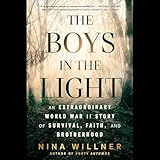
- Audible Audiobook
- Nina Willner (Author) - Mark Bramhall, Nina Willner (Narrators)
- English (Publication Language)
- 07/22/2025 (Publication Date) - Penguin Audio (Publisher)
The Boys In The Light by Nina Willner: A Contrarian Perspective
Nina Willner’s The Boys In The Light by Nina Willner offers a potent, direct engagement with the lived realities of Holocaust survivors. By prioritizing individual testimonies, the book serves as a critical counterpoint to abstract historical narratives, highlighting the profound personal toll of atrocity. However, a significant failure mode for readers lies in the potential for overgeneralization, mistaking the specificity of individual trauma for a universally applicable template of suffering and resilience.
This can lead to two primary misinterpretations: either assuming all survivors endured identical experiences, or underestimating the persistent, lifelong impact of their trauma. Readers might incorrectly infer a clear, linear progression from victimhood to complete recovery, failing to grasp the complex, often non-linear journey of healing from profound historical trauma.
Detecting Potential Misinterpretations Early
- Assumption of Uniformity: If a reader begins to think, “All survivors experienced X in the same way,” they are likely falling into a trap of generalization. For example, assuming the post-war struggles of a Polish survivor were identical to those of a survivor from Hungary ignores distinct geopolitical and social contexts.
- Evidence: Compare the described liberation experiences, resettlement challenges, and family reunification processes across different testimonies. Willner’s selection of diverse backgrounds is key here.
- Underestimation of Lingering Trauma: A reader might infer that because a survivor is able to recount their story decades later, they have fully “processed” their experiences. This overlooks the pervasive nature of complex trauma and PTSD.
- Evidence: Look for subtle indicators within the narratives: recurring nightmares, persistent anxiety, difficulty forming deep attachments, or a sense of being perpetually vigilant. These are not signs of failure to recover, but rather the enduring reality of trauma.
Common Myths Debunked
- Myth 1: All Holocaust survivors experienced the same horrors and faced identical post-war challenges.
- Correction: While the overarching persecution was shared, the specific experiences varied dramatically based on nationality, age, gender, location of internment, and post-war circumstances. Nina Willner’s collection highlights this diversity, showcasing different paths to survival and rebuilding. For example, a survivor liberated in Western Europe faced different immediate realities than one liberated in Eastern Europe.
- Myth 2: Once survivors are “free,” their trauma is resolved, and they can move on without lasting effects.
- Correction: Complex trauma, resulting from prolonged and profound suffering, often has deep and lasting effects that can manifest years or even decades later. The narratives in The Boys In The Light frequently illustrate the ongoing struggle with memories, anxiety, and the emotional weight of their experiences, even among those who have built successful lives.
Expert Tips for Deeper Understanding
- Tip 1: Contextualize Each Survivor’s Origin: Before delving into a specific testimony, briefly identify the survivor’s country of origin or the specific camp they endured.
- Action: Perform a quick search for the mentioned location or camp to understand its specific historical context.
- Common Mistake to Avoid: Reading testimonies in isolation, which can obscure the unique historical, cultural, and political factors that shaped each individual’s experience.
- Tip 2: Analyze Authorial Interventions: Carefully note where Nina Willner adds her own commentary, connects different stories, or frames a particular narrative.
- Action: Highlight or make notes on the author’s direct contributions to the text, such as introductions to individual stories or concluding remarks.
- Common Mistake to Avoid: Treating all text as unmediated survivor speech, thereby ignoring the author’s editorial role in shaping the reader’s perception and understanding.
- Tip 3: Cross-Reference with Other Testimonies: If possible, compare the experiences presented in The Boys In The Light with other collections of survivor accounts, particularly those from different nationalities or age groups.
- Action: If you have access to other Holocaust survivor narratives, compare recurring themes and divergent experiences to gain a broader perspective.
- Common Mistake to Avoid: Concluding that one book offers a definitive or complete representation of the survivor experience; recognize the inherent limitations of any single collection.
Common Mistakes and How to Avoid Them
- Mistake: Treating all survivor accounts as uniform.
- Why it matters: Each individual’s experience of the Holocaust and its aftermath was unique, influenced by factors such as location, age, family status, and post-war circumstances. Generalizing diminishes the specificity and power of their individual stories.
- Fix: Actively seek out the differences in experiences, coping strategies, and post-war trajectories. Note the particular details of each person’s testimony.
- Mistake: Assuming a linear path from suffering to complete recovery.
- Why it matters: Trauma, especially complex trauma resulting from prolonged persecution, often has long-lasting and non-linear effects. Healing is typically a process, not a final destination.
- Fix: Be attentive to descriptions of ongoing struggles, recurring memories, and the persistent impact of trauma on daily life, even decades later.
- Mistake: Overlooking the author’s role in shaping the narrative.
- Why it matters: Nina Willner selects, edits, and contextualizes the survivor stories. Her choices influence how the reader perceives the survivors and their experiences.
Quick Comparison
| Option | Best for | Pros | Watch out |
|---|---|---|---|
| Understanding The Boys In The Light by Nina Willner | General use | The Boys In The Light by Nina Willner is a collection of deeply personal test… | Mistake to avoid: Skipping this foundational section, which can lead to misin… |
| Who This Book Is For | General use | This work is best suited for readers who seek direct, unvarnished accounts th… | Mistake to avoid: Assuming uniformity in the emotional intensity or narrative… |
| What To Examine First | General use | Readers should approach this book with emotional preparedness, as the narrati… | Mistake to avoid: Overemphasizing the unique aspects of each story and failin… |
| Step-by-Step Plan for Engaging with The Boys In The Light | General use | Individuals seeking to understand the Holocaust through the lens of personal… | Mistake to avoid: Assuming that survival equates to complete emotional resolu… |
Decision Rules
- If reliability is your top priority for The Boys In The Light by Nina Willner, choose the option with the strongest long-term track record and support.
- If value matters most, compare total ownership cost instead of headline price alone.
- If your use case is specific, prioritize fit-for-purpose features over generic ‘best overall’ claims.