Nietzsche’s Twilight Of The Idols and The Antichrist: Key Philosophical Ideas
Twilight Of The Idols/The Antichrist by Friedrich Nietzsche: Understanding Nietzsche’s Twilight of the Idols/The Antichrist
- Radical Critique: These works offer a profound and often confrontational critique of Western morality and Christian dogma, which Nietzsche argues stifle human vitality and growth.
- Core Concepts: Introduces foundational ideas like the “will to power,” differentiates between “master” and “slave” moralities, and advocates for a fundamental “revaluation of all values.”
- Key Failure Mode: A common pitfall is interpreting Nietzsche’s critique as purely nihilistic, overlooking his ultimate goal of fostering life-affirmation and the creation of new, robust value systems.
Who Should Read Twilight of the Idols and The Antichrist
- Individuals seeking a rigorous philosophical examination that challenges deeply ingrained moral, religious, and cultural assumptions.
- Readers interested in texts that critically dissect the foundations of Western civilization and advocate for individual self-overcoming.
What to Verify First
- Nietzsche’s Critical Approach: Recognize his critique as a diagnostic tool designed to expose life-negating beliefs and clear the path for life-affirming ones.
- Historical and Biographical Context: Understand these works were written late in Nietzsche’s career, reflecting a mature, often polemical, and intensely critical philosophical stance.
- Key Terminology: Familiarize yourself with terms such as “will to power,” “ressentiment,” “slave morality,” and “master morality” to grasp his arguments accurately.
- Contrarian Stance: Be prepared for arguments that deliberately oppose widely accepted societal values and beliefs, requiring a willingness to engage with challenging perspectives.
Step-by-Step Plan for Engaging with Twilight of the Idols and The Antichrist
1. Begin with Twilight of the Idols: Start with this text to grasp Nietzsche’s critical methodology and primary targets.
- Action: Read and identify Nietzsche’s main critiques (e.g., philosophers, religion, morality) and his concept of “idols” as unquestioned, often harmful, beliefs.
- What to look for: Observe how he deconstructs existing frameworks to expose their life-negating aspects.
- Mistake to avoid: Do not view this as mere deconstruction; recognize it as a preparatory step for constructing new values.
2. Analyze the Morality Distinction: Focus on Nietzsche’s contrast between “slave morality” and “master morality.”
- Action: Differentiate how “slave morality” (often associated with Christianity) prioritizes humility and pity, which Nietzsche argues suppresses vital drives, versus “master morality,” which values strength and self-affirmation.
- What to look for: Understand the origins and characteristics of each moral system as presented by Nietzsche.
- Mistake to avoid: Avoid equating “master morality” with simple aggression; it signifies a self-legislating capacity and the affirmation of one’s own highest standards.
3. Engage with The Antichrist: Proceed to Nietzsche’s direct polemic against Christianity.
- Action: Examine his critiques of Jesus, Paul, and the institutionalization of Christian doctrine, noting his arguments about how Christianity corrupted original teachings and fostered weakness.
- What to look for: Analyze the philosophical underpinnings of his critique, particularly concerning its impact on life-affirmation.
- Mistake to avoid: Do not dismiss the text as solely an anti-religious outburst; focus on the philosophical arguments about life-denial.
4. Identify the “Will to Power”: Recognize this as a fundamental concept in Nietzsche’s philosophy.
- Action: Observe how Nietzsche interprets various phenomena as manifestations of the “will to power”—a drive for growth, overcoming, and self-assertion.
- What to look for: Understand its role as a pervasive force shaping biological, psychological, and philosophical existence.
- Mistake to avoid: Do not interpret the “will to power” as a crude desire for dominance over others; it is more fundamentally a drive for self-expansion and self-mastery.
5. Grasp the “Revaluation of All Values”: Understand this as Nietzsche’s ultimate objective.
- Action: Note his assertion that existing values have become decadent and life-negating, necessitating the creation of new ones that affirm life and human potential.
- What to look for: Identify instances where Nietzsche calls for questioning and overturning established moral and cultural norms.
- Mistake to avoid: Do not interpret this as a call for nihilism; it is a call for a positive, creative act of value-creation.
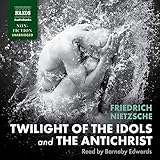
- Audible Audiobook
- Friedrich Nietzsche (Author) - Barnaby Edwards (Narrator)
- English (Publication Language)
- 04/11/2019 (Publication Date) - Naxos AudioBooks (Publisher)
6. Consider the “Eternal Recurrence”: Understand its role as a test of life-affirmation.
- Action: Reflect on Nietzsche’s thought experiment: the ability to will the eternal recurrence of one’s life, including all its suffering, as the ultimate affirmation of existence.
- What to look for: Focus on its ethical and psychological significance as a metric for one’s commitment to life.
- Mistake to avoid: Do not get lost in cosmological speculation; prioritize its function as a criterion for life-affirmation.
7. Synthesize Nietzsche’s Project: Integrate the critiques and concepts to understand his overarching philosophical endeavor.
- Action: See these works as integral to his project of diagnosing Western cultural weaknesses and proposing a path toward a more robust, life-affirming existence.
- What to look for: Connect the critiques of morality and religion to his positive vision for human potential.
- Mistake to avoid: Avoid isolating specific quotes or ideas without understanding their context within his comprehensive philosophical system.
Philosophical Foundations in Twilight of the Idols/The Antichrist by Friedrich Nietzsche
Nietzsche’s late works, Twilight of the Idols and The Antichrist, are characterized by a profound and often polemical critique of what he identified as life-denying forces within Western civilization. His primary targets are Christianity and its associated moral philosophy, which he argues promote a “slave morality” stemming from ressentiment. This morality, he contends, devalues instinct, strength, and individual excellence in favor of traits like humility, pity, and equality. Central to his philosophy is the concept of the “will to power,” which he posits as the fundamental drive of all life, characterized by an urge to grow, overcome, and assert itself. Nietzsche views traditional morality as an impediment to this vital drive, leading to cultural decadence and a weakening of the human spirit.
The Call for a Revaluation of Values
The ultimate aim of Nietzsche’s critique in these texts is not mere destruction but a radical “revaluation of all values.” He famously declared the “death of God,” signifying the collapse of traditional religious and metaphysical foundations for meaning and morality. This perceived void, he argued, necessitates the creation of new values that are life-affirming and robust. This process involves confronting and overcoming nihilism—the belief that life is without objective meaning or purpose—and embracing the full spectrum of human experience, including suffering, as essential components of a strong, creative existence. The ideal individual in this framework is the Übermensch (overman), a being who transcends conventional morality and constructs their own meaning and values.
BLOCKQUOTE_0
This quote from Twilight of the Idols highlights Nietzsche’s consistent interpretation of phenomena through the lens of the will to power, even in seemingly self-denying ideologies.
Common Mistakes When Reading Nietzsche
- Misinterpreting Critique as Nihilism:
- Why it matters: This is the most prevalent misreading, leading to the conclusion that Nietzsche advocates for the destruction of all meaning and value without offering a constructive alternative.
- Fix: Focus on Nietzsche’s explicit goal: the revaluation of values and the affirmation of life. His critique is a necessary clearing of the ground for the creation of new, life-affirming structures, not an embrace of emptiness.
- Equating “Will to Power” with Simple Domination:
- Why it matters: This leads to a superficial understanding of Nietzsche as a proponent of brute force or unbridled egoism, missing the concept’s deeper implications.
- Fix: Understand the “will to power” as a fundamental drive for self-mastery, growth, creativity, and the assertion of one’s highest potential, rather than merely the subjugation of others. It is about becoming more of what one is.
- Ignoring the Role of Suffering:
- Why it matters: Many readers find Nietzsche’s embrace of suffering unsettling and may attempt to intellectualize or dismiss its importance in his philosophy.
- Fix: Recognize that for Nietzsche, suffering is an indispensable catalyst for growth, resilience, and the development of strength. A life devoid of struggle, in his view, is a life unlived to its fullest potential.
- Dismissing Christianity as the Sole Target:
- Why it matters: This limits the scope of Nietzsche’s critique to religious dogma, overlooking its broader application to Western morality, philosophy, and culture.
- Fix: See Christianity as the primary historical example of the life-denying morality Nietzsche critiques, but understand his arguments extend to any system that suppresses vital human drives in favor of abstract, life-negating ideals.
- Overlooking the Context of Twilight of the Idols/The Antichrist:
- Why it matters: Reading these works in isolation can lead to misinterpretations of Nietzsche’s intentions and his broader philosophical system.
- Fix: Understand these texts as integral parts of Nietzsche’s larger philosophical project, aiming to diagnose cultural decay and propose a path toward a healthier, more life-affirming human existence.
Expert Tips for Engaging with Nietzsche
*
Quick Comparison
| Option | Best for | Pros | Watch out |
|---|---|---|---|
| Understanding Nietzsches Twilight of the IdolsThe Antichrist | General use | Radical Critique: These works offer a profound and often confrontational crit… | Mistake to avoid: Do not view this as mere deconstruction; recognize it as a… |
| Who Should Read Twilight of the Idols and The Antichrist | General use | Core Concepts: Introduces foundational ideas like the “will to power,” differ… | Mistake to avoid: Avoid equating “master morality” with simple aggression; it… |
| What to Verify First | General use | Key Failure Mode: A common pitfall is interpreting Nietzsche’s critique as pu… | Mistake to avoid: Do not dismiss the text as solely an anti-religious outburs… |
| Step-by-Step Plan for Engaging with Twilight of the Idols and The Antichrist | General use | Individuals seeking a rigorous philosophical examination that challenges deep… | Mistake to avoid: Do not interpret the “will to power” as a crude desire for… |
Decision Rules
- If reliability is your top priority for Twilight Of The Idols/The Antichrist by Friedrich Nietzsche, choose the option with the strongest long-term track record and support.
- If value matters most, compare total ownership cost instead of headline price alone.
- If your use case is specific, prioritize fit-for-purpose features over generic ‘best overall’ claims.