Navigating David Foster Wallace’s Infinite Jest
Infinite Jest by David Foster Wallace is a monumental work of American literature, celebrated for its intellectual rigor, thematic depth, and experimental narrative structure. This guide provides a practical framework for approaching the novel, focusing on preparation, engagement, and understanding its unique demands. It is designed for readers who are seeking a challenging yet potentially profound literary experience.
Infinite Jest by David Foster Wallace: At a Glance
- Infinite Jest by David Foster Wallace is an expansive, nonlinear novel exploring themes of addiction, entertainment, depression, and the search for authentic human connection.
- It is recommended for readers who appreciate complex literary fiction, are comfortable with challenging prose, and are prepared for a significant time investment.
- Those seeking conventional narrative structures, straightforward plots, or light reading should consider alternative options.
Infinite Jest by David Foster Wallace: Who This Guide Is For
- Readers who are drawn to ambitious, postmodern literary works that push the boundaries of traditional storytelling and employ innovative structural elements.
- Individuals willing to dedicate substantial time and intellectual energy to a complex text, finding reward in deep engagement with challenging ideas and intricate prose.
If you’re looking to dive into this seminal work, securing a copy of Infinite Jest by David Foster Wallace is your first essential step. This guide will help you navigate its complexities, but the journey begins with the book itself.
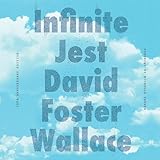
- Audible Audiobook
- David Foster Wallace (Author) - Sean Pratt, Michelle Zauner (Narrators)
- English (Publication Language)
- 04/23/2024 (Publication Date) - Little, Brown & Company (Publisher)
Initial Considerations Before Reading
- Structural Complexity: Assess your tolerance for a non-linear narrative, frequent shifts in perspective, and extensive, integrated endnotes that are integral to the text.
- Thematic Engagement: Evaluate your interest in profound explorations of addiction (substance, technology, entertainment), existential despair, family dynamics, and the quest for meaning in a hyper-stimulated world.
- Prose Density: Consider your comfort level with dense, philosophical, and linguistically intricate prose that demands sustained attention and careful processing.
- Time Commitment: Confirm your readiness for a significant reading duration. The novel’s length (over 1,000 pages) and thematic scope necessitate a deliberate and patient approach.
Step-by-Step Plan for Engaging with Infinite Jest
1. Acquire a Print Edition: Obtain a physical copy of the book.
- Action: Purchase or borrow a well-formatted print edition.
- What to Look For: Clear typography and easily accessible endnotes. A good edition enhances readability.
- Mistake to Avoid: Relying solely on digital versions that may poorly render the extensive endnotes, disrupting comprehension and flow.
2. Acknowledge the Novel’s Scope: Understand that Infinite Jest by David Foster Wallace is a substantial literary undertaking.
- Action: Mentally prepare for a long reading duration and a significant intellectual investment.
- What to Look For: Recognizing the book’s considerable length and thematic density as inherent features, not obstacles to be quickly overcome.
- Mistake to Avoid: Underestimating the time and mental energy required, which can lead to frustration and premature abandonment of the novel.
3. Integrate Endnotes Strategically: Treat the endnotes as an essential, often critical, component of the narrative.
- Action: Read endnotes as they appear if they seem crucial to understanding a passage, or use a bookmark to revisit them promptly.
- What to Look For: Endnotes frequently contain vital character background, plot details, philosophical digressions, or factual elaborations that are integral to grasping the novel’s complexities.
- Mistake to Avoid: Consistently skipping endnotes, which will result in a fragmented understanding of the novel’s intricate layers and authorial intent.
4. Adopt a Deliberate Pace: Approach the reading process with patience and a willingness to absorb.
- Action: Allow yourself ample time to process complex sentences, intricate philosophical arguments, and shifts in narrative focus. Avoid rushing through sections.
- What to Look For: Moments of thematic resonance and the gradual emergence of connections between disparate plot threads and characters.
- Mistake to Avoid: Attempting to “solve” the novel or achieve complete plot comprehension on a single, rapid read; its richness and meaning unfold over time and often require rereading.
5. Embrace Narrative Ambiguity: Accept that not all plotlines will be neatly resolved, and some questions may remain unanswered.
- Action: Focus on the immersive experience of reading, the emotional impact, and the insights gained, rather than solely on achieving definitive plot resolution.
- What to Look For: The thematic weight and philosophical questions the narrative raises, even in its unresolved aspects.
- Mistake to Avoid: Demanding explicit answers for every narrative thread or character arc, which can lead to disappointment and overlook the novel’s broader artistic aims.
6. Consider Supplemental Resources (Optional): Engage with other readers or critical analyses if you encounter significant difficulty or seek deeper understanding.
- Action: Join online reading groups, consult literary criticism, or watch documentaries about the novel after significant reading periods.
- What to Look For: Diverse interpretations and scholarly insights that can illuminate challenging passages or themes you may have overlooked.
- Mistake to Avoid: Over-reliance on secondary sources that may pre-empt your personal reading experience, impose a singular interpretation, or spoil the discovery process.
Common Misconceptions About Infinite Jest
- Myth: Infinite Jest is intentionally obscure and designed to be unreadable.
- Why it matters: This perception can deter readers who might otherwise engage with and appreciate the novel’s clear insights.
- Correction: While undeniably challenging, the novel is meticulously crafted with clear authorial intent. Its difficulty arises from its ambition to mirror the overwhelming, fragmented nature of contemporary life, including the pervasive influence of addiction and entertainment, not from a lack of purposeful design. Wallace aimed to create an experience that reflected these complexities.
- Myth: All endnotes must be read and fully understood on the first attempt.
- Why it matters: This creates undue pressure, potentially leading readers to abandon the book out of perceived obligation or an inability to meet an unrealistic standard.
- Correction: The endnotes are vital, but their integration can be fluid. Some provide essential context or plot points, while others offer tangential explorations or humorous asides. A first read can focus on grasping the main narrative, using endnotes as a resource for clarification or deeper dives into specific areas of interest.
- Myth: The novel’s primary focus is solely on drug addiction.
- Why it matters: This narrow interpretation misses the broader thematic scope and its critical commentary on modern culture and human behavior.
- Correction: While addiction, in its various forms (substance, entertainment, technology), is a central and pervasive theme, Infinite Jest also critically examines the seductive and potentially destructive nature of entertainment, the challenges of genuine human connection, the pervasive impact of depression, complex family dynamics, and the persistent search for authentic meaning in an increasingly mediated world.
Expert Tips for Engaging with Infinite Jest
- Tip: Prioritize thematic resonance over strict plot memorization.
- Actionable Step: Maintain a running log of recurring themes (e.g., addiction, entertainment, communication breakdown, authenticity) and note specific examples from the text as they appear. This helps build a conceptual map of the novel’s concerns.
- Common Mistake to Avoid: Becoming excessively fixated on tracking every character’s exact whereabouts, timeline, or the precise causal links between events. This can obscure the novel’s broader thematic arguments and philosophical inquiries.
- Tip: Utilize the endnotes as a dynamic and selective resource.
- Actionable Step: If an endnote appears to be directly relevant to understanding a current passage or a character’s motivation, pause and read it. Otherwise, make a mental note or a physical bookmark to return to it later when discussing that section or character.
- Common Mistake to Avoid: Treating endnotes as optional footnotes or mere academic decoration. They are often integral to the narrative’s fabric, providing essential context, foreshadowing, or crucial background information that significantly enhances comprehension.
- Tip: Embrace the immersive reading experience itself as a primary goal.
- Actionable Step: Allow yourself to be fully absorbed by Wallace’s distinctive prose, the novel’s unique atmosphere, and the emotional landscapes of its characters, rather than solely striving for a singular, definitive interpretation or plot resolution.
- Common Mistake to Avoid: Approaching the novel as a puzzle to be solved or a code to be cracked. Its enduring power and literary merit lie in its profound exploration and evocative portrayal of complex human experiences and societal critiques.
BLOCKQUOTE_0
Decision Criterion: Prioritizing Thematic Depth vs. Narrative Accessibility
For Infinite Jest by David Foster Wallace, a critical decision criterion for potential readers is their primary motivation for engaging with literature. If your aim is to deeply immerse yourself in complex explorations of addiction, the societal impact of entertainment, and the arduous search for authenticity in a technologically saturated age, then the novel’s dense, multifaceted, and experimental approach will likely be profoundly rewarding. However, if your primary objective is narrative accessibility, straightforward plot progression, or easily digestible entertainment, this novel’s deliberate challenges, extensive endnotes, and thematic breadth may not align with your expectations, making alternative literary selections a more suitable choice.
Comparative Overview
| Aspect | <em>Infinite Jest by David Foster Wallace</em> | Conventional Narrative Fiction |
|---|---|---|
| <strong>Narrative Structure</strong> | Non-linear, fragmented, extensive endnotes integral to the text. | Typically linear, chronological, with plot progression as a primary driver. |
| <strong>Thematic Complexity</strong> | Explores addiction, entertainment, depression, family, meaning in a hyper-stimulated world with significant philosophical depth. | Themes are often more directly presented and less philosophically dense, focusing on character development and plot resolution. |
| <strong>Prose Style</strong> | Dense, intricate, philosophical, often lengthy sentences requiring careful attention and processing. | Generally more direct, accessible, and focused on clear communication of plot and character. |
| <strong>Reader Commitment</strong> | High: significant time, intellectual engagement, and patience required. | Moderate to high: varies by book, but generally less demanding than <em>Infinite Jest</em>. |
| <strong>Ideal Reader</strong> | Appreciates challenging literature, postmodernism, deep thematic exploration, and intellectual engagement. | Seeks engaging stories, character development, and clear narrative arcs. |
Decision Rules for Approaching Infinite Jest
- If your primary goal is to engage with a landmark of postmodern literature and explore complex themes of addiction and modern malaise: Infinite Jest by David Foster Wallace is a highly recommended, albeit demanding, choice.
- If you prioritize a straightforward, linear plot with easily digestible prose and a clear narrative resolution: You may find Infinite Jest frustrating. Consider works by authors like John Grisham or Jane Austen for more conventional narrative experiences.
- If you are prepared for significant intellectual effort and find reward in wrestling with challenging texts and intricate structures: Infinite Jest offers a unique and potentially transformative reading experience.
FAQ
- Q: How long does it typically take to read Infinite Jest?
- A: Most readers report spending anywhere from three months to over a year, depending on their reading pace, time commitment, and how deeply they engage with the endnotes and supplementary material. It is not a book intended for rapid consumption.
- Q: Should I read the endnotes as I encounter them, or save them for later?
- A: There is no single prescribed method, and reader preference varies. Many find it beneficial to read endnotes that directly clarify a current passage or character. Others prefer to note them and revisit them after completing a chapter or section. Some readers even postpone engaging with all endnotes until a second reading.
- Q: What should I do if I find the novel too difficult or confusing at times?
- A: Experiencing difficulty or confusion is a common and expected part of reading Infinite Jest. Consider rereading challenging sections, taking notes on recurring themes or characters, or seeking out reputable critical analyses (but ideally not before a first pass to preserve your own experience). The novel is designed to be wrestled with, and patience is a crucial element.
- Q: Is there a specific order for reading the different sections of the book?
- A: While the novel is presented in a particular order, its non-linear structure means that chronological consistency is not always the primary focus. Readers are generally advised to follow the published order, allowing the fragmented narrative to unfold as intended by the author. The interweaving timelines are part of the novel’s design.