Napoleon Hill’s ‘Think and Grow Rich’ Philosophy
Think And Grow Rich by Napoleon Hill: Quick Answer
- Think And Grow Rich by Napoleon Hill offers a success philosophy centered on desire, faith, and strategic planning to guide individuals toward their aspirations.
- Its core tenets emphasize the significant impact of mindset and persistent, focused action on achieving goals.
- This book is most beneficial for those prepared to apply its psychological principles rigorously, while acknowledging its inherent limitations regarding external factors.
Who This Is For
- Individuals seeking a structured mental framework to pursue ambitious objectives, particularly in financial and personal development realms.
- Readers interested in foundational self-help literature and the psychological theories of success from the early 20th century.
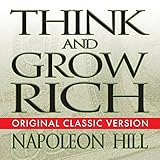
- Audible Audiobook
- Napoleon Hill (Author) - Erik Synnestvedt (Narrator)
- English (Publication Language)
- 10/16/2007 (Publication Date) - Ascent Audio (Publisher)
What To Check First
- Your personal definition of “riches.” Hill’s primary focus is financial and material wealth. Evaluate if this aligns with your broader life goals.
- Your capacity for sustained self-discipline. The principles necessitate consistent application and strong internal motivation over extended periods.
- The influence of external factors on your life. Hill’s philosophy heavily emphasizes internal control. Consider how societal structures, luck, and systemic influences might also impact outcomes.
- Your openness to psychological frameworks. The book utilizes concepts like autosuggestion and the subconscious mind, requiring a willingness to engage with abstract mental processes.
The Philosophy of Think And Grow Rich by Napoleon Hill
Napoleon Hill’s Think And Grow Rich by Napoleon Hill, first published in 1937, is a landmark text in the self-help genre. Based on interviews with over 500 successful individuals, including figures like Andrew Carnegie and Henry Ford, the book asserts that wealth originates in a state of mind—a “burning desire” that, when combined with faith, a definite plan, and persistent effort, can lead to significant achievements. Hill identified thirteen “Principles of Success,” such as Desire, Faith, Autosuggestion, Organized Planning, and Persistence, as foundational elements for wealth creation and personal fulfillment. The book’s enduring relevance stems from its systematic approach, suggesting that success is not accidental but a predictable result of applying specific mental and behavioral disciplines.
Core Principles and Their Mechanisms
Hill’s philosophy is built on the premise that the mind is a powerful creative engine, capable of attracting desired outcomes through focused thought and unwavering belief.
- Desire: This is posited as the starting point, not a casual wish but an intense, burning obsession. Hill argues this powerful emotion fuels the drive necessary to overcome obstacles.
- What to look for: A clear, specific, and emotionally charged objective that you are motivated to pursue relentlessly, making it a primary focus.
- Mistake: Confusing a mild preference or fleeting interest with a true “burning desire.” Such weak motivations lack the potency to sustain effort through challenges.
- Faith: The absolute belief that your desire can and will be achieved. Hill suggests faith acts as a potent energizer for the subconscious mind, preparing it to receive and manifest the desired outcome.
- What to look for: A deep-seated conviction in your capabilities and the attainability of your goal, even when faced with doubt or external skepticism.
- Mistake: Allowing temporary setbacks, failures, or others’ opinions to erode your fundamental belief. Doubt is presented as a primary impediment.
- Autosuggestion: The practice of impressing desires and plans upon the subconscious mind through continuous, positive self-talk and affirmations.
- What to look for: Consistent, affirmative statements about your goals and your ability to achieve them, delivered with emotional conviction.
- Mistake: Engaging in autosuggestion sporadically or with a passive, uninvested attitude. The subconscious mind requires repetition and emotional engagement to internalize suggestions effectively.
- Organized Planning: The development of a concrete, actionable plan to achieve your defined desire. This involves breaking down the goal into manageable steps and potentially enlisting the support of others.
- What to look for: A detailed, step-by-step strategy that is regularly reviewed, refined, and actively implemented.
- Mistake: Possessing a vague or incomplete plan, or failing to take consistent action on the outlined steps. A plan without execution remains theoretical.
A Contrarian View: The Overemphasis on Internal Locus
While Think And Grow Rich by Napoleon Hill is lauded for empowering individuals by highlighting their capacity for self-creation, a contrarian perspective reveals a significant limitation: its almost exclusive focus on an internal locus of control. The book largely downplays or omits the profound impact of external factors. These include systemic socio-economic barriers, inherited advantages or disadvantages, systemic discrimination, sheer luck, and the broader economic climate.
BLOCKQUOTE_0
This intense internal focus can inadvertently lead to a form of victim-blaming. When individuals fail to achieve the success Hill outlines, the implication can be that their lack of desire or faith was the sole cause, rather than acknowledging the presence of formidable external obstacles. The book’s deterministic approach, while powerful in its promotion of personal agency, can oversimplify the complex realities that shape individual outcomes in the real world.
Common Myths About Think And Grow Rich
- Myth 1: “Positive thinking alone guarantees wealth.”
- Why it matters: This is a significant misinterpretation. Hill’s philosophy is not about passive wishful thinking. It requires a “burning desire” coupled with meticulous, organized planning, persistent action, and unwavering faith. Positive thinking is a crucial component, but not the entire strategy.
- Fix: Understand that Hill’s concept of “thinking” involves intense focus, emotional commitment, and the development of concrete strategies for tangible action.
- Myth 2: “Reading the book guarantees riches for every reader.”
- Why it matters: The book offers a philosophy and a methodology, not an absolute guarantee. True success hinges on the individual’s capacity for rigorous implementation of these principles, their unique circumstances, and the inherent unpredictability of life’s events.
- Fix: Approach the book as a comprehensive guide to cultivating a success-oriented mindset and developing a robust action plan, rather than viewing it as a foolproof formula for guaranteed wealth.
Step-by-Step Plan for Applying Hill’s Philosophy
Implementing Napoleon Hill’s principles requires a structured and disciplined approach. This plan outlines key actions and potential pitfalls to consider.
1. Define Your Burning Desire with Precision:
- Action: Clearly articulate a specific, significant goal. Quantify it with an exact monetary amount and a deadline (e.g., “I will earn $75,000 by December 31st of next year”). Write this down and visualize it daily.
- What to look for: A strong emotional connection to the goal; it should feel essential and motivating, not merely desirable.
- Mistake: Setting goals that are too vague, abstract, or easily attainable, as these lack the motivational force needed to drive sustained effort.
2. Cultivate Unwavering Faith:
- Action: Practice autosuggestion daily, affirming your absolute belief in your capacity to achieve your desire. Actively seek out and engage with positive influences and information that reinforce your goal.
- What to look for: A noticeable reduction in self-doubt and a corresponding increase in confidence regarding your chosen path and its eventual success.
- Mistake: Allowing negative thoughts, criticisms from others, or minor setbacks to undermine your core conviction. This introduces doubt, which is counterproductive.
3. Develop a Definite, Actionable Plan:
- Action: Outline specific, concrete steps required to reach your goal. Identify necessary resources, potential allies, and realistic timelines for completing each step.
- What to look for: A logical, sequential progression of tasks that, when executed, systematically move you closer to your objective.
- Mistake: Creating a plan that is too general, lacks concrete steps, or is not regularly reviewed and adapted. A plan without consistent execution is ineffective.
4. Execute Your Plan with Consistent, Organized Action:
- Action: Diligently implement your plan, focusing on completing one step at a time. Maintain momentum and avoid procrastination by taking action even when conditions are not perceived as perfect.
- What to look for: Tangible progress, even if incremental, towards your stated goal.
- Mistake: Engaging in inconsistent effort, starting multiple tasks but finishing few, or waiting for ideal circumstances before taking action.
5. Leverage the Power of the “Master Mind” Alliance:
- Action: Form alliances with individuals who share your vision or possess complementary skills and knowledge. Schedule regular meetings to brainstorm, offer mutual support, and hold each other accountable.
- What to look for: Synergistic collaboration where the combined intellect and effort of the group significantly exceed the sum of individual contributions.
- Mistake: Partnering with individuals who are negative, unsupportive, or lack genuine commitment, which can actively hinder progress.
6. Maintain Unyielding Persistence:
- Action: When confronted with obstacles or initial failures, analyze what went wrong, extract lessons learned, and adjust your plan without abandoning your core desire.
- What to look for: Demonstrated resilience and the ability to recover from setbacks, viewing them as valuable learning opportunities rather than definitive failures.
- Mistake: Giving up prematurely after encountering the first significant challenge or setback, thereby forfeiting the possibility of eventual success.
Expert Tips for Applying Hill’s Philosophy
- Tip 1: Quantify and Qualify Your Desire.
- Action: Instead of a general statement like “I want to be wealthy,” specify an exact monetary amount and a firm deadline.
- Common Mistake to Avoid: Setting a goal that is too vague or lacks a specific timeframe, which diminishes its power
Quick Comparison
| Option | Best for | Pros | Watch out |
|---|---|---|---|
| Think And Grow Rich by Napoleon Hill Quick Answer | General use | Think And Grow Rich by Napoleon Hill offers a success philosophy centered on… | Mistake: Confusing a mild preference or fleeting interest with a true “burnin… |
| Who This Is For | General use | Its core tenets emphasize the significant impact of mindset and persistent, f… | Mistake: Allowing temporary setbacks, failures, or others’ opinions to erode… |
| What To Check First | General use | This book is most beneficial for those prepared to apply its psychological pr… | Mistake: Engaging in autosuggestion sporadically or with a passive, uninveste… |
| The Philosophy of Think And Grow Rich by Napoleon Hill | General use | Individuals seeking a structured mental framework to pursue ambitious objecti… | Mistake: Possessing a vague or incomplete plan, or failing to take consistent… |
Decision Rules
- If reliability is your top priority for Think And Grow Rich by Napoleon Hill, choose the option with the strongest long-term track record and support.
- If value matters most, compare total ownership cost instead of headline price alone.
- If your use case is specific, prioritize fit-for-purpose features over generic ‘best overall’ claims.