Mutiny on the Bounty: A Classic Sea Adventure
Quick Answer
- “Mutiny on the Bounty” by Charles Nordhoff offers a compelling, dramatized account of the 1789 naval mutiny, focusing on the psychological pressures and conflicting perspectives aboard HMS Bounty.
- This novel is recommended for readers who appreciate detailed historical fiction, character-driven narratives, and explorations of authority, rebellion, and survival in a maritime setting.
- Those seeking a strictly factual historical account or a lighthearted adventure might find the novel’s deliberate pacing and thematic complexity less engaging.
Who This Is For
- Readers interested in classic maritime literature and historical fiction that delves into themes of authority, rebellion, and the harsh realities of naval life.
- Individuals who appreciate nuanced character studies and narratives that explore the psychological impact of extreme environments and hierarchical structures.
What to Check First
- Narrative Interpretation vs. Fact: Understand that “Mutiny on the Bounty” is a fictionalized account inspired by historical events. Nordhoff and Hall took creative liberties to explore character motivations and dramatize the narrative, rather than providing a purely documentary record.
- Dual Perspectives: The novel notably shifts between the viewpoints of Lieutenant William Bligh and Fletcher Christian. Be prepared to engage with potentially conflicting interpretations of events and character actions.
- Pacing and Style: The prose is characteristic of early 20th-century historical fiction – deliberate, descriptive, and focused on atmosphere and character development. It is not a fast-paced thriller.
- Thematic Depth: Beyond the central mutiny, the book explores significant themes such as the abuse of power, the struggle for freedom, loyalty, and the psychological toll of long voyages and confinement.
Step-by-Step Plan: Engaging with Mutiny On The Bounty by Charles Nordhoff
To fully appreciate “Mutiny on the Bounty,” consider approaching it with a structured reading strategy.
1. Understand the Historical Foundation: Briefly familiarize yourself with the actual historical events of the HMS Bounty voyage and mutiny.
- What to look for: Key figures like William Bligh and Fletcher Christian, the voyage’s purpose (transporting breadfruit), and the general timeline.
- Mistake to avoid: Treating the novel as a direct historical transcript. Recognize it as a dramatized interpretation designed for narrative impact.
2. Analyze Character Motivations: Pay close attention to the internal lives and decisions of Lieutenant Bligh and Fletcher Christian.
- What to look for: Evidence of Bligh’s command style, the crew’s grievances, and the specific incidents that escalate tensions. Observe Christian’s gradual shift from loyal officer to mutineer.
- Mistake to avoid: Assigning simplistic labels of “villain” or “hero.” The novel’s strength lies in its complex portrayal of human nature under pressure.
3. Examine the Dynamics of Authority: Observe how power is wielded and perceived on board the Bounty.
- What to look for: Instances of harsh discipline, perceived injustices, and the crew’s reactions to Bligh’s authority. Consider the pressures Bligh faced as commander.
- Mistake to avoid: Judging 18th-century naval practices solely by modern standards, which can lead to anachronistic interpretations.
4. Trace the Escalation to Mutiny: Follow the sequence of events leading to the actual mutiny.
- What to look for: The specific triggers and turning points that push Fletcher Christian and a faction of the crew to act.
- Mistake to avoid: Assuming the mutiny was a sudden, unanimous decision. The novel depicts a complex situation with divided loyalties.
5. Consider the Aftermath and Consequences: Engage with the narrative beyond the mutiny itself.
- What to look for: Bligh’s remarkable voyage to survival and the fates of Christian and his followers on Pitcairn Island.
- Mistake to avoid: Ending your engagement with the climax; the long-term consequences are integral to the story’s thematic weight.
6. Reflect on the Thematic Resonance: Consider the broader messages the novel conveys.
- What to look for: Recurring ideas about freedom, oppression, loyalty, and the human capacity for both cruelty and resilience.
- Mistake to avoid: Reading the book solely as a historical adventure and overlooking its deeper commentary on human nature and societal structures.
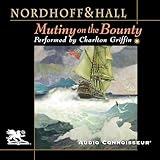
- Audible Audiobook
- Charles Nordhoff (Author) - Charlton Griffin (Narrator)
- English (Publication Language)
- 07/18/2014 (Publication Date) - Audio Connoisseur (Publisher)
Mutiny On The Bounty by Charles Nordhoff: A Critical Examination
The enduring relevance of “Mutiny on the Bounty” lies in its masterful fusion of historical event with compelling dramatic interpretation. Nordhoff and Hall meticulously reconstruct the world of an 18th-century naval vessel, immersing the reader in the claustrophobic environment where strict hierarchy, scarce resources, and prolonged isolation could forge intense human drama. The novel’s primary strength is its atmospheric rendering of seafaring life and its nuanced exploration of the psychological pressures that can lead to drastic action.
A key literary device employed is the dual perspective, primarily through the eyes of Lieutenant William Bligh and Fletcher Christian. This narrative choice allows for a complex examination of the events leading to the mutiny. Readers are presented with Bligh’s perspective on the immense challenges of maintaining order and discipline, contrasted with Christian’s growing disillusionment and his perception of injustices. This approach deliberately avoids a simplistic good-versus-evil narrative, instead offering a nuanced portrayal of conflicting personalities, circumstances, and the unforgiving realities of naval command during that era. The detailed descriptions of shipboard routines, the rigors of sailing, and the psychological toll of long voyages lend a significant degree of authenticity and weight to the unfolding events.
However, this dedication to detail and character study can present a challenge for some readers. The pacing is often deliberate, and those accustomed to more rapid-fire adventure narratives might find certain passages to be slow. Furthermore, it is crucial to remember that while the novel is based on historical events, it is a work of fiction. The authors took creative license to delve into the internal lives and motivations of their characters, meaning specific dialogues and events may diverge from strict historical records. This distinction is vital for readers prioritizing exact historical accuracy. The novel ultimately excels as a character-driven exploration of a historical incident, rather than a definitive historical report.
BLOCKQUOTE_0
Common Myths About Mutiny on the Bounty
- Myth: Fletcher Christian’s decision to mutiny was solely a reaction to Captain Bligh’s personal cruelty.
- Why it matters: This oversimplifies a complex historical and psychological situation, ignoring other significant contributing factors.
- Fix: Recognize that while Bligh’s harshness was a significant catalyst, Christian’s motivations were multifaceted. The novel suggests influences such as his own ambitions, the allure of the Tahitian lifestyle for the crew, and potentially the sway of other officers. The narrative depicts a gradual erosion of loyalty rather than a sudden outburst.
- Myth: The entire crew of the Bounty enthusiastically participated in the mutiny.
- Why it matters: This erases the agency and diverse opinions of the individuals on board HMS Bounty.
- Fix: Understand that the mutiny was not a unanimous event. A substantial portion of the crew remained loyal to Captain Bligh and were subsequently set adrift. The novel illustrates the divisions and the coercive nature of the mutiny for some of its participants.
- Myth: “Mutiny on the Bounty” is a straightforward adventure story with a clear protagonist.
- Why it matters: This expectation can lead to disappointment if the reader finds the narrative morally ambiguous and thematically complex, rather than a simple tale of heroism.
- Fix: Approach the book as a psychological drama set against an adventure backdrop. The question of who constitutes the “hero” is intentionally left open to interpretation, and the story’s impact stems from its exploration of flawed characters and their difficult choices.
Expert Tips for Appreciating Mutiny On The Bounty
- Tip 1: Focus on the Psychological Undercurrents.
- Actionable Step: When reading scenes involving Bligh or Christian, actively look for subtle cues in their dialogue, actions, and the narrative’s descriptions that reveal their underlying anxieties, frustrations, or ambitions.
- Common Mistake to Avoid: Interpreting character interactions solely at face value without considering the unspoken pressures, emotional states, or hidden motivations that the authors subtly weave into the text.
- Tip 2: Contextualize Naval Discipline of the Era.
- Actionable Step: Before or during your reading, conduct brief research into the common disciplinary practices and hierarchical structures prevalent in the British Royal Navy during the late 18th century.
- Common Mistake to Avoid: Judging Captain Bligh’s actions and the crew’s reactions solely through the lens of modern management standards or human rights principles, which can lead to an anachronistic and potentially unfair assessment.
- Tip 3: Engage with Thematic Parallels.
- Actionable Step: As you progress through the novel, consider how the themes of authority, rebellion, the pursuit of freedom, and the consequences of oppression resonate with other historical events or even contemporary societal issues.
- Common Mistake to Avoid: Treating the novel as an isolated historical incident without drawing broader connections to enduring aspects of human nature and societal structures.
Quick Comparison
| Feature | “Mutiny on the Bounty” by Charles Nordhoff | Alternative Historical Fiction | Light Adventure Novel |
|---|---|---|---|
| Best For | Readers seeking deep character analysis and atmospheric historical fiction. | Readers wanting detailed historical immersion with potentially broader scope. | Readers seeking fast-paced action and straightforward plots. |
| Strengths | Nuanced character portrayal, detailed maritime atmosphere, exploration of complex themes. | Often strong research, diverse settings, and varied narrative approaches. | Engaging action sequences, clear heroic arcs, accessible storytelling. |
| Potential Drawbacks | Deliberate pacing, fictionalized elements may deter strict historians. | Can vary widely |
Decision Rules
- If reliability is your top priority for Mutiny On The Bounty by Charles Nordhoff, choose the option with the strongest long-term track record and support.
- If value matters most, compare total ownership cost instead of headline price alone.
- If your use case is specific, prioritize fit-for-purpose features over generic ‘best overall’ claims.