Migration And Family: Valeria Luiselli’s ‘Lost Children Archive
Quick Answer
- Lost Children Archive by Valeria Luiselli is a profoundly ambitious novel that uses a family road trip across the United States as a narrative device to examine the child migrant crisis, the dissolution of familial bonds, and the nature of storytelling itself.
- Its primary strengths lie in its experimental narrative structure, thematic resonance, and unflinching engagement with urgent social issues, though its fragmented style may present a challenge for readers seeking a conventional, plot-driven experience.
- This book is best suited for readers who value literary depth, thematic complexity, and are willing to engage with a work that prioritizes reflection and form over straightforward narrative progression.
Who This Is For
- Readers who are drawn to literary fiction that grapples with significant contemporary social and political issues, specifically the experiences of child migrants and the intricate, often painful, dynamics of family life.
- Individuals who appreciate narrative experimentation, a multi-vocal approach, and a style that often blurs the lines between fiction, essay, and journalistic observation.
What to Check First
- Narrative Structure and Fragmentation: Luiselli employs a deliberately fragmented structure, shifting perspectives, forms, and timelines. Be prepared for a mosaic-like construction rather than a linear plot.
- Thematic Weight: The novel is rich with interconnected themes: displacement, identity, the American narrative, the concept of home, and the devastating realities of the child migrant crisis. The story serves these themes.
- Authorial Voice and Intent: Luiselli’s writing often incorporates essayistic and documentary elements. Understanding her approach to weaving these into a fictional framework is key to appreciating the work’s purpose.
- Pacing and Reader Engagement: The book demands patience and active engagement. Its power emerges from sustained attention to its intricate layering and reflective passages, not from rapid plot development.
Step-by-Step Plan for Engaging with Lost Children Archive by Valeria Luiselli
1. Initiate with the Prologue and Part One:
- Action: Read the opening sections with careful attention to the family’s situation and the stated purpose of their journey.
- What to look for: The subtle establishment of marital strain, the children’s individual personalities, and the ambiguous nature of the parents’ artistic project. Note the introduction of the “archive” concept.
- Mistake: Treating the initial setup as mere exposition and failing to recognize the underlying tensions and thematic seeds planted early on.
2. Engage with the Sonic Archive Project:
- Action: Pay close attention to the details of the parents’ sound recording project, their intentions, and the specific sounds they capture.
- What to look for: The metaphorical resonance of capturing sounds in an attempt to preserve or understand something intangible, paralleling the novel’s exploration of memory, identity, and the elusive nature of truth.
- Mistake: Dismissing the sound recording project as a secondary or purely functional plot element, rather than recognizing its central role in the novel’s exploration of what constitutes an archive and what is lost.
3. Track the Children’s Evolving Narratives:
- Action: Actively follow the distinct voices and perspectives of the children as they emerge and develop throughout the narrative.
- What to look for: How their observations, questions, and experiences offer a counterpoint to the adults’ preoccupations, often revealing raw truths about their family and the world around them.
- Mistake: Underestimating the significance of the children’s narratives, viewing them solely as passive recipients of their parents’ drama rather than active participants whose perspectives are crucial to the novel’s thematic core.
4. Analyze the Road Trip as a Structural and Thematic Device:
- Action: Observe how the physical journey across the United States unfolds and how the landscape itself becomes a character or commentary.
- What to look for: The juxtaposition of the family’s internal fragmentation with the vastness and historical narratives of America, and how the journey mirrors the children’s own displacement and search for belonging.
- Mistake: Reading the road trip as a simple chronological progression of travel, rather than understanding it as a deliberate framework designed to expose the fractures within the family and the nation.
5. Examine the Integration of Factual and Essayistic Elements:
- Action: Pay attention to how Luiselli weaves in elements of reportage, historical accounts, and personal essays alongside the fictional narrative.
- What to look for: The deliberate dialogue created between the fictional family’s experience and the documented realities of the child migrant crisis, highlighting the human cost of policy and borders.
- Mistake: Compartmentalizing the fictional and documentary elements, failing to see how their juxtaposition creates a richer, more complex understanding of the issues at play.
For those seeking a deeply resonant and thought-provoking read, Lost Children Archive by Valeria Luiselli offers a powerful exploration of contemporary issues through a unique narrative lens. Its experimental style and thematic depth make it a standout literary achievement.
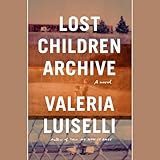
- Audible Audiobook
- Valeria Luiselli (Author) - Valeria Luiselli, Kivlighan de Montebello, William DeMeritt (Narrators)
- English (Publication Language)
- 02/12/2019 (Publication Date) - Random House Audio (Publisher)
6. Consider the Epilogue’s Reconfiguration and Ambiguity:
- Action: Reflect on the final sections of the book and how they alter or deepen the reader’s perception of the preceding events.
- What to look for: The novel’s ultimate engagement with the idea of narrative itself—how stories are constructed, how they shape our understanding, and the inherent limitations of any single perspective.
- Mistake: Expecting a neat resolution or definitive answers; the book’s lasting impact often lies in the questions it leaves the reader contemplating.
Lost Children Archive by Valeria Luiselli: A Thematic Deep Dive
Valeria Luiselli’s Lost Children Archive is not merely a novel; it is a meticulously constructed literary ecosystem designed to confront the reader with the complexities of migration, family, and the very act of bearing witness. The narrative centers on a family embarking on a road trip from New York to Arizona, ostensibly to document sounds for an archive. However, this journey quickly becomes a vehicle for exploring the unraveling marriage of the parents, the emotional landscapes of their children, and, most critically, the ongoing child migrant crisis at the U.S.-Mexico border.
Luiselli masterfully employs a fragmented structure, interweaving the fictional narrative with excerpts from her own journalistic work and historical accounts related to migration. This approach, while demanding, is essential to the book’s power. It mirrors the fractured lives of the children and families at the heart of the crisis, as well as the splintered nature of the American identity itself. The novel asks profound questions: What does it mean to be a citizen? What are the stories we tell ourselves about belonging and exclusion? How do we archive human experience, and what is inevitably lost in translation?
One of the most compelling aspects of Lost Children Archive by Valeria Luiselli is its exploration of the “archive” itself. It’s not just a collection of sounds or documents, but a metaphor for memory, history, and the attempt to make sense of chaos. The parents’ project, driven by their own existential anxieties, becomes a mirror for the larger societal project of archiving and, often, forgetting. The children, particularly the older son, offer a critical lens on this endeavor, questioning the validity and purpose of such an archive when confronted with immediate human suffering.
BLOCKQUOTE_0
This quote, paraphrased from the novel’s thematic concerns, encapsulates the central tension: the intellectual and artistic pursuit of understanding versus the raw, lived reality of crisis. Luiselli does not offer easy answers. Instead, she invites the reader into a space of contemplation, where the fictional and the factual, the personal and the political, collide to create a potent, often unsettling, experience. The novel’s strength lies in its refusal to simplify, its commitment to exploring the messy, contradictory nature of human experience and societal responsibility.
Common Myths About Lost Children Archive by Valeria Luiselli
- Myth: The book is a straightforward, plot-driven novel about a family road trip.
- Why it matters: This misperception can lead to disappointment if readers expect a conventional narrative arc with clear resolutions. The book’s primary focus is thematic and structural rather than plot mechanics.
- Fix: Approach Lost Children Archive by Valeria Luiselli as a literary mosaic. The road trip serves as a framework, but the true substance lies in its exploration of complex social issues and experimental narrative techniques.
- Myth: The integration of journalistic and essayistic elements disrupts the fictional narrative.
- Why it matters: Some readers might find the shifts in form jarring. However, these elements are crucial to Luiselli’s purpose of interweaving personal experience with broader societal realities.
- Fix: Recognize that the factual and essayistic sections are deliberately designed to enhance and contextualize the fictional story, creating a powerful dialogue between individual lives and systemic issues. They are not extraneous but integral to the novel’s message.
- Myth: The fragmented structure is merely a stylistic choice, a form of literary experimentation without deeper meaning.
- Why it matters: Dismissing the structure overlooks its critical function in mirroring the novel’s themes of displacement, fractured identities, and the disjointed nature of memory and history.
- Fix: Understand that the fragmentation is thematic. It reflects the brokenness of families, the disjointed experiences of migrants, and the difficulty of piecing together a coherent narrative from disparate fragments of experience and information.
- Myth: The book is solely about the child migrant crisis.
- Why it matters: While the migrant crisis is a central and powerful theme, the novel is also deeply concerned with the dissolution of a specific family unit, the complexities of marriage, and the nature of parenthood.
- Fix: Appreciate that the migrant crisis serves as a potent backdrop and thematic amplifier for the more intimate story of a family’s breakdown and their attempts to navigate profound emotional and existential challenges.
Expert Tips for Navigating the Layers of Lost Children Archive
- **Tip
Quick Comparison
| Option | Best for | Pros | Watch out |
|---|---|---|---|
| Quick Answer | General use | <em>Lost Children Archive by Valeria Luiselli</em> is a profoundly ambitious novel t… | Mistake: Treating the initial setup as mere exposition and failing to recogni… |
| Who This Is For | General use | Its primary strengths lie in its experimental narrative structure, thematic r… | Mistake: Dismissing the sound recording project as a secondary or purely func… |
| What to Check First | General use | This book is best suited for readers who value literary depth, thematic compl… | Mistake: Underestimating the significance of the children’s narratives, viewi… |
| Step-by-Step Plan for Engaging with Lost Children Archive by Valeria Luiselli | General use | Readers who are drawn to literary fiction that grapples with significant cont… | Mistake: Reading the road trip as a simple chronological progression of trave… |
Decision Rules
- If reliability is your top priority for Lost Children Archive by Valeria Luiselli, choose the option with the strongest long-term track record and support.
- If value matters most, compare total ownership cost instead of headline price alone.
- If your use case is specific, prioritize fit-for-purpose features over generic ‘best overall’ claims.