Michael Ende’s ‘Momo’: The Power Of Listening
Quick Answer
- Momo by Michael Ende is a profound allegorical novel exploring the corrosive effects of time-saving and efficiency on human connection and genuine experience.
- It serves as a potent critique of a society increasingly driven by the pursuit of material wealth and the devaluation of intangible qualities like imagination and empathy.
- The book’s central message, delivered through the simple act of listening, offers a timeless reminder of what truly enriches human life.
Who This Is For
- Readers seeking a thought-provoking, allegorical narrative that delves into philosophical themes about time, society, and human connection.
- Individuals interested in exploring the societal pressures of modern efficiency and its potential impact on well-being and authentic living.
What To Check First
- The Nature of Time: Understand that time in Momo is not merely a ticking clock but a tangible, vital force that can be stolen or cherished.
- The Grey Men: Recognize them as personifications of a utilitarian, profit-driven ideology that seeks to control and commodify human existence.
- Momo’s Gift: Identify Momo’s unique ability not as magic, but as the profound, undistracted power of active, empathetic listening.
- The Setting: Note the stark contrast between the vibrant, communal life of the amphitheater ruins and the sterile, efficient world the Grey Men impose.
Step-by-Step Plan: Understanding Momo by Michael Ende
This plan outlines how to approach the narrative and extract its core messages.
1. Engage with Momo’s World: Observe the initial depiction of the amphitheater and its inhabitants.
- Action: Read the early chapters focusing on the community that gathers around Momo.
- What to look for: The natural flow of time, the richness of spontaneous interaction, and the value placed on shared presence.
- Mistake to avoid: Dismissing the setting as mere backdrop; it is crucial to the story’s thematic development.
2. Introduce the Grey Men: Observe their arrival and modus operandi.
- Action: Pay close attention to how the Grey Men present their “time-saving” services.
- What to look for: The subtle manipulation, the promise of future leisure, and the gradual erosion of joy and connection.
- Mistake to avoid: Underestimating the insidious nature of their influence; their methods are not overtly violent but psychologically pervasive.
3. Witness the Impact of Time Theft: Observe how society transforms.
- Action: Note the changes in people’s behavior, their hurriedness, and their loss of creativity and empathy.
- What to look for: The increasing superficiality of relationships, the anxiety driven by perceived scarcity of time, and the decline of art and play.
- Mistake to avoid: Attributing these changes solely to individual choices; the Grey Men actively engineer this societal shift.
4. Understand Momo’s Role: Observe how Momo resists the Grey Men.
- Action: Focus on Momo’s interactions and her inability to be swayed by the Grey Men’s logic.
- What to look for: Her innate understanding of true time and her refusal to participate in the efficiency cult.
- Mistake to avoid: Thinking Momo possesses conventional superpowers; her power is in her presence and her listening.
5. Explore the Concept of True Time: Grasp the distinction between saved time and lived time.
- Action: Analyze Master Hora’s explanations and the nature of the Time Treasury.
- What to look for: The idea that time is not a commodity to be hoarded but a dimension to be experienced fully.
- Mistake to avoid: Equating Master Hora’s time with abstract philosophical concepts without grounding it in the novel’s narrative.
6. Witness the Confrontation: Observe how Momo confronts the Grey Men.
- Action: Follow the climax of the story where Momo actively combats the Grey Men.
- What to look for: The power of her listening, the return of stolen time, and the restoration of genuine human connection.
- Mistake to avoid: Expecting a physical battle; the conflict is fundamentally spiritual and existential.
7. Reflect on the Takeaway: Consider the novel’s enduring message.
- Action: Ponder the final state of the community and the lesson learned.
- What to look for: The re-establishment of values beyond efficiency and productivity, and the importance of human presence.
- Mistake to avoid: Overlooking the allegorical nature; the story is a commentary on contemporary society as much as a fairy tale.
Michael Ende’s ‘Momo’ is a profound allegorical novel that delves into the corrosive effects of time-saving and efficiency on human connection. It serves as a potent critique of a society increasingly driven by material wealth and the devaluation of imagination and empathy.
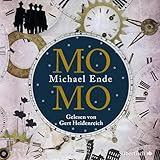
- Audible Audiobook
- Michael Ende (Author) - Gert Heidenreich (Narrator)
- German (Publication Language)
- 05/02/2013 (Publication Date) - HörbucHHamburg HHV GmbH (Publisher)
Common Myths About Momo by Michael Ende
- Myth 1: Momo’s ability to listen is a form of magical telepathy.
- Why it matters: This misinterprets the core message. Her “power” is not supernatural but the profound human capacity for deep, undistracted presence and empathy.
- Fix: Recognize Momo’s listening as a heightened, intentional form of active listening that creates a space for others to truly hear themselves and connect.
- Myth 2: The Grey Men represent a specific political or economic system.
- Why it matters: Limiting their meaning to a single ideology misses the broader critique. They are a representation of any force that prioritizes sterile efficiency and material gain over human experience and connection.
- Fix: View the Grey Men as an allegory for the pervasive societal pressures that devalue intangible human qualities in favor of quantifiable productivity and time-saving.
- Myth 3: The novel is simply a children’s fairy tale with a simple moral.
- Why it matters: This understates the philosophical depth and complexity of the themes addressed, which resonate strongly with adult readers.
- Fix: Approach Momo as a work of philosophical fiction that uses allegorical elements to explore profound questions about the nature of time, society, and the human spirit, relevant to all ages.
Expert Tips for Engaging with Momo by Michael Ende
- Tip 1: Cultivate a Listener’s Mindset.
- Actionable Step: As you read, consciously practice active listening by focusing on the characters’ unspoken emotions and motivations, mirroring Momo’s approach.
- Common Mistake to Avoid: Rushing through the text to reach the plot’s climax, thereby missing the subtle nuances of character interaction and thematic development.
- Tip 2: Analyze the Language of Efficiency.
- Actionable Step: Pay close attention to the vocabulary and phrasing used by the Grey Men and their adherents, noting terms related to “saving,” “efficiency,” and “progress.”
- Common Mistake to Avoid: Accepting these terms at face value without critically examining their impact on the characters’ lives and the community’s well-being.
- Tip 3: Map the Transformation of Time.
- Actionable Step: Create a mental or physical timeline tracking how the perception and experience of time shift for the characters before and after the Grey Men’s influence takes hold.
- Common Mistake to Avoid: Viewing time as a static, objective concept throughout the novel, rather than as a dynamic element that is manipulated and distorted.
Decision Rules
- If your primary concern is understanding the allegorical critique of modern society, Momo by Michael Ende offers unparalleled depth.
- If you prioritize narratives that champion human connection and the value of intangible qualities, this novel is exceptionally strong.
- If you are seeking a straightforward adventure story with a clear protagonist-antagonist conflict, this book’s philosophical underpinnings might require a different reading approach.
Quick Comparison
| Aspect | Strength | Limitation | Best For |
|---|---|---|---|
| <strong>Allegory</strong> | Potent critique of efficiency culture | Can be perceived as heavy-handed by some readers | Those interested in societal commentary |
| <strong>Character of Momo</strong> | Embodiment of empathy and true listening | Her passive nature might frustrate readers seeking active heroism | Readers who value quiet strength and presence |
| <strong>Pacing</strong> | Deliberate, allowing thematic development | Can feel slow to readers accustomed to fast-paced plots | Those who appreciate contemplative reading |
FAQ
- Q: Is Momo by Michael Ende suitable for young children?
A: While framed as a children’s story, the allegorical depth and critique of societal pressures make it more profoundly appreciated by older children, young adults, and adults. The themes of time theft and societal manipulation can be complex for very young readers.
- Q: What is the primary lesson of Momo by Michael Ende?
A: The primary lesson is the irreplaceable value of human presence, genuine connection, and experiencing time fully, rather than merely saving it for a future that may never arrive or be enjoyed. It champions the power of listening and imagination against the forces of sterile efficiency.
- Q: How does Momo defeat the Grey Men?
A: Momo defeats the Grey Men not through physical force but by using her unique gift of listening. By giving her undivided attention, she creates a space where others can find their own inner resources and remember what truly matters, thereby negating the Grey Men’s power which thrives on distraction and haste.
- Q: What does Master Hora represent in Momo by Michael Ende?
A: Master Hora represents the custodian of time itself, embodying its deeper, more spiritual dimension. He is the counterpoint to the Grey Men’s superficial, commodified view of time, highlighting that true time is not to be hoarded but lived and experienced.
BLOCKQUOTE_0
Thematic Strengths of Momo by Michael Ende
- Allegorical Power: The novel excels in its use of allegory to critique modern society. The Grey Men are a potent, chilling representation of the pervasive societal drive towards efficiency and productivity at the expense of human connection and genuine experience. Their insidious methods of “saving”