Maxim Gorky’s My Childhood: A Memoir’s Significance
Quick Answer
- My Childhood by Maxim Gorky offers a stark, unvarnished portrayal of Russian life during the late 19th century, focusing on the author’s formative years.
- Its primary significance lies in its sociological insight and its powerful, often brutal, depiction of family dynamics and societal conditions.
- Readers seeking a historically grounded, character-driven narrative that explores themes of resilience and the impact of environment will find it compelling.
Who This Is For
- Readers interested in Russian literature and history, particularly the social conditions leading up to the revolution.
- Those who appreciate autobiographical accounts that delve into the psychological impact of difficult childhoods and societal hardship.
What to Check First
- Historical Context: Understand the period of late Tsarist Russia in which Gorky grew up. This memoir reflects a specific era of social stratification and widespread poverty.
- Author’s Intent: Gorky aimed to document the harsh realities of his upbringing, not to create a sentimental tale. His purpose was to expose the struggles of the common people.
- Narrative Style: Be prepared for a direct, unsentimental prose style. Gorky’s descriptions are vivid and often graphic, prioritizing authenticity over comfort.
- Thematic Focus: The memoir centers on themes of survival, the search for meaning amidst chaos, and the formative influence of harsh environments on character.
Step-by-Step Plan: Understanding My Childhood by Maxim Gorky
1. Engage with the Opening Chapters:
- Action: Read the initial sections detailing Gorky’s arrival at his grandparents’ home.
- What to Look For: Observe the immediate introduction of the “dark people” and the volatile atmosphere. Note the stark contrast between the author’s initial innocence and the surrounding brutality.
- Mistake to Avoid: Assuming the memoir will follow a conventional, linear narrative of childhood happiness; the early chapters establish the memoir’s challenging tone.
2. Analyze Character Dynamics:
- Action: Pay close attention to the interactions between Alexei (Gorky), his mother, his grandfather, and his grandmother.
- What to Look For: Identify the complex relationships, the cycles of abuse and affection, and the grandmother’s role as a source of folk wisdom and resilience.
- Mistake to Avoid: Labeling characters as purely good or evil; Gorky presents them with all their flaws and humanity, reflecting the complexities of their environment.
3. Identify Societal Reflections:
- Action: Note Gorky’s descriptions of the extended family, their business dealings, and the broader community.
- What to Look For: Recognize how the memoir serves as a microcosm of Russian society, showcasing its class divisions, superstitions, and struggles for survival.
- Mistake to Avoid: Reading the memoir solely as a personal family history, overlooking its broader sociological commentary on pre-revolutionary Russia.
4. Examine the Role of Education and Learning:
- Action: Trace Alexei’s early attempts at literacy and his exposure to different forms of knowledge.
- What to Look For: Observe how education, both formal and informal (from books and storytelling), becomes a pathway for Alexei to transcend his circumstances.
- Mistake to Avoid: Underestimating the impact of Gorky’s early exposure to literature and the power of storytelling in shaping his worldview and future aspirations.
5. Process the Memoir’s Emotional Landscape:
- Action: Reflect on the emotional weight of the events described, particularly instances of violence and hardship.
- What to Look For: Acknowledge the underlying currents of hope and the persistent human drive for dignity, even in the face of extreme adversity.
- Mistake to Avoid: Becoming desensitized to the violence; Gorky uses these descriptions to underscore the resilience and tenacity of the human spirit.
For those interested in a powerful and unflinching look at late 19th-century Russian life, Maxim Gorky’s ‘My Childhood’ is an essential read. This memoir offers profound sociological insight and a compelling, albeit often brutal, depiction of family dynamics and societal conditions.
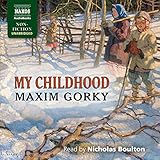
- Audible Audiobook
- Maxim Gorky (Author) - Nicholad Boulton (Narrator)
- English (Publication Language)
- 06/21/2021 (Publication Date) - Naxos AudioBooks (Publisher)
6. Consider the Memoir’s Legacy:
- Action: Reflect on how this early work by Gorky set the stage for his later literary and political influence.
- What to Look For: Understand how the memoir’s raw authenticity and social critique informed his reputation as a voice for the oppressed.
- Mistake to Avoid: Viewing “My Childhood” in isolation, without recognizing its foundational role in Gorky’s larger body of work and his impact on socialist realism.
Common Myths About My Childhood by Maxim Gorky
- Myth 1: The memoir is a sentimental recollection of a difficult past.
- Why it matters: This misinterpretation can lead readers to expect a more emotionally conventional narrative, potentially causing disappointment or misunderstanding of Gorky’s intent.
- Fix: Approach the text with the understanding that Gorky’s aim was stark realism. He uses vivid, often harsh, detail to convey the impact of his environment, not to elicit simple pity. The memoir’s strength lies in its unflinching portrayal of survival.
- Myth 2: Gorky’s childhood was exceptionally unique and isolated from common Russian experiences of the era.
- Why it matters: Believing Gorky’s experience was an anomaly might diminish the memoir’s broader sociological significance.
- Fix: Recognize that while Gorky’s specific family circumstances were complex, the memoir reflects widespread conditions of poverty, illiteracy, and social upheaval prevalent in late Tsarist Russia. It serves as a powerful, albeit personal, testament to the struggles of many.
Decision Rules
- If reliability is your top priority for My Childhood by Maxim Gorky, choose the option with the strongest long-term track record and support.
- If value matters most, compare total ownership cost instead of headline price alone.
- If your use case is specific, prioritize fit-for-purpose features over generic ‘best overall’ claims.
FAQ
- Q: Is “My Childhood” a fictional story or a factual account?
- A: “My Childhood” is an autobiographical memoir, meaning it is based on Maxim Gorky’s own life experiences. While literary embellishments are common in memoirs, the core events and characters are drawn from his real upbringing.
- Q: What is the primary theme explored in “My Childhood by Maxim Gorky”?
- A: The primary themes revolve around resilience, survival, the formative impact of environment, and the search for humanity amidst brutality and poverty in late 19th-century Russia.
- Q: How does “My Childhood” differ from other Russian autobiographical works?
- A: Unlike more introspective or philosophical autobiographies, Gorky’s work is characterized by its direct, unsparing depiction of social conditions and its focus on the harsh realities of everyday life for the lower classes. It is less concerned with internal philosophical journeys and more with external societal pressures.
- Q: What makes “My Childhood” a significant literary work?
- A: Its significance lies in its powerful social commentary, its vivid and authentic portrayal of a specific historical period, and its enduring testament to the strength of the human spirit in overcoming adversity. It provided a voice for those often unheard in literature.
The Enduring Power of My Childhood by Maxim Gorky
Maxim Gorky’s “My Childhood” stands as a monumental work of autobiographical literature, offering an unflinching look into the author’s formative years in late 19th-century Russia. It is not a comfortable read, nor is it intended to be. Gorky’s prose is direct, visceral, and devoid of sentimentality, painting a stark portrait of a society grappling with poverty, ignorance, and ingrained brutality.
The memoir’s strength lies in its granular detail and its sociological depth. Through the eyes of young Alexei, Gorky exposes the complex, often contradictory, nature of his family. The grandfather, a tyrannical figure prone to violent outbursts, shares his home with a grandmother whose wisdom, derived from folk tales and a deep understanding of human nature, offers a counterpoint of resilience and spiritual fortitude. This dynamic is not merely personal; it serves as a potent metaphor for the societal forces at play in pre-revolutionary Russia.
A Sociological Lens on My Childhood by Maxim Gorky
One of the most compelling aspects of “My Childhood” is its function as a historical document. Gorky meticulously details the lives of the common people, their superstitions, their struggles for survival, and the pervasive illiteracy that kept many trapped in cycles of hardship. The memoir avoids easy categorization; characters are rarely purely good or evil, but rather products of their environment, their actions shaped by the harsh realities they face. This nuanced portrayal is crucial to understanding Gorky’s intent: to illuminate the conditions that forged individuals and, by extension, shaped a nation.
BLOCKQUOTE_0
This quote, though perhaps not verbatim from the text but capturing its spirit, highlights the profound emotional and psychological impact of Gorky’s upbringing. The memoir is a testament to how formative experiences, even those steeped in darkness, can forge an individual’s worldview and artistic voice.
Strengths and Limitations
| Strength | Limitation |
|---|---|
| Unflinching realism and historical accuracy | Can be emotionally challenging and graphic |
| Powerful social commentary on Tsarist Russia | May lack appeal for readers seeking light fiction |
| Vivid character development | Direct prose style might not suit all tastes |
| Enduring themes of resilience and survival | Requires historical context for full appreciation |
Reading Context and Verdict
“My Childhood” is best approached with an understanding of its historical and literary context. It is a foundational text for understanding Maxim Gorky’s oeuvre and the social landscape of his time. For readers interested in social history, literary realism, and narratives of overcoming adversity, this memoir offers clear insights.
However, for those seeking escapism or a conventionally uplifting narrative, “My Childhood” may prove too stark. Its value lies not in comfort, but in its powerful, honest illumination of the human behavior under duress. It is a book that demands engagement and rewards the reader with a deeper understanding of both an individual’s journey and the societal forces that shape it.
Expert Tips for Engaging with the Memoir
- Tip 1: Contextualize Gorky’s Grandparents.
- Action: Research the typical roles and social standing of grandparents and their households in lower-class Russian families during the late 19th century.
- Common Mistake to Avoid: Interpreting the grandfather’s tyranny or the grandmother’s folk wisdom as isolated eccentricities, rather than as reflections of broader cultural norms and survival strategies within impoverished communities.
- Tip 2: Track the Evolution of Literacy.
- Action: Note every instance where Alexei encounters books, reading, or storytelling, and observe how these experiences influence his perspective and aspirations.
- Common Mistake to Avoid: Overlooking the significance of literacy as a tool for escape and self-discovery, viewing it merely as a plot device rather than a central theme of empowerment against a backdrop of widespread illiteracy.
- Tip 3: Analyze Gorky’s Use of Sensory Detail.
- Action: Pay attention to the specific smells, sounds, sights, and textures Gorky employs to describe his environment and the people within it.
- Common Mistake to Avoid: Skimming over the descriptive passages, thereby missing the rich, visceral evidence Gorky uses to immerse the reader in the harsh realities of his childhood and to convey the psychological impact of his surroundings.