Matilde Serao’s Il Ventre Di Napoli: Life In Naples
Quick Answer
- Il Ventre Di Napoli by Matilde Serao is a seminal work of literary reportage offering a vivid, unvarnished look at poverty in late 19th-century Naples.
- Its strength lies in its immersive, detailed portrayal of daily struggles and the resilience of the working class, acting as a vital counterpoint to romanticized views.
- Readers should anticipate gritty realism and a focus on collective experience over individual plot development.
Who This Is For
- Readers interested in social history, urban sociology, and literary journalism from the late 1800s.
- Those who appreciate detailed, evocative prose and seek an authentic, unflinching depiction of historical hardship.
What to Check First
- Authorial Intent: Serao aimed to document Neapolitan poverty, not to craft sentimental narratives or offer easy solutions. Understanding this objective is critical for interpretation.
- Historical Context: The book reflects conditions in Naples during the 1880s. Recognizing this temporal and geographical specificity is essential for accurate understanding.
- Genre: Il Ventre Di Napoli is literary reportage, blending journalistic observation with vivid descriptive writing, rather than following a conventional fictional plot.
- Narrative Focus: The work centers on the collective life and environment of Naples’ poor, using individuals as representative figures within a broader social tapestry.
Understanding Il Ventre Di Napoli by Matilde Serao
Matilde Serao’s Il Ventre Di Napoli (The Belly of Naples), first published in 1884, is a seminal work of literary reportage that immerses readers in the impoverished districts of Naples at the close of the 19th century. Serao, a pioneering journalist and novelist, meticulously details the daily existence, survival strategies, and enduring spirit of the city’s working class. This is not a romanticized depiction; instead, it is a journalistic deep dive into the squalor, hunger, and sheer tenacity of a population living on the margins. The book’s strength lies in its unvarnished portrayal of Naples, presenting it as a complex, often brutal, living entity.
A common failure mode for readers engaging with Il Ventre Di Napoli is the expectation of a traditional narrative arc or a focus on a central protagonist. Serao’s intent is to capture the collective experience of the Neapolitan poor, rendering individuals as integral parts of a larger social landscape. This can lead to a perceived lack of plot or character development if one anticipates a conventional story. To mitigate this, readers should recognize Serao’s documentary and descriptive approach, akin to a photographer capturing a raw scene, where immersion in the environment and social fabric takes precedence over individual journeys.
Step-by-Step Plan to Engage with Il Ventre Di Napoli
1. Identify the Genre: Recognize Il Ventre Di Napoli as literary reportage, not a novel.
- Action: Approach the text with the understanding that it is observational and descriptive.
- What to look for: Serao’s observational stance, detailed descriptions of settings and routines, and the absence of a driving plot.
- Mistake: Anticipating a traditional storyline with character development and a clear resolution.
2. Brace for Stark Realism: Serao unflinchingly depicts poverty, hunger, and challenging living conditions.
- Action: Prepare yourself mentally for graphic descriptions of hardship.
- What to look for: Vivid accounts of food scarcity, cramped housing, and the physical impact of hardship on the population.
- Mistake: Being unprepared for or resistant to the graphic portrayal of suffering.
3. Analyze the “Belly” Metaphor: Understand how Serao uses the city’s underbelly as a central theme.
- Action: Consider the title’s implications for Naples’ social and economic structure throughout your reading.
- What to look for: Recurring imagery related to basic survival needs, sustenance, and the primal aspects of life in the city.
- Mistake: Overlooking the symbolic significance of the title and its implications for Naples’ social and economic structure.
4. Recognize Serao’s Empathy: Despite its objective tone, the work conveys deep empathy for its subjects.
- Action: Look for nuanced portrayals that highlight the humanity of the Neapolitans.
- What to look for: Instances where Serao highlights the dignity, resilience, or humanity of the Neapolitans amidst their difficult circumstances.
- Mistake: Interpreting her direct reporting as a lack of compassion.
5. Contextualize Historically: Frame the book within its late 19th-century Italian setting.
- Action: Seek out brief historical context about Naples in the 1880s before or during your reading.
- What to look for: References to the social structures, economic realities, and the broader political climate of unified Italy.
- Mistake: Applying contemporary standards to historical conditions without considering the era’s context.
6. Appreciate the Literary Style: Serao’s prose is rich and descriptive, even when detailing grim realities.
- Action: Pay attention to Serao’s descriptive language and imagery.
- What to look for: Powerful imagery and sensory details that vividly bring the Neapolitan streets and lives into focus.
- Mistake: Dismissing the literary quality due to the challenging subject matter.
Common Mistakes
- Romanticizing Poverty — Why it matters: Serao’s work actively counters idealized notions of poverty; approaching it with romantic preconceptions leads to misinterpreting her documentary intent. — Fix: Read with the understanding that the book aims to expose hardship and resilience, not to beautify suffering.
- Expecting a Linear Plot — Why it matters: Il Ventre Di Napoli is a collection of observations and vignettes, not a novel with a traditional narrative arc. — Fix: Approach the book as a sociological study or a series of community portraits, appreciating the interconnectedness of the lives depicted.
- Ignoring the Historical Context — Why it matters: The conditions described are specific to Naples in the late 1800s. — Fix: Research the social and economic conditions of Naples during that period to better understand Serao’s observations and their significance.
- Overlooking Serao’s Journalism Roots — Why it matters: Her background as a journalist heavily influences her direct, observational, and fact-based reporting style. — Fix: Recognize the journalistic rigor and factual foundation supporting her evocative descriptions.
FAQ
- Q: Is Il Ventre Di Napoli a novel or a factual account?
A: It is best categorized as literary reportage. Serao employs journalistic techniques to observe and describe real conditions, but her prose is also highly literary, blending factual reporting with artistic rendering to create an immersive experience.
- Q: What is the central theme of Il Ventre Di Napoli?
A: The primary theme is the raw, often harsh, reality of life for the working class in Naples. It highlights their daily struggles for survival, their inherent resilience, and the complex social fabric of the city’s “belly.”
- Q: Should I read this book if I am looking for uplifting stories?
A: Il Ventre Di Napoli is not primarily uplifting in a conventional sense. While it portrays resilience, its core focus is on the stark realities of poverty. Readers seeking comfort might find it challenging, but those interested in profound social observation will find it deeply rewarding.
- Q: How does Il Ventre Di Napoli compare to other depictions of Naples?
A: Unlike more romanticized portrayals, Serao’s work is unflinchingly realistic and journalistic. It offers a ground-level view of poverty that provides a vital historical and social document, contrasting sharply with superficial or idealized representations.
Further Exploration of Il Ventre Di Napoli by Matilde Serao
Serao’s approach in Il Ventre Di Napoli was groundbreaking for its era, particularly given the societal expectations for female writers at the time. She adopted a voice that was both authoritative and deeply empathetic, leveraging her platform to illuminate the lives of those often overlooked by mainstream society. Her detailed observations, which can read like dispatches from a frontier of poverty, capture the sensory experience of Naples—the pervasive smells, the constant sounds, the textures of its crowded streets and cramped dwellings.
For a truly immersive experience into the heart of late 19th-century Naples, Matilde Serao’s Il Ventre Di Napoli is an essential read. This seminal work of literary reportage offers an unvarnished, journalistic deep dive into the daily lives and struggles of the city’s working class.
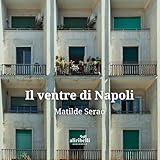
- Audible Audiobook
- Matilde Serao (Author) - Letizia Lucchini (Narrator)
- Italian (Publication Language)
- 06/16/2025 (Publication Date) - Ali Ribelli Edizioni (Publisher)
BLOCKQUOTE_0
This sentiment, while not a direct quote from the book, encapsulates the dual nature Serao frequently portrays: the overwhelming hardship juxtaposed with the indomitable spirit of its inhabitants. Her work serves as a powerful reminder that statistics on poverty often fail to convey the human experience—the daily negotiations with hunger and the small acts of kindness or defiance that sustain communities.
Table: Key Aspects of Neapolitan Life Depicted
| Aspect of Life | Description in Il Ventre Di Napoli | Significance |
|---|---|---|
| Housing Conditions | Overcrowded, unsanitary tenements and makeshift dwellings, often lacking basic amenities. | Highlights the severe lack of adequate infrastructure and living standards. |
| Diet and Sustenance | Chronic hunger, reliance on meager rations, and the constant struggle to obtain food. | Underscores the pervasive economic hardship and its impact on daily life. |
| Social Dynamics | Close-knit communities, informal economies, and the resilience forged through shared hardship. | Reveals the coping mechanisms and social bonds developed in challenging environments. |
| Public Health | Rampant disease and the visible toll of poor sanitation and nutrition on the population’s health. |
Decision Rules
- If reliability is your top priority for Il Ventre Di Napoli by Matilde Serao, choose the option with the strongest long-term track record and support.
- If value matters most, compare total ownership cost instead of headline price alone.
- If your use case is specific, prioritize fit-for-purpose features over generic ‘best overall’ claims.