Mark Twain’s The Prince And The Pauper
Mark Twain’s The Prince and the Pauper, published in 1881, is a classic exploration of identity, social class, and justice. The novel centers on two boys of identical appearance who swap lives: Edward Tudor, the young heir to the English throne, and Tom Canty, a boy from the impoverished slums of London. Through their swapped experiences, Twain offers a sharp critique of the rigid social hierarchy and the arbitrary nature of power in 16th-century England. This tale provides a compelling narrative that examines societal structures and the inherent worth of individuals.
Who This Book Is For
- Young readers (ages 10+) seeking an engaging introduction to classic literature, historical fiction, and adventure.
- Adult readers interested in Mark Twain’s social commentary and his nuanced critique of societal inequalities and legal systems.
What to Check First
Before engaging with the narrative, consider the following foundational elements:
- Historical Setting: The novel is set in the reign of Henry VIII in 16th-century England. Understanding the strict social stratification and the absolute power of the monarchy of this era is crucial for appreciating the story’s premise and its satirical intent.
- Twain’s Satirical Style: Mark Twain is renowned for his use of wit and satire. Recognize that the narrative employs exaggeration and irony to highlight the absurdities and injustices of the time, particularly concerning class and law.
- Themes of Identity and Justice: The core of the story interrogates notions of identity, questioning whether upbringing or inherent nature defines an individual. It also critically examines the concept of justice as administered by the era’s institutions.
- Language and Tone: While generally accessible, the language reflects 19th-century prose. Familiarity with the author’s typical narrative voice, which often blends humor with serious social observation, will enhance comprehension.
The Prince and the Pauper by Mark Twain: A Step-by-Step Reading Plan
This plan is designed to guide your reading of The Prince and the Pauper by Mark Twain, focusing on plot progression and thematic development.
1. Establish Tom Canty’s Circumstances:
- Action: Read the opening chapters detailing Tom Canty’s life in Offal Court.
- Look for: The stark realities of poverty, Tom’s vivid imagination fueled by stories, and his innate kindness despite his harsh environment. This establishes the baseline for the story’s exploration of social disparity.
- Mistake to Avoid: Dismissing Tom’s dreams as mere escapism; these aspirations are fundamental to his character and the narrative’s critique of societal limitations.
2. The Fateful Meeting:
- Action: Analyze the pivotal scene where Tom Canty and Prince Edward first encounter each other.
- Look for: The immediate physical resemblance, the prince’s impulsive suggestion to swap roles, and the swift, consequential separation of the boys.
- Mistake to Avoid: Underestimating the gravity of the swap; recognize that this impulsive decision immediately plunges both boys into life-threatening situations, highlighting the arbitrary nature of their circumstances.
3. Edward’s Ordeal as a Pauper:
- Action: Follow Prince Edward’s experiences as he navigates the world of the common people.
- Look for: His shock at the pervasive injustice and brutality, his failed attempts to assert royal authority, and his developing empathy for the marginalized.
- Mistake to Avoid: Assuming Edward will easily adapt or that his royal status offers inherent protection; the narrative emphasizes his vulnerability and the harsh, transformative lessons he learns.
4. Tom’s Reign as Prince:
- Action: Observe Tom Canty’s attempts to impersonate the prince within the royal court.
- Look for: His initial fear and struggle to maintain the deception, moments of unexpected compassion and fairness, and the suspicion he generates among courtiers.
- Mistake to Avoid: Viewing Tom solely as an imposter; Twain uses his perspective to subtly critique courtly manners and reveal genuine human decency, challenging the notion that nobility is solely inherited.
5. Court Intrigue and Growing Suspicion:
- Action: Identify the characters who perceive the truth or seek to exploit the situation.
- Look for: The machinations of figures like Lord Hertford, who benefit from the confusion, and the growing unease among those privy to the throne.
- Mistake to Avoid: Focusing exclusively on the two protagonists; the political maneuvering is essential for plot progression and underscores the corrupting influence of power and ambition.
6. The Climax and Revelation:
- Action: Read through the coronation ceremony and the subsequent dramatic reveal of the true identities.
- Look for: The moment of truth, the court’s reaction, and the eventual restoration of both boys to their rightful places.
- Mistake to Avoid: Expecting a simple or predictable resolution; Twain often introduces unexpected turns and emphasizes the lasting impact of the characters’ experiences.
7. Post-Swap Reflections and Lessons Learned:
- Action: Consider the final chapters and the enduring consequences of the boys’ swapped lives.
- Look for: The lasting impact on their characters, their perspectives on justice, and their understanding of society.
- Mistake to Avoid: Concluding the story ends with the reversal of the swap; the true takeaway lies in the profound personal growth and altered worldviews of Edward and Tom.
Common Myths About The Prince and the Pauper
Myth 1: The story is a simple children’s adventure with no deeper meaning.
- Why it matters: This perception can lead readers to overlook the novel’s sophisticated social and political critique, diminishing its literary value.
- Correction: While framed as an adventure, The Prince and the Pauper is a pointed satire on the English legal system, class inequality, and the arbitrary nature of royal power. Twain uses the premise to expose the harsh realities faced by the poor and the often-unjust systems that perpetuate their suffering. For instance, the arbitrary punishments for vagrancy and the stark contrast between royal privilege and common destitution are far from superficial elements.
Myth 2: Mark Twain wrote this book solely for a young audience.
For those looking to dive into this classic tale, a well-formatted edition of Mark Twain’s The Prince and the Pauper is essential for appreciating the nuances of his storytelling and social commentary.
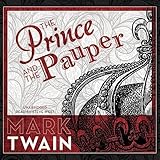
- Audible Audiobook
- Mark Twain (Author) - Steve West (Narrator)
- English (Publication Language)
- 08/23/2011 (Publication Date) - Blackstone Audio, Inc. (Publisher)
- Why it matters: Attributing the book exclusively to a juvenile audience may lead adults to dismiss its literary merit or thematic complexity.
- Correction: While accessible to younger readers, Twain’s works often contain layers of meaning intended for a broader audience. The novel’s exploration of justice, identity, and societal hypocrisy resonates deeply with adult readers. Twain himself acknowledged the book’s appeal to youth but also its underlying commentary on societal structures. The narrative’s engagement with themes of law and order, as seen in the characters’ legal predicaments, demonstrates a complexity that extends beyond simple children’s fare.
Expert Tips for Reading The Prince and the Pauper
- Tip 1: Track the Dual Perspectives Carefully.
- Action: Actively compare and contrast the experiences, observations, and internal monologues of Prince Edward and Tom Canty as they navigate each other’s lives.
- Common Mistake to Avoid: Treating the boys’ journeys in isolation; their parallel experiences are designed to highlight the stark differences in social standing and the shared human elements that transcend class.
- Tip 2: Identify Twain’s Satirical Targets.
- Action: Note instances where Twain employs humor, exaggeration, or irony to critique institutions, social customs, or character flaws.
- Common Mistake to Avoid: Accepting all events and characters at face value; many elements are deliberately exaggerated to expose societal absurdities, such as the often-ineffective or cruel application of justice, or the superficiality of courtly life.
- Tip 3: Analyze the Symbolism of Royal Authority.
- Action: Pay close attention to how symbols of royal authority, such as the Great Seal, are used and what they represent within the narrative’s context of identity and power.
- Common Mistake to Avoid: Dismissing these symbols as mere plot devices; they represent the arbitrary nature of power and how easily identity can be manipulated or questioned when stripped of outward insignia.
How This List Was Curated
This guide to The Prince and the Pauper by Mark Twain was curated using the following criteria:
- Thematic Depth: Prioritizing an understanding of the novel’s core themes, including social class, identity, and justice, as they are central to Twain’s message.
- Narrative Structure: Focusing on the sequential unfolding of the plot and the parallel journeys of the protagonists, which are key to appreciating the story’s impact.
- Reader Engagement: Providing actionable steps and points of consideration to enhance comprehension and enjoyment for both new and returning readers.
- Contextual Relevance: situating the novel within Mark Twain’s broader body of work and its historical context to illuminate its significance.
- Critical Nuance: Moving beyond superficial plot summary to encourage a deeper analysis of Twain’s satirical intent and social commentary.
The Prince and the Pauper by Mark Twain: A Thematic Exploration
Mark Twain’s The Prince and the Pauper by Mark Twain transcends a simple tale of mistaken identity to become a profound exploration of the artificiality of social stratification and the inherent worth of individuals, irrespective of their birth. The novel meticulously contrasts the opulent yet often stifling world of royalty with the brutal, unforgiving reality of 16th-century London’s underbelly. Through the swapped experiences of Edward Tudor and Tom Canty, readers are invited to question the foundations of power, privilege, and justice.
The narrative’s primary strength lies in its dual perspective. As Prince Edward is thrust into the harsh realities of pauper life, he witnesses firsthand the systemic injustices and the suffering of the common people. This experience, while physically demanding and dangerous, fosters a crucial empathy that his sheltered royal upbringing never afforded him. Conversely, Tom Canty’s brief reign as prince exposes the superficiality and often arbitrary nature of courtly life. His innate kindness and common sense, though initially mistaken for eccentricity, reveal a capacity for genuine leadership and compassion that challenges the established norms of the aristocracy.
A potential limitation, for some modern readers, might be the novel’s pacing and occasional didacticism, characteristic of 19th-century literature. However, these elements are integral to Twain’s purpose: to educate and provoke thought about societal structures.
Reader Segmentation
- For the Curious Novice: This book serves as an excellent introduction to Mark Twain’s style and his engagement with social issues. The adventure plot makes it highly accessible.
- For the Critical Reader: Those interested in historical satire and critiques of power structures will find ample material for analysis, particularly regarding the English legal and social systems of the era.
Surprising/Under-the-Radar Pick
Focus on the ‘Great Seal’ Symbolism: While the plot revolves around the boys’ physical resemblance, pay close attention to the recurring motif of the Great Seal of England. Its presence signifies not just royal authority but the arbitrary nature of power and how easily it can be usurped or questioned. The seal becomes a symbol of both legitimacy and illusion, reflecting the novel’s deeper commentary on manufactured social hierarchies. This subtle but persistent element often gets overlooked in favor of the more overt plot points.
Comparing The Prince and the Pauper to Similar Works
- Best for: Readers who enjoyed A Tale of Two Cities by Charles Dickens for its historical setting and social commentary, or The Adventures of Huckleberry Finn for its exploration of societal hypocrisy through a young protagonist’s eyes.
- Skip if: You prefer fast-paced, modern thrillers or stories with straightforward moral clarity; The Prince and the Pauper demands patience for its historical context and nuanced critique.
- Trade-off: The novel offers clear insights into class and justice but requires engagement with 19th-century prose and pacing, which may feel slow to some.
Quick Comparison
| Aspect | The Prince and the Pauper by Mark Twain | Related Work Example | Key Differentiator |
|---|---|---|---|
| <strong>Primary Theme</strong> | Social class, identity, justice | <em>A Tale of Two Cities</em> | Focus on mistaken identity as the engine for social critique. |
| <strong>Narrative Style</strong> | Dual perspective, historical satire | <em>The Adventures of Huckleberry Finn</em> | Less reliance on regional dialect, more on direct societal observation. |
| <strong>Audience Appeal</strong> | Young readers and adults | <em>Oliver Twist</em> | More direct critique of royalty and aristocracy, less focused on urban poverty alone. |
Decision Rules
- If reliability is your top priority for The Prince and the Pauper by Mark Twain, choose the option with the strongest long-term track record and support.
- If value matters most, compare total ownership cost instead of headline price alone.
- If your use case is specific, prioritize fit-for-purpose features over generic ‘best overall’ claims.
FAQ
- Q: Is The Prince and the Pauper historically accurate?
A: The novel is set in the reign of Henry VIII and reflects the general social conditions, class structures, and legal practices of 16th-century England. However, it is a work of fiction and uses dramatic license for its plot and characters, rather than aiming for strict historical accuracy.
- Q: What is the main message Mark Twain is trying to convey?
A: The central message revolves around the idea that a person’s true worth is not determined by their social status or birthright, but by their character and actions. Twain critiques the injustices of class systems and highlights the shared humanity that transcends societal divisions.
- Q: Is the language in The Prince and the Pauper difficult to understand?
A: The language is characteristic of 19th-century English. While it may contain some archaic vocabulary and sentence structures, it is generally considered accessible to young adult readers and above. Most readers find they adapt to the style relatively quickly.
- Q: How does The Prince and the Pauper differ from other Mark Twain novels?
A: Unlike the more overtly satirical The Adventures of Huckleberry Finn or The Adventures of Tom Sawyer, The Prince and the Pauper adopts a more direct approach to social commentary, using a historical setting to explore themes of justice and identity. It is also one of Twain’s few novels that does not prominently feature the Mississippi River setting.
Structured Pick Cards
Myth 1: The story is a simple children’s adventure with no deeper meaning.
Structured Pick Cards
Myth 1: The story is a simple children’s adventure with no deeper meaning.
- Best for: readers who want practical takeaways and clear progression.
- Skip if: you need only advanced theory with little implementation guidance.
- Trade-off: stronger depth can mean a slower pace in some chapters.
Myth 2: Mark Twain wrote this book solely for a young audience.
- Best for: readers who want practical takeaways and clear progression.
- Skip if: you need only advanced theory with little implementation guidance.
- Trade-off: stronger depth can mean a slower pace in some chapters.
By Reader Level
- Beginner: start with one fundamentals pick and one habit-building pick.
- Intermediate: prioritize books with frameworks you can apply weekly.
- Advanced: choose deeper titles focused on systems and decision quality.