Marcia Bartusiak’s The Day We Found The Universe
Quick Answer
- The Day We Found The Universe by Marcia Bartusiak chronicles the scientific revolution that established the vast scale of the cosmos, revealing our galaxy as one among billions.
- It details the critical observations and debates of the early 20th century, focusing on Edwin Hubble’s work with Cepheid variables.
- This book is essential for understanding the historical and scientific process behind our modern cosmological understanding.
Who This Is For
- Readers interested in the history of science and how major scientific paradigms shift.
- Individuals who appreciate narratives about meticulous observation and intellectual rigor in scientific discovery.
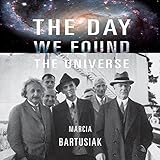
- Audible Audiobook
- Marcia Bartusiak (Author) - Erik Synnestvedt (Narrator)
- English (Publication Language)
- 04/29/2009 (Publication Date) - Gildan Media, LLC (Publisher)
What to Check First
- Author’s Expertise: Marcia Bartusiak is an award-winning science writer with a focus on physics and astronomy, ensuring a knowledgeable and well-researched account.
- Historical Period: The book primarily covers the late 19th and early 20th centuries, a period of rapid advancement in observational astronomy.
- Key Scientific Tools: Familiarize yourself with the importance of instruments like the Hooker Telescope and the scientific principles they enabled, such as spectral analysis and the use of Cepheid variables.
- Central Figures: Be aware of the contributions of astronomers like Henrietta Swan Leavitt, Harlow Shapley, Heber Curtis, and Edwin Hubble.
- Nature of Scientific Debate: Understand that scientific progress is often iterative and involves significant debate, as exemplified by the Shapley-Curtis debate.
Step-by-Step Plan
1. Establish the Pre-Discovery Context: Begin by understanding the prevailing astronomical view before the extragalactic discoveries. Bartusiak describes a universe largely confined to our Milky Way.
- Action: Read the initial chapters detailing late 19th-century astronomy and the perceived limits of the cosmos.
- What to look for: Descriptions of the Milky Way’s structure as understood then, and the classification of nebulae without a clear understanding of their nature.
- Mistake to avoid: Assuming the vastness of the universe was an obvious concept; recognize the significant conceptual leap required.
2. Grasp the Enabling Discovery: Focus on Henrietta Swan Leavitt’s foundational work on Cepheid variable stars.
- Action: Study the explanation of Leavitt’s discovery of the period-luminosity relationship for Cepheid stars.
- What to look for: How the predictable pattern of brightness variation in these stars was quantified and its potential as a “standard candle” for measuring cosmic distances.
- Mistake to avoid: Underestimating Leavitt’s contribution as merely a preliminary step; it was a crucial calibration tool for all subsequent extragalactic distance measurements.
3. Follow the Observational Evidence: Track the investigation into the nature of spiral nebulae, particularly the role of advanced telescopes.
- Action: Analyze the sections detailing observations made with instruments like the Hooker Telescope at Mount Wilson Observatory.
- What to look for: Evidence of Cepheid variables within spiral nebulae and the subsequent distance calculations that placed them far beyond the Milky Way’s boundaries.
- Mistake to avoid: Dismissing early observational data as insufficient; understand that a gradual accumulation of evidence was key to shifting scientific consensus.
4. Understand the “Great Debate”: Examine the pivotal 1920 debate between Harlow Shapley and Heber Curtis.
- Action: Review the differing viewpoints and the evidence presented by Shapley and Curtis regarding the scale and composition of the universe.
- What to look for: The specific arguments, the data each astronomer utilized, and the eventual resolution of their conflicting conclusions based on further evidence.
- Mistake to avoid: Viewing the debate as having a clear winner from the outset; appreciate the scientific rigor, uncertainty, and intellectual courage involved in challenging established ideas.
5. Evaluate Edwin Hubble’s Synthesis: Understand how Hubble synthesized prior work and utilized superior observational capabilities to definitively establish the extragalactic nature of nebulae.
- Action: Focus on Hubble’s application of Leavitt’s findings to measure distances to nebulae, such as Andromeda.
- What to look for: The specific measurements and calculations that demonstrated Andromeda’s immense distance, confirming it as a separate galaxy.
- Mistake to avoid: Attributing the entire discovery of other galaxies solely to Hubble, without acknowledging the crucial preceding contributions of Leavitt, Shapley, and others.
6. Appreciate the Paradigm Shift: Consider the profound implications of realizing the universe is vastly larger than previously conceived. Bartusiak synthesizes how this discovery reshaped cosmology.
- Action: Reflect on the final chapters discussing the broader impact of these discoveries on scientific thought and humanity’s place in the cosmos.
- What to look for: How the universe transformed from a single galaxy to a cosmos of countless galaxies, and the philosophical questions that arose from this expanded view.
- Mistake to avoid: Failing to connect the scientific findings to their significant impact on our understanding of existence and our place within it.
The Day We Found The Universe by Marcia Bartusiak: A Revolution in Cosmic Scale
The Day We Found The Universe by Marcia Bartusiak meticulously chronicles a pivotal era in astronomical history, detailing how humanity’s perception of the cosmos fundamentally transformed. The book focuses on the early 20th-century discoveries that revealed our Milky Way was not the sole inhabitant of existence, but merely one among countless galaxies. Bartusiak emphasizes the critical role of observational evidence, particularly the work of Edwin Hubble. By employing Henrietta Swan Leavitt’s discovery of Cepheid variable stars as cosmic distance markers, Hubble was able to measure the vast distances to nebulae, such as Andromeda, proving they were independent stellar systems far beyond our own galaxy. This was not a sudden revelation but the culmination of decades of scientific inquiry and technological advancement.
The narrative highlights the intellectual ferment and debates within the astronomical community. The “Great Debate” of 1920 between Harlow Shapley and Heber Curtis, for instance, starkly illustrated the conflicting interpretations of available data regarding the nature of spiral nebulae. Bartusiak effectively portrays how advancements in instrumentation, such as the powerful Hooker Telescope at Mount Wilson, provided the crucial data needed to resolve these debates. The book underscores that scientific progress is often iterative, driven by persistent observation, rigorous analysis, and the willingness to challenge established paradigms. The realization that our galaxy was just one island universe profoundly altered cosmology and humanity’s place within the grander scheme.
Common Mistakes
- Myth: Scientific discovery is a linear progression of facts.
- Correction: The Day We Found The Universe demonstrates that scientific understanding evolves through periods of intense debate, revised interpretations, and the integration of new, often contradictory, evidence. The journey from viewing nebulae as within the Milky Way to recognizing them as separate galaxies was fraught with uncertainty.
- Fix: Pay close attention to the historical context and the scientific reasoning behind each stage of discovery, understanding that what seems obvious now was once a subject of considerable dispute.
- Myth: Technological advancement is a passive enabler of discovery.
- Correction: The book illustrates how specific technological developments, such as larger and more powerful telescopes (e.g., the Hooker Telescope), were not just tools but active drivers of new scientific questions and the ability to answer them.
- Fix: Note the direct correlation Bartusiak draws between improvements in observational equipment and the new data that challenged existing cosmological models.
- Underestimating the Importance of Data Calibration: Readers might overlook the critical role of precise measurement standards.
- Why it matters: Henrietta Swan Leavitt’s discovery of the period-luminosity relationship for Cepheid variables provided the essential calibration that allowed Edwin Hubble to accurately measure the distances to other galaxies. Without this, his conclusions would have been far less certain.
- Fix: Recognize that foundational discoveries in measurement techniques are as crucial as the direct observations they enable.
- Focusing on Individual “Eureka!” Moments: Some readers may look for singular moments of sudden insight.
- Why it matters: The book emphasizes that significant scientific progress, like understanding the universe’s scale, is typically the result of sustained effort, incremental data collection, and collaborative scientific discourse over time.
- Fix: Appreciate the narrative of persistent investigation and the way multiple scientists’ contributions built upon each other to achieve the final breakthrough.
The Day We Found The Universe by Marcia Bartusiak: Expert Insights and Cautions
Marcia Bartusiak’s The Day We Found The Universe offers a valuable perspective on the nature of scientific progress. A key insight is the inherent provisionality of scientific knowledge. What is considered established fact today is often the result of a long process of questioning, testing, and refinement, built upon previous understandings that were themselves considered definitive.
BLOCKQUOTE_0
This perspective cautions against viewing scientific history as a simple march towards truth. Instead, it highlights the complex interplay of observation, theory, and human interpretation. When reading, it is crucial to recognize that the scientists of the early 20th century were operating with the best available tools and knowledge, and their discoveries were significant leaps forward within that context. Approaching the narrative with an awareness of this scientific evolution prevents anachronistic judgment and fosters a deeper appreciation for the scientific process.
Frequently Asked Questions
- Q: Does the book discuss the expansion of the universe?
A: Yes, the discoveries detailed in The Day We Found The Universe directly led to the understanding of the universe’s expansion. Edwin Hubble’s measurements of distant galaxies and their recession velocities provided the observational basis for this concept.
- Q: Is the scientific language in the book accessible to a general reader?
A: Marcia Bartusiak is known for her clarity in explaining complex scientific topics. While some technical terms are necessary, the
Quick Comparison
| Option | Best for | Pros | Watch out |
|---|---|---|---|
| Quick Answer | General use | The Day We Found The Universe by Marcia Bartusiak chronicles the scientific r… | Mistake to avoid: Assuming the vastness of the universe was an obvious concep… |
| Who This Is For | General use | It details the critical observations and debates of the early 20th century, f… | Mistake to avoid: Underestimating Leavitt’s contribution as merely a prelimin… |
| What to Check First | General use | This book is essential for understanding the historical and scientific proces… | Mistake to avoid: Dismissing early observational data as insufficient; unders… |
| Step-by-Step Plan | General use | Readers interested in the history of science and how major scientific paradig… | Mistake to avoid: Viewing the debate as having a clear winner from the outset… |
Decision Rules
- If reliability is your top priority for The Day We Found The Universe by Marcia Bartusiak, choose the option with the strongest long-term track record and support.
- If value matters most, compare total ownership cost instead of headline price alone.
- If your use case is specific, prioritize fit-for-purpose features over generic ‘best overall’ claims.