Maj Sjöwall’s ‘Roseanna’ and Police Procedurals
Quick Answer
- Roseanna by Maj Sjöwall is a seminal work that codified many elements of the modern police procedural, emphasizing realistic police work over sensationalism.
- The novel is notable for its detailed depiction of Inspector Martin Beck’s methodical investigation and its integration of social commentary.
- Its enduring significance lies in its meticulous plotting and its examination of societal issues through the lens of a criminal investigation.
Who This Is For
- Readers seeking to understand the historical development and foundational texts of the police procedural genre.
- Those who appreciate detective fiction that prioritizes thorough investigation, character depth, and social context over rapid action.
What to Check First
- Genre Context: Understand that Roseanna (published in 1965) predates many contemporary genre conventions, offering a more grounded and less romanticized view of police work.
- Character Focus: Recognize Inspector Martin Beck as a complex, often weary, professional whose personal life and psychological state are integral to the narrative, not merely plot devices.
- Societal Engagement: Be aware that the novel uses the criminal investigation as a vehicle to explore broader themes within Swedish society of the era, such as bureaucracy, alienation, and social inequality.
- Pacing and Tone: The investigative process is depicted with deliberate detail and realism. Readers should anticipate a focus on procedural accuracy and deduction, rather than a high-octane thriller.
Step-by-Step Plan: Unpacking the Investigation in Roseanna by Maj Sjöwall
This section details the investigative methodology employed in Roseanna, highlighting key procedural steps and common challenges faced by the investigators.
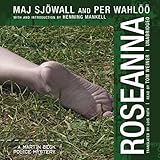
- Audible Audiobook
- Maj Sjöwall (Author) - Tom Weiner (Narrator)
- English (Publication Language)
- 10/07/2008 (Publication Date) - Blackstone Audio, Inc. (Publisher)
1. Initial Discovery and Scene Assessment:
- Action: The investigation begins with the discovery of a body, necessitating immediate scene preservation and documentation.
- What to Look For: The thoroughness of the initial forensic examination, the identification of the victim, and the preliminary collection of physical evidence.
- Mistake: Assuming the initial assessment is conclusive. In Roseanna, the victim’s unknown identity presents a significant early obstacle that requires extensive background investigation.
2. Developing a Working Hypothesis:
- Action: Detectives formulate initial theories based on the evidence gathered at the scene and preliminary information.
- What to Look For: The logical progression from observed facts to potential motives, suspect profiles, and lines of inquiry.
- Mistake: Falling prey to “tunnel vision,” where investigators become fixated on a single theory and disregard or misinterpret evidence that contradicts it.
3. Information Gathering and Witness Interviews:
- Action: Law enforcement systematically interviews individuals who may have information, including witnesses, associates, and potential persons of interest.
- What to Look For: The meticulous, often time-consuming, process of collecting statements, corroborating accounts, and identifying inconsistencies.
- Mistake: Underestimating the value of seemingly minor details or the inherent unreliability of human memory and testimony.
4. Forensic Analysis and Evidence Correlation:
- Action: Submitted evidence undergoes specialized laboratory analysis to yield objective data.
- What to Look For: How forensic findings (e.g., ballistics, trace evidence, toxicology) connect to the crime scene, the victim, and potential suspects.
- Mistake: Over-reliance on forensic data alone without integrating it with human intelligence, investigative leads, and contextual understanding.
5. Reconstructing the Victim’s Life and Activities:
- Action: Inspector Beck and his team meticulously reconstruct the victim’s personal history, routines, and activities leading up to the crime.
- What to Look For: The victim’s relationships, recent conflicts, travel, and any deviations from their established patterns.
- Mistake: Overlooking crucial connections or motives because they initially appear tangential or insignificant to the immediate facts of the crime.
6. Pursuing and Verifying Leads:
- Action: Investigators follow up on all credible leads generated through interviews, evidence, and deduction.
- What to Look For: The systematic process of verifying information, eliminating false trails, and narrowing the suspect pool.
- Mistake: Prematurely abandoning a promising lead or failing to re-evaluate suspects as new information emerges and alters the investigative landscape.
7. Culmination and Apprehension:
- Action: The investigation culminates in the identification and apprehension of the perpetrator based on accumulated evidence.
- What to Look For: The logical conclusion of investigative steps, ensuring the apprehended individual is demonstrably linked to the crime through corroborating evidence.
- Mistake: Rushing the final stages or apprehending a suspect based solely on circumstantial evidence that has not been fully corroborated or explained.
Roseanna by Maj Sjöwall: A Masterclass in Procedural Realism
This section examines Roseanna‘s significant contribution to the police procedural genre, focusing on its realistic depiction of investigative work and its thematic depth.
Roseanna stands as a landmark publication that helped define the modern police procedural. Maj Sjöwall, in collaboration with Per Wahlöö, meticulously detailed the investigative process, shifting the focus from the singular, intuitive detective to a more collaborative, systematic, and often frustrating reality of police work. The novel’s primary strength lies in its commitment to verisimilitude; readers are exposed to the bureaucratic obstacles, the tedious stakeouts, and the painstaking analysis of evidence that characterize real-world investigations. This grounded approach starkly contrasts with earlier, more dramatic detective fiction, offering an authentic portrayal of law enforcement’s methodical efforts.
The investigation into the murder of a young woman, Roseanna, whose body is discovered in a canal, unfolds with a deliberate, measured pace. Inspector Martin Beck, the central character, is depicted not as a flamboyant hero but as a dedicated, often weary, professional navigating complex cases. His methods involve careful observation, thorough interviewing, and a persistent pursuit of factual accuracy. The novel does not shy away from the complexities of human behavior or the societal undercurrents that can contribute to criminal acts. For instance, the exploration of the victim’s background and the circumstances leading to her death serve as a vehicle for social commentary, addressing themes of alienation and exploitation within Swedish society. This integrated approach, where the crime serves as a catalyst for examining broader societal issues, is a hallmark of Sjöwall and Wahlöö’s work and a primary reason for Roseanna‘s enduring impact.
Common Myths
- Myth: Roseanna is primarily a fast-paced thriller focused on action and suspense.
- Correction: This is a significant misconception. Roseanna is characterized by its methodical, procedural approach to crime-solving. The narrative satisfaction derives from the detailed unraveling of the mystery through diligent police work and deduction, rather than rapid plot twists or high-octane sequences. Its strength lies in its realism and character development, not sensationalism.
- Myth: Inspector Martin Beck operates as a solitary, intuitive genius detective.
- Correction: Beck is depicted as part of a larger police organization, and the procedural aspect of the novel emphasizes collaboration and the division of labor within the force. His effectiveness stems from his persistence, his ability to coordinate the efforts of his colleagues, and his methodical thinking, rather than from isolated, intuitive brilliance.
- Myth: The social commentary in Roseanna is a secondary element, merely background to the crime plot.
- Correction: The social critique is intrinsically woven into the narrative fabric of the novel. The investigation into the murder serves as a catalyst for examining broader societal issues, such as bureaucracy, social inequality, and alienation. These themes are not mere background but are integral to understanding the characters, their motivations, and the crime itself.
Expert Tips
- Tip: Analyze the detailed descriptions of Swedish bureaucracy and police procedures.
- Actionable Step: Pay close attention to how the institutional context, including administrative processes and inter-departmental dynamics, shapes the investigation and the characters’ actions.
- Common Mistake to Avoid: Skipping over passages detailing administrative processes, viewing them as extraneous filler rather than key elements that contribute to the novel’s authenticity and thematic depth.
- Tip: Observe Inspector Beck’s internal reflections and his interactions with his colleagues.
- Actionable Step: Focus on Beck’s thought processes, his moments of frustration, his ethical considerations, and his evolving relationships with his team to understand the psychological demands and complexities of his profession.
- Common Mistake to Avoid: Treating Beck as a purely functional character. His internal struggles, his personal life, and his professional relationships are critical to the novel’s overall narrative and character development, providing insight into the human cost of police work.
- Tip: Consider the novel’s historical context, published in 1965.
- Actionable Step: Evaluate the portrayal of police work, forensic science, and societal issues in light of the era in which the novel was written, recognizing its groundbreaking realism for its time.
- Common Mistake to Avoid: Judging the novel by contemporary standards of forensic science, investigative techniques, or societal norms without acknowledging its pioneering status and historical context.
Roseanna by Maj Sjöwall: A Critical Lens
This section offers a contrarian perspective, challenging assumptions about the novel’s immediate appeal and highlighting specific decision-making factors for potential readers.
While Roseanna is widely lauded for its procedural realism and its foundational role in the genre, a contrarian viewpoint suggests that its deliberate pace and extensive focus on systemic issues may prove less accessible to readers accustomed to more action-oriented crime fiction. The novel’s strength in portraying the mundane, often tedious, aspects of police work—the extensive paperwork, the inter-departmental friction, the slow accumulation of evidence—can be perceived as a weakness by those seeking immediate narrative propulsion and rapid plot resolution. Furthermore, the depth of social commentary, while highly praised by critics, requires a reader willing to engage with nuanced critiques of Swedish society rather than simply seeking a straightforward mystery solution.
The primary decision criterion for readers selecting Roseanna
Quick Comparison
| Option | Best for | Pros | Watch out |
|---|---|---|---|
| Quick Answer | General use | Roseanna by Maj Sjöwall is a seminal work that codified many elements of th… | Mistake: Assuming the initial assessment is conclusive. In Roseanna, the vi… |
| Who This Is For | General use | The novel is notable for its detailed depiction of Inspector Martin Beck’s me… | Mistake: Falling prey to “tunnel vision,” where investigators become fixated… |
| What to Check First | General use | Its enduring significance lies in its meticulous plotting and its examination… | Mistake: Underestimating the value of seemingly minor details or the inherent… |
| Step-by-Step Plan Unpacking the Investigation in Roseanna by Maj Sjöwall | General use | Readers seeking to understand the historical development and foundational tex… | Mistake: Over-reliance on forensic data alone without integrating it with hum… |
Decision Rules
- If reliability is your top priority for Roseanna by Maj Sjöwall, choose the option with the strongest long-term track record and support.
- If value matters most, compare total ownership cost instead of headline price alone.
- If your use case is specific, prioritize fit-for-purpose features over generic ‘best overall’ claims.