M. R. James’ Classic ‘Ghost Stories Of An Antiquary
Ghost Stories Of An Antiquary by M. R. James: Quick Answer
- This collection is a foundational work in literary ghost fiction, characterized by its scholarly protagonists, understated dread, and evocative historical settings.
- Its primary strength lies in its masterful use of suggestion and atmosphere, building terror through implication rather than explicit shocks.
- Ideal for readers who appreciate intellectual chills and creeping unease, though those seeking overt horror may find it too subtle.
Who This Is For
- Readers interested in the historical evolution of the ghost story genre and its literary underpinnings.
- Individuals who value subtle psychological horror, atmospheric tension, and the uncanny over graphic scares.
What To Check First
- Authorial Context: M. R. James was a distinguished medieval scholar. This background informs the stories’ integration of historical detail, academic pursuits, and the intrusion of ancient malevolence.
- Subtlety of Horror: The collection’s horror is rarely overt. Focus on the gradual build-up of unease, unsettling implications, and the disruption of ordered environments by dormant evils.
- Protagonist Archetype: James frequently features academics or antiquarians whose intellectual curiosity inadvertently leads them to disturb ancient, malevolent forces.
- Atmospheric Detailing: Pay close attention to descriptions of old buildings, ancient manuscripts, and remote locales. These elements are critical for establishing the pervasive mood of dread.
- Narrative Voice: James employs a detached, scholarly tone that contrasts with the supernatural events, amplifying the uncanny effect.
For those seeking a foundational experience in literary ghost fiction, M. R. James’s ‘Ghost Stories Of An Antiquary’ is an unparalleled choice. Its masterful use of suggestion and atmosphere creates a creeping dread that has influenced countless horror writers.
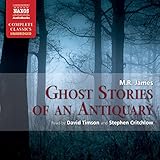
- Audible Audiobook
- M. R. James (Author) - David Timson, Stephen Critchlow (Narrators)
- English (Publication Language)
- 12/09/2010 (Publication Date) - Naxos AudioBooks (Publisher)
Step-by-Step Plan for Engaging with Ghost Stories Of An Antiquary by M. R. James
1. Begin with “Canon Alberic’s Scrap-Book”: This story serves as an excellent entry point into James’s style. Action: Focus on the protagonist’s academic investigation into an unsettling medieval manuscript. What to look for: The disturbing nature of the illustrations and the escalating dread as Alberic deciphers their sinister implications. Mistake to avoid: Dismissing the detailed scholarly context as mere background; these elements are crucial for understanding the unfolding horror.
2. Proceed to “Lost Hearts”: This narrative explores the corruption of innocence through ancestral evil. Action: Observe the stark contrast between the idyllic rural setting and the dark secrets of a local family history. What to look for: How ancient malevolence manifests and impacts the innocent. Mistake to avoid: Underestimating the story’s power by focusing solely on its seemingly simple plot; its true impact lies in its subtext and implications.
3. Engage with “The Treasure of Abbot Thomas”: This tale highlights the perils of avarice and disturbing the past. Action: Track the protagonist’s descent from scholarly curiosity to obsessive pursuit of hidden wealth. What to look for: The growing unease and physical challenges associated with the treasure hunt, driven by supernatural forces. Mistake to avoid: Concentrating solely on the treasure hunt aspect; the supernatural element is the primary driver of conflict and dread.
4. Examine “Oh, Whistle, and I’ll Come to You, My Lad”: This story masterfully explores the uncanny and the fear of the unseen. Action: Note the protagonist’s initial skepticism and the gradual, subtle manifestation of a spectral presence. What to look for: Minor disturbances and the increasing, palpable sense of being observed. Mistake to avoid: Expecting a grand, explicit revelation; James’s strength lies in suggestion and the evocation of unseen forces that prey on the mind.
5. Consider “The Interlopers”: This narrative delves into the consequences of ancestral transgressions. Action: Follow the unfolding repercussions of a past wrong that continues to haunt a family across generations. What to look for: The persistent sense of doom and the interconnectedness of the characters’ fates, driven by an unseen force. Mistake to avoid: Attempting to rationalize the supernatural events within a mundane framework; their presence is an accepted, integral part of the narrative’s logic.
6. Read “The Tractate Middoth”: This story demonstrates how academic research can lead to unintended spiritual consequences. Action: Observe how a genealogical search, grounded in historical records, unearths a spectral entanglement. What to look for: The precise details of the historical and religious context, and the spectral interference encountered as a result. Mistake to avoid: Overlooking the importance of the specific context; it grounds the supernatural events and enhances their credibility within the story.
7. Conclude with “A Warning to the Curious”: This story serves as a thematic capstone, exploring the price of disturbing ancient artifacts. Action: Analyze the protagonist’s motivations and the escalating danger as he pursues a legendary object. What to look for: The subtle dread that permeates the narrative and the severe consequences of disturbing the past. Mistake to avoid: Assuming the story is a straightforward adventure; the underlying terror and the ramifications of disturbing ancient power are paramount.
Common Mistakes
- Mistake: Expecting overt gore and jump scares.
- Why it matters: James’s horror is primarily psychological and atmospheric, relying on suggestion and creeping dread rather than visceral shocks.
- Fix: Adjust expectations to appreciate subtle unease, uncanny phenomena, and intellectual chills. Focus on the author’s skill in building tension through implication.
- Mistake: Skipping or minimizing the scholarly details.
- Why it matters: The academic context of protagonists and their research is crucial for understanding the disruption of order and the nature of the unearthed evils. These details provide the framework for the supernatural intrusions.
- Fix: Pay close attention to the historical and antiquarian elements; they are not just background but integral to the plot and themes, serving as the catalyst for the horror.
- Mistake: Underestimating the power of implication.
- Why it matters: James often leaves the most terrifying aspects to the reader’s imagination, making the unseen more potent than the explicit. The horror is in what is suggested, not necessarily shown.
- Fix: Actively engage with what is not shown, allowing the narrative’s suggestions and silences to build a sense of profound dread.
- Mistake: Viewing the stories as simple ghost tales.
- Why it matters: They are intricately crafted narratives that explore themes of academic hubris, the persistence of ancient evils, and the fragility of human order against primordial forces.
- Fix: Read with an analytical lens, considering the author’s background, the thematic depth of each story, and the subtle ways in which the supernatural intrudes upon the rational world.
Decision Rules for Ghost Stories Of An Antiquary by M. R. James
- If atmospheric dread and intellectual horror are your top priorities, this collection is a definitive choice due to its masterful use of suggestion and unease.
- If explicit horror, gore, or overt supernatural battles are your preference, you may find this collection too subtle, and other authors might be a better fit for your taste.
- If you are interested in the foundational elements of modern ghost stories and their literary development, this collection is essential for understanding genre evolution and James’s significant influence.
FAQ
- Q: Is Ghost Stories Of An Antiquary by M. R. James suitable for modern readers who enjoy horror?
- A: Yes, if you appreciate subtle dread, atmospheric tension, and intelligent storytelling that relies on psychological unease. Those seeking explicit gore or jump scares may find it less impactful, but its craft remains compelling.
- Q: What makes M. R. James’s writing style unique and effective?
- A: James employs a detached, scholarly narrative voice that creates a powerful contrast with the supernatural events, amplifying the uncanny effect. His prose is precise and economical, focusing on atmosphere, suggestion, and the disruption of ordered reality.
- Q: Should I read Ghost Stories Of An Antiquary before other M. R. James collections?
- A: It is an excellent starting point and widely considered one of his strongest collections. It establishes many of the author’s signature elements and thematic concerns, providing a solid foundation for exploring his other works. Reading Ghost Stories Of An Antiquary by M. R. James first is highly recommended.
- Q: What is the primary theme explored in Ghost Stories Of An Antiquary?
- A: A central theme is the disruption of academic or scholarly order by ancient, often malevolent, forces unearthed through research or exploration. The persistence of the past and the perilous consequences of disturbing it are paramount.
Expert Tips for Engaging with Ghost Stories Of An Antiquary
- Tip: Embrace the scholarly context.
- Actionable Step: Before reading, briefly research M. R. James’s background as a medieval scholar and provost. This context will significantly enhance your appreciation for the historical details, academic protagonists, and the specific nature of the unearthed evils.
- Common Mistake to Avoid: Treating the historical and academic elements as mere window dressing. These details are fundamental to the stories’ construction, thematic resonance, and the credibility of the supernatural intrusions.
- Tip: Cultivate patience for the build-up.
- Actionable Step: Allow James’s methodical pacing to establish the atmosphere, characters, and setting fully before the supernatural elements become prominent. The slow burn is essential to his technique.
- Common Mistake to Avoid: Rushing through descriptive passages or exposition. These sections are where James meticulously lays the groundwork for dread, and skipping them means missing crucial subtle cues.
- Tip: Focus on the uncanny.
- Actionable Step: Pay close attention to moments that feel “off” or unsettling, even if they are not overtly terrifying. The power of these stories lies in the unsettling nature of the supernatural intruding upon the mundane and the rational.
- Common Mistake to Avoid: Dismissing minor oddities or strange occurrences as irrelevant. These often serve as vital foreshadowing or contribute to the overall sense of pervasive unease.
The Enduring Appeal of Ghost Stories Of An Antiquary
M. R. James’s Ghost Stories Of An Antiquary remains a benchmark for literary horror, a collection that defined and refined the genre for generations. Unlike many contemporary works that rely heavily on shock value or explicit gore, James crafts tales of creeping dread through meticulous detail and a profound understanding of the human psyche’s vulnerability. His protagonists, typically educated men of letters, scholars, or antiquarians, stumble upon ancient evils precisely through their scholarly pursuits, creating a unique and potent blend of intellectual curiosity and supernatural terror. The collection’s enduring appeal lies in its understated effectiveness; the horrors are often implied, leaving the reader to fill in the terrifying blanks with their own deepest fears. This masterful technique ensures that the chills linger long after the book is closed, a testament to James’s skill in evoking genuine fear through suggestion and atmosphere.
BLOCKQUOTE_0
A Comparative Look at James’s Work
| Story Title | Core Element | Primary Fear Type | Counterpoint/Comparison |
|---|---|---|---|
| Canon Alberic’s Scrap-Book | Forbidden knowledge within an artifact | Intellectual dread | Modern occult thrillers focusing on forbidden texts (e.g., <em>The Ninth Gate</em>) |
| Lost Hearts | Corrupted innocence, ancestral curse | Psychological unease | Folk horror narratives exploring ancient evils in rural settings (e.g., <em>The Wicker Man</em>) |
| The Treasure of Abbot Thomas | Greed leading to supernatural consequence | Physical peril, dread | Adventure tales with a dark twist and supernatural obstacles (e.g., <em>Indiana Jones</em> with more dread) |
| Oh, Whistle, and I’ll Come to You, My Lad | The unseen observer, spectral presence | Existential fear | Ghost stories focused on classic haunting phenomena (e.g., <em>The Haunting of Hill House</em>) |
For those who wish to delve further into the chilling world of M. R. James, More Ghost Stories Of An Antiquary by M. R. James offers a continuation of his distinctive style, providing more opportunities to immerse oneself in his unique brand of subtle terror and scholarly dread.
FAQ
- Q: What is the best way to read Ghost Stories Of An Antiquary for maximum effect?
- A: Read it slowly, ideally in a quiet, dimly lit setting, perhaps during the evening. Pay close attention to the descriptive passages and allow the atmosphere to build organically. Consider reading one story per sitting to fully absorb each narrative and its lingering sense of unease.
- Q: Are there any specific stories within Ghost Stories Of An Antiquary that are considered the most frightening?
- A: While subjective, “Canon Alberic’s Scrap-Book” and “Lost Hearts” are frequently cited for their effective build-up of dread and their unsettling, impactful conclusions. “Oh, Whistle, and I’ll Come to You, My Lad” is also notable for its palpable sense of being watched and the existential terror it evokes.
- Q: How does M. R. James’s writing differ from modern horror authors?
- A: James prioritizes suggestion and psychological tension over explicit violence or gore. His prose is more formal and less reliant on visceral shock tactics, focusing instead on the uncanny, the disruption of order, and the intellectual dread that arises from encountering ancient, malevolent forces.
- Q: Where does Ghost Stories Of An Antiquary rank among M. R. James’s works?
- A: It is widely considered one of his finest and most representative collections, often recommended as the ideal starting point for new readers. Its impact on the ghost story genre is significant, establishing many of the tropes and stylistic elements that define literary horror.