Louise Fitzhugh’s Harriet the Spy: A Beloved Children’s Classic
Quick Answer
- Harriet the Spy by Louise Fitzhugh is a seminal work in children’s literature, notable for its realistic portrayal of a young protagonist’s complex inner life and observational habits.
- The novel’s strength lies in its unflinching examination of privacy, identity, and the consequences of unchecked curiosity, offering a nuanced perspective on childhood.
- This book is recommended for readers who appreciate character-driven narratives and a departure from idealized depictions of children.
Who This Is For
- Readers seeking a classic children’s novel that delves into psychological realism and the complexities of human interaction.
- Individuals interested in literary works that explore themes of observation, privacy, and the development of personal ethics from a child’s perspective.
What to Check First
- Harriet’s Observational Methods: Note the specific details Harriet records in her spy notebook and the systematic way she gathers information, which forms the core of her character.
- The Protagonist’s Motivation: Understand that Harriet’s spying is driven by an insatiable curiosity and a desire to understand the world and its inhabitants, rather than malice or ill intent.
- The Impact of Discovery: Recognize that the narrative’s turning point is the loss of Harriet’s notebook and the subsequent fallout, highlighting the critical importance of privacy and trust.
- Fitzhugh’s Writing Style: Observe the direct, unsentimental prose that mirrors Harriet’s no-nonsense perspective and contributes significantly to the novel’s authenticity and impact.
- Thematic Depth: Consider how the novel moves beyond a simple spy narrative to explore themes of loneliness, belonging, and the formation of identity.
Step-by-Step Plan: Engaging with Harriet the Spy by Louise Fitzhugh
This plan outlines a structured approach to analyzing the novel and its core thematic elements.
1. Initiate Reading with Contextual Awareness: Begin reading with the understanding that Harriet the Spy was groundbreaking for its time in its realistic portrayal of a child protagonist’s internal world and her often ethically ambiguous actions.
- Action: Read the opening chapters, focusing on Harriet’s established routines and her detached observation of her surroundings and the people within them.
- What to Look For: Harriet’s methodical approach to spying and her internal commentary on the individuals she observes, noting the objective details versus her subjective interpretations.
- Mistake to Avoid: Expecting a straightforward adventure story with clear moral lines; the novel is grounded in psychological realism and explores more complex, often uncomfortable, themes.
2. Analyze Harriet’s Observational Framework and Bias: Pay close attention to the specific details Harriet records in her notebook and the methods she employs to gather information, recognizing that her perspective is inherently biased.
- Action: Document specific instances of Harriet’s spying and her subjective interpretations of events, contrasting them with what might be considered objective reality.
- What to Look For: The development of Harriet’s understanding of human behavior, noting how her initial, often simplistic, observations evolve as she gathers more information.
- Mistake to Avoid: Dismissing her observations as mere childish games; they are integral to her character development and her perception of the world, revealing her attempts to impose order on chaos.
For those seeking a classic children’s novel that delves into psychological realism, Louise Fitzhugh’s Harriet the Spy is an exceptional choice. It offers a nuanced perspective on childhood, exploring themes of observation, privacy, and identity.
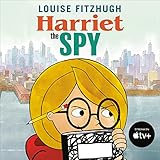
- Audible Audiobook
- Louise Fitzhugh (Author) - Anne Bobby (Narrator)
- English (Publication Language)
- 10/17/2003 (Publication Date) - Listening Library (Publisher)
3. Examine the Social and Emotional Repercussions of Intrusion: Observe how Harriet’s actions impact her relationships with her friends, her nanny, and her classmates when her secret activities are revealed.
- Action: Track the progression of her friendships and the reactions of those around her as her perceived betrayal of trust unfolds.
- What to Look For: The emotional fallout when Harriet’s notebook is discovered and how she navigates the breach of privacy and the subsequent damage to relationships.
- Mistake to Avoid: Underestimating the significance of the privacy violation; the narrative emphasizes the tangible consequences of her actions on others, forcing her to confront the impact of her curiosity.
4. Identify the Ethical Dilemmas and Moral Ambiguity: Consider the moral implications of Harriet’s spying, particularly concerning privacy, consent, and the potential for misinterpretation of others’ lives.
- Action: Reflect on whether Harriet’s insatiable curiosity justifies her intrusion into others’ private lives and observe how the novel presents these questions without easy answers.
- What to Look For: Moments where Harriet grapples, however implicitly, with her behavior or where her observations lead to misunderstandings and conflict among her peers.
- Mistake to Avoid: Applying rigid adult ethical standards without acknowledging that the novel explores these issues through a child’s evolving moral compass, highlighting the developmental nature of ethical understanding.
5. Assess the Novel’s Resolution and Harriet’s Growth: Evaluate how Harriet responds to the consequences of her secret being revealed and how she begins to adapt her behavior and develop a more nuanced understanding of empathy and relationships.
- Action: Observe Harriet’s reactions to the fallout and her attempts to mend relationships and understand the emotional impact of her actions.
- What to Look For: Evidence of her personal growth, a shift from detached observation to a more engaged and empathetic understanding of human connection.
- Mistake to Avoid: Expecting a simplistic or didactic conclusion; the ending is characteristically nuanced, reflecting ongoing development and the complex nature of learning from experience.
Harriet the Spy by Louise Fitzhugh: A Critical Failure Mode Analysis
A significant failure mode readers encounter with Harriet the Spy by Louise Fitzhugh is the misinterpretation of Harriet’s character as purely mischievous or rebellious, overlooking the profound internal conflict, vulnerability, and loneliness she experiences. This often stems from an expectation of traditional child protagonist archetypes and a focus on the surface-level “spy” plot without engaging with the deeper psychological underpinnings.
- Detection: Early in the novel, Harriet’s relentless pursuit of information and her detached observation of others can be perceived as simple nosiness or a lack of empathy. Readers who focus solely on the “spy” element without delving into her motivations or the emotional undercurrents may miss the deeper narrative. Signs of this misinterpretation include a reader’s frustration with Harriet’s lack of overt emotional expression or a judgment of her actions as purely amoral, failing to see them as a coping mechanism.
- Consequence: This leads to a shallow understanding of the book, missing its exploration of loneliness, the search for belonging, and the development of empathy. The novel’s power lies in its nuanced portrayal of a child grappling with identity and the consequences of her actions, a layer that is lost if Harriet is only seen as a mischievous character.
Expert Tips for Reading Harriet the Spy
- Tip 1: Focus on Harriet’s Inner Monologue and Vulnerability.
- Action: Pay close attention to Harriet’s thoughts and feelings as described in the text, particularly in contrast to her outward actions and observations. Note instances where she feels isolated or misunderstood.
- Common Mistake to Avoid: Reading the plot events without fully engaging with Harriet’s internal processing, which is where the novel’s thematic depth and her character arc reside. This can lead to judging her actions without understanding her internal state.
- Tip 2: Consider the Novel’s Historical Context and Groundbreaking Nature.
- Action: Understand that Harriet the Spy was published in 1964, a time when depicting a child protagonist with such complex, sometimes ethically ambiguous, motivations and internal struggles was groundbreaking for children’s literature.
- Common Mistake to Avoid: Judging Harriet’s actions solely by contemporary standards without acknowledging the novel’s innovative approach to children’s literature for its era, which challenged conventional portrayals of childhood innocence.
- Tip 3: Recognize the Subtlety of Fitzhugh’s Social Commentary.
- Action: Look for how Harriet’s spying reveals societal norms, family dynamics, and the unspoken rules of adult behavior, often through a child’s unfiltered perspective. Consider what these observations reveal about the adult world she is trying to understand.
- Common Mistake to Avoid: Focusing only on the plot mechanics of spying and missing the broader commentary on human behavior, relationships, and the often-hypocritical nature of adult interactions that the novel offers.
Common Myths Debunked
- Myth 1: Harriet is simply a naughty child who enjoys invading others’ privacy for fun.
- Why it Matters: This view reduces Harriet to a one-dimensional character and misses the novel’s exploration of her loneliness, her search for connection, and her developing understanding of the world and its complexities.
- Fix: Recognize that Harriet’s spying is a coping mechanism and a method of making sense of a world that often feels confusing or distant. Her internal monologue reveals her vulnerabilities and her desire to understand, not just to pry for amusement.
- Myth 2: The book is solely about the thrill of espionage for children, akin to a spy game.
- Why it Matters: This perspective overlooks the significant emotional arc of the novel, particularly the consequences of Harriet’s actions and her subsequent journey toward empathy and responsibility. The “spy” element is a vehicle, not the destination.
- Fix: Understand that the “spy” element serves as a device for exploring themes of identity, privacy, and the impact of one’s actions on others. The narrative’s core is character development and the nuanced exploration of childhood experiences, not just plot excitement.
- Myth 3: Harriet is a cold or unfeeling character due to her observational detachment.
- Why it Matters: This interpretation ignores the significant emotional turmoil Harriet experiences, especially after her notebook is found. Her detachment is a defense mechanism and a tool for understanding, not an absence of feeling.
- Fix: Pay attention to Harriet’s reactions when confronted with the consequences of her actions. Her distress, confusion, and eventual efforts to reconcile with her friends demonstrate her capacity for deep feeling and her struggle with the emotional weight of her choices.
Decision Rules for Assessing Harriet the Spy
- If
Quick Comparison
| Option | Best for | Pros | Watch out |
|---|---|---|---|
| Quick Answer | General use | Harriet the Spy by Louise Fitzhugh is a seminal work in children’s literature… | Mistake to Avoid: Expecting a straightforward adventure story with clear mora… |
| Who This Is For | General use | The novel’s strength lies in its unflinching examination of privacy, identity… | Mistake to Avoid: Dismissing her observations as mere childish games; they ar… |
| What to Check First | General use | This book is recommended for readers who appreciate character-driven narrativ… | Mistake to Avoid: Underestimating the significance of the privacy violation;… |
| Step-by-Step Plan Engaging with Harriet the Spy by Louise Fitzhugh | General use | Readers seeking a classic children’s novel that delves into psychological rea… | Mistake to Avoid: Applying rigid adult ethical standards without acknowledgin… |