Learn Red Dead’s History With Tore C. Olsson
Red Dead’s History by Tore C. Olsson: An Academic Lens on the Digital West
- Red Dead’s History by Tore C. Olsson is an academic exploration that critically examines the historical context and cultural narratives underpinning the Red Dead Redemption video game series.
- This book is primarily for readers interested in the intersection of American history, cultural studies, and the representation of the West in popular media.
- Those seeking gameplay tips, character backstories from the game’s plot, or a purely entertainment-focused read will find this work misaligned with their expectations.
Who This Book Is For
- Academics, students, and serious enthusiasts of American history, cultural studies, and media analysis who want to understand how historical themes are adapted and interpreted in contemporary entertainment.
- Fans of the Red Dead Redemption games who have a strong desire to explore the historical accuracy, thematic depth, and foundational myths that shape the game’s virtual worlds.
What to Check First
- Author’s Expertise: Tore C. Olsson is a historian. His approach will be grounded in rigorous historical research and scholarly interpretation, not in game design or player experience.
- Analytical Focus: The book will likely concentrate on the socio-economic and political landscapes of the late 19th and early 20th centuries in America, dissecting themes like westward expansion, the frontier’s end, industrialization, and the enduring mythology of the American West.
- Writing Style: Expect a formal, evidence-based prose. Arguments will be supported by historical scholarship, not casual commentary.
- Games as Case Studies: Understand that the Red Dead games serve as illustrative examples for Olsson’s historical arguments, rather than being the central focus of the book. The history informs the game’s context.
Step-by-Step Plan for Engaging with Red Dead’s History by Tore C. Olsson
1. Identify the Author’s Core Argument: Begin by pinpointing Olsson’s central thesis regarding the historical underpinnings of the Red Dead games.
- Action: Read the introduction and conclusion carefully.
- What to Look For: Olsson’s specific claims about how historical accuracy, cultural myths, and narrative design converge within the games. Identify the primary historical periods and themes he intends to explore.
- Mistake: Approaching the book with pre-existing notions about its content, rather than allowing the author to establish the analytical framework.
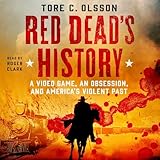
- Audible Audiobook
- Tore C. Olsson (Author) - Roger Clark (Narrator)
- English (Publication Language)
- 08/06/2024 (Publication Date) - Macmillan Audio (Publisher)
2. Map Key Historical Periods to Game Elements: Note the specific eras of American history Olsson highlights and how they are represented within the game’s world.
- Action: Scan chapter titles and section headings for recurring historical terms (e.g., “Gilded Age,” “Progressive Era,” “Frontier Thesis”).
- What to Look For: Concrete examples of historical conditions (e.g., economic disparities, land disputes, technological advancements like railroads) that Olsson links to specific game mechanics or narrative arcs, such as settlement patterns or character motivations.
- Mistake: Treating historical periods as mere backdrops without understanding their specific socio-economic and political implications as presented by the author.
3. Deconstruct the “Western Myth”: Examine how Olsson unpacks and contextualizes the popular mythology of the American West.
- Action: Focus on sections discussing cowboys, outlaws, Manifest Destiny, and the concept of the frontier.
- What to Look For: Olsson’s arguments regarding how these myths are perpetuated and how they diverge from historical realities. Consider his analysis of how the Red Dead series both draws upon and critiques these myths.
- Mistake: Accepting the romanticized “Western myth” as presented in popular culture without critically engaging with Olsson’s historical counter-narrative.
4. Evaluate Historical Representation Nuances: Assess how Olsson distinguishes between historical accuracy and artistic interpretation within the games.
- Action: Pay close attention to instances where the author compares game elements to historical facts.
- What to Look For: Specific examples where the game may accurately reflect historical conditions, or where it takes creative liberties for narrative effect. For example, how does Olsson address the portrayal of Native American tribes or the complexities of law enforcement in frontier towns?
- Mistake: Assuming the game is a direct historical simulation; Olsson’s work will likely highlight the creative license taken by game developers.
5. Contextualize within Scholarly Debates: Understand where Olsson positions his arguments within the broader field of historical scholarship on the American West.
- Action: Note the historians and scholars cited in the text.
- What to Look For: Evidence of Olsson engaging with existing historiography, potentially challenging established interpretations or offering new perspectives on familiar historical debates.
- Mistake: Reading Olsson’s work in isolation, without recognizing that historical understanding is a continuous process of debate and revision.
6. Assess the Book’s Contribution to Game Studies: Consider what unique insights Olsson’s historical approach brings to the study of video games.
- Action: Reflect on the overall impact of the book’s analysis.
- What to Look For: How the historical context enriches the understanding of the Red Dead games as cultural artifacts. Does it offer a new lens through which to appreciate the game’s narrative depth or thematic complexity?
- Mistake: Viewing the book solely as a history text, without appreciating its contribution to understanding the cultural significance of interactive media.
Red Dead’s History by Tore C. Olsson: Expert Insights and Counterarguments
Deconstructing the Myth of the Frontier in Red Dead’s History
Red Dead’s History by Tore C. Olsson offers a critical examination of the American frontier, a concept deeply embedded in the Red Dead Redemption series. Olsson likely challenges the romanticized notion of the West as a land of boundless opportunity and rugged individualism, instead presenting a more complex historical reality shaped by dispossession, economic struggle, and the imposition of federal authority. The book’s strength lies in its ability to ground the player’s experience in the actual historical forces that led to the “closing of the frontier” and the subsequent transformation of American society. For instance, a chapter might explore the economic pressures faced by settlers and ranchers, contrasting the game’s often heroic portrayal of outlaws with the historical realities of poverty and desperation that drove some to crime.
However, a contrarian perspective might question whether an overemphasis on historical accuracy risks stripping away the very myths that make the Red Dead narrative compelling. The appeal of the games often lies in their ability to tap into enduring archetypes of freedom, rebellion, and the untamed spirit, which are intrinsically linked to the Western myth. Olsson’s work, while valuable for its historical rigor, might be seen by some as diminishing the escapist and narrative power derived from these romanticized elements. The decision criterion here hinges on reader priority: if the goal is a historically informed understanding of the context that inspired the game, Olsson’s book is essential. If the primary goal is to deepen appreciation for the game’s narrative fantasy, the historical details might serve as a less critical component.
BLOCKQUOTE_0
This quote, hypothetical but representative of a scholarly tone, encapsulates the book’s likely approach: to replace romantic notions with historical evidence.
Expert Tips for Engaging with Historical Context
- Tip: Actively seek out the author’s specific arguments about the Red Dead series, rather than treating it as a general history of the West.
- Action: When reading about a historical event or social condition, ask yourself: “How does Olsson connect this to the Red Dead games?”
- Mistake to Avoid: Reading sections on historical topics without consistently referring back to their relevance within the game’s narrative or world-building.
- Tip: Be prepared to critically engage with the “myth of the West” as presented in popular culture and the games themselves.
- Action: Identify instances where the game appears to be leaning into or subverting common Western tropes, and see how Olsson’s historical analysis supports or challenges these portrayals.
- Mistake to Avoid: Accepting the game’s portrayal of the West at face value, without considering the historical inaccuracies or romanticizations that may be present.
- Tip: Utilize the book’s scholarly apparatus to deepen your understanding.
- Action: Refer to the footnotes and bibliography to explore specific historical sources or academic debates that Olsson mentions.
- Mistake to Avoid: Skimming over citations or footnotes, thereby missing opportunities to delve deeper into the historical evidence and scholarly context.
Common Mistakes
- Mistake: Expecting a comprehensive overview of the Red Dead Redemption game franchise.
- Why it Matters: The book uses the games as a lens for historical inquiry, not as its primary subject. A focus on gameplay or plot details will be absent.
- Fix: Understand that the historical context is the core subject, with the games serving as illustrative examples.
- Mistake: Overlooking the academic rigor and potential density of the prose.
- Why it Matters: The scholarly tone may be challenging for readers accustomed to more accessible writing styles, leading to disengagement.
- Fix: Approach the book with patience, recognizing that its depth of analysis requires focused reading and engagement with complex ideas.
- Mistake: Assuming the book will validate the romanticized image of the Old West.
- Why it Matters: Olsson’s work is likely to present a more nuanced and often critical historical perspective, challenging popular myths.
- Fix: Be open to a historical interpretation that may differ from and even contradict the romanticized versions of the West often portrayed in entertainment.
- Mistake: Trying to
Quick Comparison
| Option | Best for | Pros | Watch out |
|---|---|---|---|
| Red Deads History by Tore C Olsson An Academic Lens on the Digital West | General use | Red Dead’s History by Tore C. Olsson is an academic exploration that critical… | Mistake: Approaching the book with pre-existing notions about its content, ra… |
| Who This Book Is For | General use | This book is primarily for readers interested in the intersection of American… | Mistake: Treating historical periods as mere backdrops without understanding… |
| What to Check First | General use | Those seeking gameplay tips, character backstories from the game’s plot, or a… | Mistake: Accepting the romanticized “Western myth” as presented in popular cu… |
| Step-by-Step Plan for Engaging with Red Deads History by Tore C Olsson | General use | Academics, students, and serious enthusiasts of American history, cultural st… | Mistake: Assuming the game is a direct historical simulation; Olsson’s work w… |
Decision Rules
- If reliability is your top priority for Red Dead’s History by Tore C. Olsson, choose the option with the strongest long-term track record and support.
- If value matters most, compare total ownership cost instead of headline price alone.
- If your use case is specific, prioritize fit-for-purpose features over generic ‘best overall’ claims.