Kenneth Cook’s Wake in Fright: A Descent into Madness
Quick answer:
- Kenneth Cook’s Wake in Fright is a stark, unflinching portrayal of a man’s descent into psychological and physical degradation in the Australian outback.
- The novel offers a powerful, often disturbing, exploration of Australian identity, masculinity, and the suffocating nature of the outback.
- Its enduring relevance lies in its raw depiction of isolation and the thin veneer of civilization.
Who this is for:
- Readers seeking challenging, character-driven fiction that probes the darker aspects of human nature and societal pressures.
- Those interested in Australian literature and its exploration of the unique psychological landscape of the outback.
What to check first:
- Author’s Intent: Kenneth Cook stated the novel was an attempt to depict the “real Australia,” free from romanticism. Understanding this context is crucial to appreciating the novel’s harshness.
- Setting’s Role: The Bundanyabba setting is not merely a backdrop but an active antagonist, its oppressive heat, dust, and social environment directly contributing to John Grant’s unraveling.
- Protagonist’s State: John Grant begins his journey already in a precarious mental state, seeking escape from his teaching post. His situation deteriorates progressively, making his initial condition a vital starting point for analysis.
- Themes of Masculinity: The novel critically examines the performative and often destructive nature of Australian masculinity, particularly within the context of the pub culture and the rituals Grant is forced to endure.
The Unraveling of John Grant in Wake in Fright by Kenneth Cook
Kenneth Cook’s Wake in Fright is a potent, almost visceral, exploration of a man’s psychological disintegration under the weight of isolation and a hostile environment. The novel follows John Grant, a schoolteacher stationed in the remote New South Wales town of Tiboorga, who travels to Sydney for Christmas. A series of unfortunate events, including losing his money in a game of two-up, leaves him stranded in the desolate outback town of Bundanyabba (often referred to as “The Yabba”). What follows is not a tale of adventure, but a harrowing descent into a primal, suffocating world that mirrors and amplifies Grant’s own internal collapse.
The strength of Wake in Fright lies in Cook’s unsparing prose and his ability to imbue the landscape with a palpable sense of menace. The relentless heat, the dust, the pervasive smell of stale beer, and the crude, often violent, social interactions of Bundanyabba all conspire to break Grant down. The novel challenges romantic notions of the outback, presenting it instead as a place that can strip away civilization, revealing a raw, often brutal, core. Grant’s initial desire to escape his mundane life transforms into a desperate fight for his sanity and his very identity.
Examining the Psychological Terrain of Wake in Fright by Kenneth Cook
The primary narrative thrust of Wake in Fright revolves around John Grant’s psychological deterioration. Stranded in Bundanyabba, he is forced into the company of rough, boisterous men whose culture of drinking, gambling, and casual violence is both alien and terrifying to him. The novel meticulously details his increasing desperation, his attempts to maintain a semblance of control, and his eventual surrender to the primal urges and despair that the environment fosters.
A contrarian reading of Wake in Fright suggests that Grant’s “madness” is not an aberration but an almost logical response to an environment designed to crush individuality and intellect. The men of The Yabba, particularly the seemingly benevolent but ultimately destructive Doc Gallagher, represent a force that seeks to absorb and homogenify anyone who enters their orbit. Grant’s struggle is not just against external circumstances but against the seductive pull of succumbing to this dominant, often nihilistic, culture.
BLOCKQUOTE_0
This quote captures the essence of Grant’s experience. The novel emphasizes that the true damage is not inflicted by physical blows, but by the erosion of one’s inner self.
Common Myths About Wake in Fright:
- Myth: Wake in Fright is a simple story about a man getting lost in the Australian outback.
- Correction: While the setting is crucial, the novel is a profound psychological study. Grant’s journey is primarily internal, exploring themes of identity, masculinity, and the destructive potential of societal pressures. The narrative focuses on his mental breakdown, not just physical displacement.
- Myth: The characters in Bundanyabba are exaggerated caricatures of rural Australians.
- Correction: Cook aimed for realism, depicting a specific subculture with its own codes and behaviors. While extreme, these characters reflect a facet of Australian identity and the environment that shapes it, not mere stereotypes. Their actions, however harsh, are presented as a direct product of their isolated and harsh surroundings.
Step-by-step plan:
1. Assess Initial Situation: Begin by noting John Grant’s mental state upon arriving in Bundanyabba.
- Action: Observe Grant’s initial feelings of desperation, his yearning for escape, and his internal conflict about his life in Tiboorga.
- What to look for: Evidence of his pre-existing fragility and desire for change.
- Mistake: Assuming Grant is a stable individual whose breakdown is solely due to external events; his pre-existing fragility is key to understanding the depth of his collapse.
2. Engage with Bundanyabba Culture: Observe Grant’s forced immersion into the town’s social fabric, particularly the pub.
- Action: Note the crude humor, the pervasive drinking, the games of chance (especially two-up), and the underlying aggression.
- What to look for: The environmental pressures that begin to wear down Grant’s defenses.
- Mistake: Underestimating the psychological impact of constant exposure to this environment; it actively wears down Grant’s defenses, making his internal resistance increasingly futile.
3. Analyze Key Interactions: Focus on Grant’s encounters with characters like Doc Gallagher and the local police.
- Action: Examine the manipulative nature of Gallagher’s “help,” the casual indifference of the authorities, and the attempts to draw Grant into their world.
- What to look for: The subtle and overt attempts to assert dominance or enforce conformity.
- Mistake: Interpreting these interactions as benign hospitality; they are often attempts to assert dominance or enforce conformity, designed to absorb outsiders into the Yabba’s ethos.
4. Track Physical and Mental Decline: Document Grant’s physical deterioration alongside his mental state.
- Action: Note the effects of heat, lack of sleep, alcohol consumption, and the growing sense of hopelessness.
- What to look for: The interconnectedness of physical hardship and psychological breakdown.
- Mistake: Separating physical hardship from psychological breakdown; in Wake in Fright, they are inextricably linked, each exacerbating the other.
5. Examine the “Game” of Two-Up: Pay close attention to the scene where Grant loses his money.
- Action: Observe the hypnotic rhythm of the game, the pressure from the crowd, and Grant’s compulsion to play despite his better judgment.
- What to look for: The critical point of losing control and succumbing to the environment’s destructive allure.
- Mistake: Viewing the loss as simple bad luck; it represents a critical point of losing control and succumbing to the environment’s destructive allure, a key step in his descent.
6. Observe the Hunting Scene: Analyze the episode where Grant joins a kangaroo hunt.
- Action: Note the brutal efficiency of the hunt, Grant’s participation, and his subsequent realization of his own complicity in violence.
- What to look for: Grant’s descent into the primal nature of his surroundings and his own capacity for brutality.
- Mistake: Seeing the hunt as mere action; it symbolizes Grant’s descent into the primal nature of his surroundings and his own capacity for brutality, blurring the lines between observer and participant.
7. Evaluate the Ending: Consider the ambiguity and finality of the novel’s conclusion.
- Action: Reflect on Grant’s ultimate fate and the lingering impact of his experience on his identity.
- What to look for: The confirmation of irreversible psychological damage.
- Mistake: Seeking a clear resolution or redemption; the novel’s power lies in its unflinching depiction of irreversible psychological damage, leaving the reader with a sense of profound unease.
Expert Tips:
- Tip: Pay close attention to the sensory details Cook employs to create the oppressive atmosphere of Bundanyabba.
- Actionable Step: Highlight descriptions of heat, dust, sounds, and smells each time they appear, noting how they contribute to Grant’s distress. For example, the description of “the dry, hot air that smelt of dust and stale beer” in Chapter 3 immediately establishes the suffocating environment.
- Common Mistake to Avoid: Skimming over descriptive passages, assuming they are mere filler, rather than recognizing them as crucial elements of the novel’s psychological impact. These details are not decorative; they are functional in building Grant’s sense of entrapment.
- Tip: Analyze the dialogue for its subtext and the way characters attempt to assert control or conformity.
- Actionable Step: Underline instances where characters use humor, bravado, or veiled threats to pressure Grant into their way of thinking or behaving. Doc Gallagher’s repeated invitations to “have a drink” or join in activities are not just social gestures but attempts to assimilate Grant into the Yabba’s culture.
- Common Mistake to Avoid: Taking dialogue at face value; the casual cruelty and manipulative undertones are vital to understanding the social dynamics and the pressure on Grant to conform.
- Tip: Consider the novel’s critique of Australian masculinity and the pressure
Wake in Fright by Kenneth Cook: Quick Comparison
| Option | Best for | Pros | Watch out |
|---|---|---|---|
| The Unraveling of John Grant in Wake in Fright by Kenneth Cook | General use | Kenneth Cook’s Wake in Fright is a stark, unflinching portrayal of a man’s… | Mistake: Assuming Grant is a stable individual whose breakdown is solely due… |
| Wake in Fright by Kenneth Cook Option 2 | General use | The novel offers a powerful, often disturbing, exploration of Australian iden… | Mistake: Underestimating the psychological impact of constant exposure to thi… |
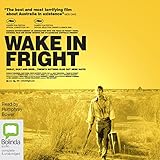
- Audible Audiobook
- Kenneth Cook (Author) - Humphrey Bower (Narrator)
- English (Publication Language)
- 03/25/2016 (Publication Date) - Bolinda audio (Publisher)
Decision Rules
- If reliability is your top priority for Wake in Fright by Kenneth Cook, choose the option with the strongest long-term track record and support.
- If value matters most, compare total ownership cost instead of headline price alone.
- If your use case is specific, prioritize fit-for-purpose features over generic ‘best overall’ claims.