Jonathan Haidt’s The Coddling Of The American Mind Explained
Quick Answer
- Core Thesis: “The Coddling Of The American Mind” by Jonathan Haidt posits that an overemphasis on safety and emotional comfort in modern parenting and education is creating a generation that is more anxious and less resilient, hindering their ability to navigate life’s challenges.
- Key Untruths Identified: The book focuses on three pervasive “great untruths”: “What doesn’t kill you makes you weaker,” “Always trust your feelings,” and “Life is too divided between good people and bad people.”
- Primary Recommendation: Rebalance protection with opportunities for challenge and independent problem-solving to foster competence and emotional fortitude in young people.
Who This Is For
- Parents and educators seeking to understand and counter trends contributing to increased anxiety and fragility in young adults.
- Individuals interested in the psychological and sociological underpinnings of modern campus culture and adolescent development.
What To Check First
- Author’s Background: Jonathan Haidt is a distinguished social psychologist whose research provides a credible foundation for the book’s arguments.
- Central Argument: Grasp the core idea that excessive safety-seeking, while well-intentioned, can inadvertently create fragility and hinder development.
- The Three Great Untruths: Understand these as the analytical framework Haidt uses to dissect modern societal trends.
- Scope: Recognize that while the book draws heavily on examples from American higher education, its themes are broadly applicable to adolescent development.
The Coddling Of The American Mind by Jonathan Haidt: A Critical Examination
Jonathan Haidt, in his influential book “The Coddling Of The American Mind” co-authored with Greg Lukianoff, presents a critical analysis of contemporary parenting and educational practices. The central argument is that an overwhelming focus on protecting children from any form of harm, discomfort, or offense is paradoxically making them less resilient and more susceptible to anxiety and emotional distress. This approach, Haidt contends, prioritizes emotional safety at the expense of developing essential coping skills, critical thinking, and the ability to engage with life’s inherent adversities.
The book identifies and dissects three pervasive “great untruths” that Haidt believes are shaping this cultural shift:
1. “What doesn’t kill you makes you weaker”: This directly challenges the notion that avoiding adversity builds strength. Haidt argues that the absence of struggle prevents individuals from developing competence and resilience through overcoming challenges.
2. “Always trust your feelings”: The authors critique the elevation of subjective emotional experience as the ultimate arbiter of truth. They suggest this can lead to distorted perceptions, irrational fears, and an inability to engage with objective reality or differing viewpoints.
3. “Life is too divided between good people and bad people”: This binary worldview is presented as a catalyst for polarization, intolerance, and an impediment to nuanced understanding and constructive dialogue.
For a concise overview of Jonathan Haidt’s groundbreaking work, consider diving into ‘The Coddling Of The American Mind.’ It clearly outlines the core thesis and the three great untruths that are shaping modern youth.
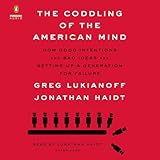
- Audible Audiobook
- Greg Lukianoff (Author) - Jonathan Haidt (Narrator)
- English (Publication Language)
- 09/04/2018 (Publication Date) - Penguin Audio (Publisher)
Haidt synthesizes psychological research, sociological observations, and anecdotal evidence, particularly from university campuses, to illustrate how these untruths manifest in practices ranging from parenting styles to campus speech codes. The book serves as a critical examination of a cultural phenomenon and a call to re-evaluate approaches that may be hindering, rather than aiding, the development of capable young adults.
Step-by-Step Plan: Cultivating Resilience and Critical Thinking
Implementing the insights from “The Coddling Of The American Mind” involves a deliberate shift from solely ensuring comfort to actively fostering competence and intellectual fortitude. This plan outlines actionable steps for parents and educators.
1. Reframe “Safety” to Include Manageable Risk:
- Action: Introduce age-appropriate challenges and opportunities for independent problem-solving. Examples include allowing children to navigate minor social conflicts or tackle more complex academic tasks with guided support.
- What to look for: Observe the development of self-reliance, problem-solving strategies, and a sense of accomplishment after overcoming obstacles.
- Mistake: Prohibiting any activity with even a small chance of failure or discomfort, thereby preventing the development of crucial coping mechanisms.
2. Teach Emotional Literacy and Regulation:
- Action: Help children identify, label, and understand their emotions. Guide them in developing healthy strategies for managing distress, such as deep breathing exercises or cognitive reframing techniques.
- What to look for: Children who can articulate their feelings constructively and who can begin to self-soothe without immediate external intervention.
- Mistake: Dismissing or invalidating a child’s emotional experience, or encouraging the avoidance of any feeling that is not positive.
3. Expose Children to Diverse Perspectives:
- Action: Encourage engagement with a variety of ideas, viewpoints, and narratives, even those that may be challenging or unfamiliar. Facilitate this through literature, thoughtful discussions, and exposure to different cultural perspectives.
- What to look for: Increased empathy, the ability to analyze arguments from multiple angles, and a reduced tendency towards simplistic binary thinking.
- Mistake: Creating echo chambers where only one narrative is presented, or teaching children to view those with differing opinions as inherently malicious or wrong.
4. Foster Independent Problem-Solving:
- Action: When a child encounters a problem, resist the urge to solve it for them. Instead, ask guiding questions that empower them to brainstorm solutions and evaluate potential outcomes.
- What to look for: Children who demonstrate initiative in finding solutions and who learn from the consequences of their choices.
- Mistake: Immediately intervening to fix a problem, thereby denying the child the opportunity to build their own problem-solving toolkit.
5. Promote “Antifragile” Development:
- Action: Encourage participation in activities that require effort, persistence, and the potential for failure, such as learning a new sport, mastering a musical instrument, or engaging in debate.
- What to look for: Increased grit, perseverance, and a positive association with effort and challenge.
- Mistake: Shielding children from any situation that might cause frustration or require significant effort, leading to a diminished capacity for perseverance.
6. Model Constructive Disagreement:
- Action: Demonstrate how to engage in respectful debate, focusing on issues rather than personal attacks, and showing how to find common ground or agree to disagree.
- What to look for: An understanding that disagreement is a normal and potentially productive part of human interaction.
- Mistake: Reacting with anger or hostility to differing opinions, or teaching children that disagreement is inherently dangerous or to be avoided at all costs.
Common Myths Addressed
- Myth: Protecting children from all negative experiences builds stronger individuals.
- Evidence-Based Rebuttal: Haidt and Lukianoff argue the opposite: exposure to manageable adversity (the concept of “antifragility”) is crucial for building resilience. Shielding children prevents them from developing coping mechanisms and confidence in their ability to overcome challenges. This is a central theme in discussions about the importance of resilience.
- Takeaway: Focus on teaching children how to manage difficulties, rather than eliminating all potential for them.
- Myth: Emotional reactions are always accurate indicators of truth or danger.
- Evidence-Based Rebuttal: The book critiques the “always trust your feelings” untruth, explaining that while emotions are important, they can be misleading. Unchecked emotional responses can lead to misinterpretations, overreactions to minor issues, and an inability to engage with objective facts.
- Takeaway: Teach children to analyze their feelings and consider objective evidence alongside their emotional responses.
- Myth: Children are inherently fragile and require constant supervision and protection.
- Evidence-Based Rebuttal: This perspective, termed “what doesn’t kill you makes you weaker,” is a key untruth. Haidt suggests that this belief leads to overprotective parenting, which paradoxically makes children more fragile by denying them opportunities to develop independence and competence.
- Takeaway: Empower children by trusting their capacity to learn, adapt, and overcome challenges within safe boundaries.
The Coddling Of The American Mind by Jonathan Haidt: Expert Considerations
BLOCKQUOTE_0
This quote encapsulates the book’s central concern: that a well-intentioned but ultimately counterproductive approach to child-rearing and education is creating a generation ill-equipped for the realities of life. Haidt and Lukianoff advocate for a recalibration of societal norms to prioritize the development of resilience, critical thinking, and emotional fortitude.
Expert Tips for Fostering Resilience
- Tip: Embrace “exposure therapy” for minor anxieties.
- Actionable Step: If a child expresses mild anxiety about a social event or a new activity, help them prepare and attend, rather than allowing them to avoid it.
- Common Mistake to Avoid: Immediately agreeing to cancel the event or arranging for an excessive level of parental supervision, which reinforces the anxiety.
- Tip: Prioritize “discomfort tolerance” over “comfort seeking.”
- Actionable Step: Encourage children to persist through frustrating tasks or slightly uncomfortable social situations, framing these experiences as opportunities for growth.
- Common Mistake to Avoid: Rushing to alleviate any sign of discomfort, thereby teaching children that negative feelings are unbearable and require immediate external intervention.
- Tip: Cultivate intellectual humility and open-mindedness.
- Actionable Step: Engage in discussions where different viewpoints are explored respectfully, modeling the ability to consider perspectives that differ from your own. This is a key aspect of understanding cognitive biases.
- **Common Mistake to
Quick Comparison
| Option | Best for | Pros | Watch out |
|---|---|---|---|
| Quick Answer | General use | Core Thesis: “The Coddling Of The American Mind” by Jonathan Haidt posits tha… | “What doesn’t kill you makes you weaker”: This directly challenges the notion… |
| Who This Is For | General use | Key Untruths Identified: The book focuses on three pervasive “great untruths”… | Mistake: Prohibiting any activity with even a small chance of failure or disc… |
| What To Check First | General use | Primary Recommendation: Rebalance protection with opportunities for challenge… | Mistake: Dismissing or invalidating a child’s emotional experience, or encour… |
| The Coddling Of The American Mind by Jonathan Haidt A Critical Examination | General use | Parents and educators seeking to understand and counter trends contributing t… | Mistake: Creating echo chambers where only one narrative is presented, or tea… |
Decision Rules
- If reliability is your top priority for The Coddling Of The American Mind by Jonathan Haidt, choose the option with the strongest long-term track record and support.
- If value matters most, compare total ownership cost instead of headline price alone.
- If your use case is specific, prioritize fit-for-purpose features over generic ‘best overall’ claims.